

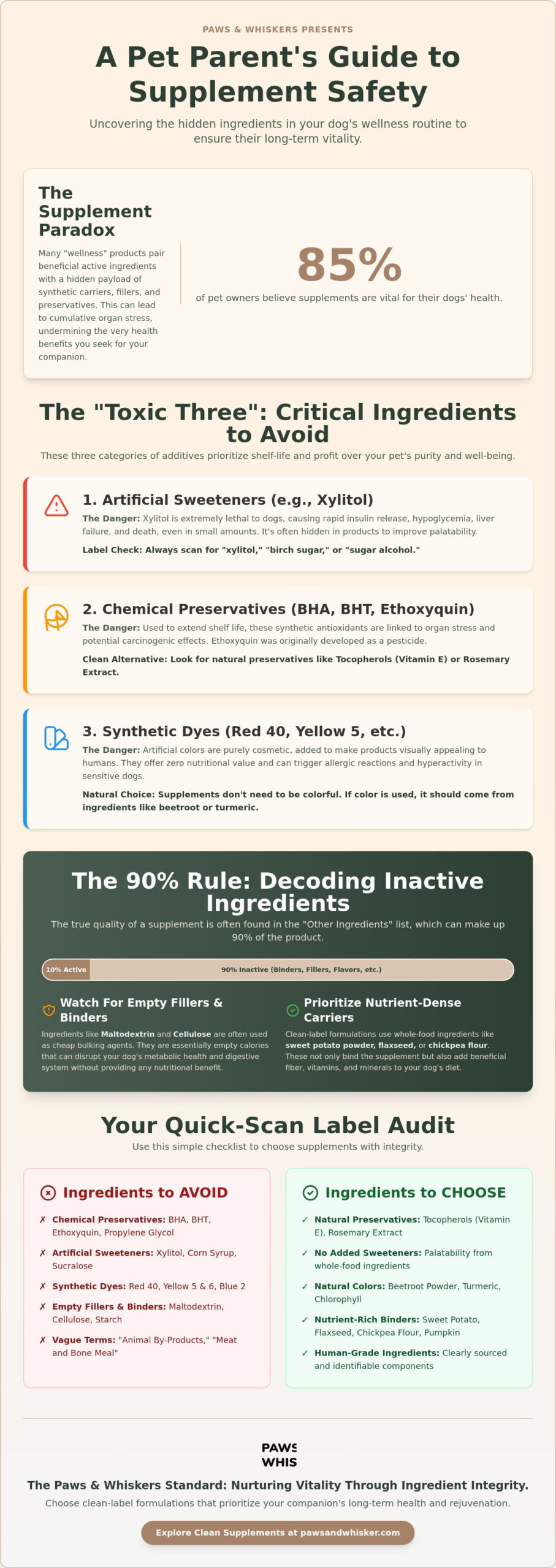
Did you know that 85% of global pet owners now believe supplements are just as vital for their dogs as they are for themselves? Your dog’s vitality is a legacy of the choices you make today, yet this commitment to wellness often leads us into a maze of complex labels and clinical jargon. You likely feel a deep responsibility to protect your companion’s internal health, yet the fear of accidentally introducing harmful ingredients to avoid in dog supplements can make the shopping experience feel more like a minefield than a path to restoration. It’s exhausting to navigate misleading marketing when your only goal is to ensure your family member feels their best.
Scientific transparency is the ultimate act of love. This guide provides the clinical clarity you need to identify hidden risks like xylitol, excessive manganese, or synthetic binders that can cause long-term organ stress. We’ll walk through a definitive blacklist of fillers and toxins, ensuring you have the confidence to choose clean-label products that support your dog’s true, vibrant recovery. By auditing the 90% of the chew that isn’t the active ingredient, you can move away from uncertainty and toward a wellness routine that prioritizes safety as much as efficacy.
Key Takeaways
- Understand the “Supplement Paradox” and how synthetic carriers can create cumulative organ stress even when paired with beneficial active ingredients.
- Identify the “Toxic Three” list of critical ingredients to avoid in dog supplements, including lethal sweeteners like Xylitol and chemical preservatives like BHA.
- Learn to decode common binders and fillers such as maltodextrin and cellulose that often serve as empty calories and disrupt your dog’s metabolic health.
- Master a simple “Three-Second Rule” for auditing labels so you can quickly filter out artificial dyes and suspicious chemical abbreviations.
- Gain the clinical confidence to choose clean-label formulations that prioritize ingredient integrity and your companion’s long-term rejuvenation.
The Supplement Paradox: Why ‘Wellness’ Products Often Contain Hidden Toxins
Your dog’s wellness journey shouldn’t be a trade-off. The supplement paradox occurs when a product delivers high-quality active ingredients, such as glucosamine or omega-3s, inside a vehicle of synthetic irritants. It’s a confusing reality where a chew designed to heal might actually be introducing ingredients to avoid in dog supplements. You want to see your companion thrive, yet the very tool you’re using for their rejuvenation could be working against their internal balance.
Mass-market manufacturers often prioritize shelf stability and palatability over pure biology. Low-cost binders and artificial flavors are cheaper to source and easier to process in large-scale facilities, allowing brands to maximize profit while maintaining a soft, “treat-like” texture. While the pet food industry regulation framework provides basic safety guidelines, there’s a vast difference between “feed grade” and “human grade” standards in the 2026 market. Feed grade ingredients allow for higher levels of impurities and less rigorous testing, whereas human grade standards demand the same purity you would expect for your own family.
Understanding the ‘Inactive’ List
Flip the bottle over. The “Other Ingredients” section is where the true story of a supplement lives, often carrying more weight than the flashy claims on the front. These substances are frequently used to ensure a soft chew stays moist or a powder doesn’t clump during shipping. Unfortunately, these hidden additives can bypass the primary benefits of natural joint supplements for dogs by triggering digestive sensitivities or allergic responses. The inactive ingredient category serves as a functional vehicle for delivering active nutrients, yet it is frequently exploited as a convenient path for chemical shortcuts and cost-saving fillers.
The Cumulative Effect on Canine Vitality
Consider the “Daily Toxin Load.” Giving your dog one chew every morning for 10 or 15 years adds up to thousands of doses of synthetic material. The liver and kidneys are the body’s filtration systems, working tirelessly to process and eliminate synthetic colors, chemical preservatives, and artificial sweeteners. Over time, this constant metabolic demand can lead to chronic, low-grade inflammation, which is why identifying ingredients to avoid in dog supplements is so critical for long-term health. Senior dogs are the most vulnerable in this scenario. As their organ function naturally slows with age, their ability to filter out “dirty” labels diminishes, making the choice of clean, botanical-based carriers essential for their comfort and movement.
The ‘Toxic Three’: Artificial Preservatives, Sweeteners, and Synthetic Dyes
Protecting your dog’s health requires more than just looking for active benefits; it demands a vigilant eye for the “Toxic Three” hidden in common formulations. While we often focus on what a supplement adds to our dog’s life, what it takes away through chemical exposure is just as vital. The FDA’s regulation of pet supplements clarifies that these products are treated as food or drugs rather than following human dietary supplement guidelines, which often leaves a gap where industrial additives can slip through. These substances are frequently the primary ingredients to avoid in dog supplements if you want to maintain your companion’s long-term vitality.
Preservatives: The Shelf-Life vs. Life-Span Tradeoff
Manufacturers often prioritize a product’s ability to sit on a warehouse shelf for years over the biological needs of the animal consuming it. BHA (Butylated Hydroxyanisole) and BHT (Butylated Hydroxytoluene) are synthetic antioxidants that scientific consensus in 2026 continues to link to carcinogenic potential and organ stress. Even more concerning is Ethoxyquin, a substance originally developed as a pesticide that is still used to prevent rancidity in fats. These chemicals are red flags that suggest a brand is prioritizing profit margins over purity. Truly nurturing brands opt for natural preservation systems, using tocopherols (Vitamin E) and Rosemary extract to maintain freshness without compromising the animal’s internal environment.
Sweeteners and Palatants: The Sugar Trap
The quest to make a supplement taste like a treat has led to a dangerous reliance on high-glycemic sweeteners and toxic sugar substitutes. Xylitol, which is increasingly rebranded as “birch sugar” to appeal to health-conscious owners, remains the most lethal of all ingredients to avoid in dog supplements. Even a small amount can cause a life-threatening drop in blood sugar and acute liver failure. Beyond the immediate danger of Xylitol, ingredients like corn syrup and sorbitol contribute to canine obesity and metabolic dysfunction. We also see “natural flavors” used as a catch-all term that can hide MSG and other excitotoxins. These substances can overstimulate the nervous system, often leading owners to mistakenly believe they need calming chews for dogs to manage what is actually a chemically induced state of agitation.
Synthetic dyes like Red 40 and Yellow 5 serve no nutritional purpose; they are purely aesthetic tools used to make a product look appealing to the human eye. Similarly, Propylene Glycol is often added to keep soft chews moist, despite its history of causing blood issues in certain animals. Choosing a clean-label omega-3 chew ensures that your dog receives the rejuvenating benefits of healthy fats without the burden of these unnecessary synthetic carriers.
Decoding Fillers and Binders: The ‘Empty Calorie’ Problem in Soft Chews
Soft chews are the most popular supplement form on the market today, yet their pliable texture often comes at a biological cost. To keep these treats soft and shelf-stable, many manufacturers rely on structural binders that serve no nutritional purpose for your companion. Identifying these functional ingredients to avoid in dog supplements is the first step toward reclaiming your dog’s internal health. A recent scientific review of pet supplements highlights that the limited oversight regarding these “inactive” binders often leads to significant variations in quality and safety.
Starchy fillers like maltodextrin and dextrose are frequently used to create the desired chewiness, but they act as high-glycemic triggers that spike blood sugar levels. Beyond the metabolic strain, these sugars provide a feast for harmful gut bacteria, which can lead to bloating and digestive discomfort. You might also see “cellulose” on a label; while it sounds botanical, it’s often just powdered wood pulp used to bulk out inexpensive formulas. Other common thickening agents include:
- Carrageenan: A seaweed derivative linked to intestinal inflammation and “leaky gut” symptoms.
- Xanthan Gum: A stabilizer that can cause digestive upset and loose stools in sensitive animals.
- Corn Starch: A low-cost filler that often originates from genetically modified crops and contributes to the total carbohydrate load.
The Gut-Skin Connection
When a dog’s digestive system is constantly processing poor-quality fillers, the intestinal barrier can become compromised. This systemic strain often manifests as chronic itching, red paws, or a dull coat, as the body’s immune system reacts to the influx of synthetic material. For owners seeking allergy relief for dogs, choosing a clean label is essential to avoid fueling the very inflammation you’re trying to soothe. Maltodextrin serves as a rapidly fermentable starch that can fuel the overgrowth of harmful gut bacteria, effectively destabilizing the microbiome and compromising the intestinal barrier.
Identifying ‘Non-Descript’ Proteins
Transparency in protein sourcing is a hallmark of a nurturing brand. If a label lists “poultry meal” or “meat by-products” instead of a named source like “organic chicken” or “grass-fed beef,” the manufacturer is likely using rendered waste products. These non-descript proteins are often the result of high-heat processing that destroys natural nutrients and leaves behind a “dirty” protein source. Similarly, “animal fat” is a major red flag; it’s a generic term for fats gathered from unspecified sources, which can vary wildly in purity and safety. High-quality chews always prioritize single-source, named proteins to ensure your dog receives the strength and movement support they deserve.
A Pet Parent’s Protocol: How to Audit Your Dog’s Supplement Shelf
Empowering yourself with clinical knowledge is the most profound way to protect your dog’s long-term vitality. Once you understand the “Supplement Paradox,” the next step is performing a rigorous audit of your current wellness routine. This process isn’t about perfection; it’s about becoming a wise caretaker who recognizes the difference between a nurturing remedy and a chemical-heavy shortcut. By systematically scanning for ingredients to avoid in dog supplements, you can ensure that every chew you provide contributes to restoration rather than metabolic stress.
- Step 1: The ‘Three-Second Rule’ – Quickly scan the “Inactive Ingredients” for artificial colors (like Red 40) or chemical abbreviations such as BHA, BHT, or TBHQ. If you see FD&C numbers or complex synthetic codes, the product is likely prioritized for aesthetics over biology.
- Step 2: The ‘Origin Check’ – Look beyond where the bottle was packaged. High-quality brands are transparent about where their raw materials are sourced, ensuring that active botanicals aren’t coming from regions with lax environmental standards.
- Step 3: The ‘Third-Party Test’ – Verify if the brand carries the NASC (National Animal Supplement Council) Quality Seal. By 2026 standards, this requires members to maintain a quality control manual and a rigorous adverse event reporting system.
- Step 4: The ‘Transparency Ask’ – Reach out to the manufacturer and request a Certificate of Analysis (CoA). A brand that hesitates to share its lab results is a brand that may be hiding purity gaps.
Reading the Label Like a Pro
Marketing can be deceptive, especially when brands use “label splitting” to hide the total volume of fillers. This occurs when a manufacturer lists “maltodextrin,” “dextrose,” and “dried corn syrup” separately so that no single sugar appears as the first ingredient. You should also look for the phrase “Manufactured for” versus “Manufactured by.” If a product is “Manufactured for,” the brand is outsourcing production to a third-party facility, which can sometimes lead to a lack of oversight regarding ingredients to avoid in dog supplements. Don’t assume a “Vet-Recommended” sticker is a guarantee of purity; it’s often a paid endorsement rather than a clinical validation of clean-label integrity.
Questions to Ask Your Supplement Provider
A reputable ally in your dog’s health will welcome your questions with transparency and empirical data. Ask if they test every batch for heavy metals, lead, and microbial contaminants like salmonella or E. coli. You should also confirm if their active ingredients are “standardized” for potency, ensuring that your dog receives the same level of support in every chew. A Certificate of Analysis is the gold standard for transparency, serving as a verified laboratory report that confirms the exact chemical profile and safety of a specific batch. To ensure your companion only receives the highest standard of care, choose clean-label allergy and immune support chews that prioritize raw material purity.
The Paws & Whiskers Standard: Nurturing Vitality Through Ingredient Integrity
Paws & Whiskers isn’t just a supplement provider; it’s a mission-driven advocacy project born from the same love you feel for your companion. We’ve dedicated our lives to finding solutions for the unspoken discomfort of animals, which is why we’ve established a “No-Compromise” list of over 20 common ingredients to avoid in dog supplements. This list includes everything from the lethal sweeteners discussed in our clinical overview to the subtle chemical binders that cause cumulative organ stress. By removing these synthetic hurdles, we create a path for true rejuvenation and physical vigor.
Our commitment to purity starts in our FDA-registered US facilities, where raw material integrity is our highest priority. We believe that scientific authority must be paired with meticulous preparation, ensuring every botanical origin is documented and every batch is rigorously tested for contaminants. This clinical rigor isn’t just about regulatory compliance; it’s about holistic synergy. When you eliminate synthetic interference, the active nutrients in our formulations can achieve maximum bioavailability. This allows your dog’s system to focus entirely on strength and movement rather than the exhausting task of filtering out industrial waste.
Why Clean Labels Produce Better Results
The relationship between purity and recovery is most evident in our senior dogs. As a dog ages, their metabolic resilience naturally declines, making them more sensitive to “dirty” labels. When these companions transition to dog supplements that respect their biology, we often see a remarkable shift in their daily comfort. By avoiding the “Supplement Paradox,” we ensure that every chew supports immune resilience and joint health without the hidden trade-offs of lower-quality brands. It’s the difference between merely surviving and truly thriving during their golden years.
Your Partner in Long-Term Wellness
We understand the emotional vulnerability that comes with caring for a pet who is struggling. As your “Wise Caretaker” ally, we offer a subscription model designed to ensure your dog never misses a dose of pure, life-affirming nutrition. This consistency is vital for maintaining long-term vitality and preventing the return of chronic inflammation. Every Paws & Whiskers product is science-backed, vet-approved, and crafted with the deep affection your family member deserves. We view transparency as a form of love, and we’re honored to walk this path of restoration with you. Audit your dog’s health today with our clean-label Joint Support Chews.
Reclaiming Your Dog’s Vitality with Clinical Clarity
At Paws & Whiskers, we believe that transparency is the highest form of love. Our vet-approved formulations are meticulously prepared in FDA-registered US facilities to ensure zero artificial fillers, dyes, or synthetic preservatives enter your dog’s system. We’re here to be your partner in this journey toward organic well-being and long-term rejuvenation. Discover our science-backed, clean-label Joint Support Chews and feel the peace of mind that comes with pure, heart-centered care. Your dog’s unspoken comfort is our life’s work, and we’re honored to help them thrive.
Frequently Asked Questions
Is Xylitol really that dangerous for dogs in small supplement doses?
Yes, Xylitol is lethal in even the smallest doses, causing a rapid release of insulin that leads to life-threatening hypoglycemia and acute liver failure. While some human products use it for dental health, there’s no safe threshold for canine consumption. Even a trace amount in a liquid supplement can trigger a medical emergency, making it one of the most critical ingredients to avoid in dog supplements. Always look for “Birch Sugar” on labels, as this is a common alias.
What is the difference between ‘Natural Flavors’ and artificial ones on dog labels?
Natural flavors are derived from botanical or animal sources, while artificial flavors are synthesized in a laboratory from petroleum or chemical precursors. However, “natural” doesn’t always mean healthy for your companion. These catch-all terms can hide excitotoxins like MSG that overstimulate a dog’s nervous system and trigger anxiety. A truly clean label will specify the exact source, such as “organic chicken liver,” rather than using vague, non-descript terminology that lacks transparency.
Why do some dog supplements contain Red 40 or other food dyes?
Food dyes like Red 40 or Yellow 5 are added solely to make the product look more appealing to humans, as dogs don’t care about the color of their medicine. These synthetic pigments serve no nutritional purpose and have been linked to behavioral issues and allergic sensitivities in sensitive animals. A nurturing brand focuses on the restorative power of the active ingredients rather than using chemical dyes to mask a dull, natural appearance during the manufacturing process.
Can fillers like maltodextrin cause my dog’s allergies to flare up?
Yes, high-glycemic fillers like maltodextrin can exacerbate allergy symptoms by fueling harmful gut bacteria and contributing to systemic inflammation. When the intestinal barrier is compromised by poor-quality binders, the immune system becomes hyper-reactive to environmental triggers. If your dog is struggling with chronic itching or red paws, auditing their routine for these hidden ingredients to avoid in dog supplements is a vital step toward reclaiming their immune resilience and internal balance.
Are ‘Meat By-Products’ always bad in canine supplements?
Meat by-products aren’t necessarily toxic, but they are considered a “dirty” protein source because they consist of whatever remains after slaughter, including organs and connective tissue of varying quality. The primary concern is the lack of transparency, as these ingredients are often highly processed at high temperatures, which destroys natural nutrients and enzymes. We prefer named, single-source proteins like “grass-fed beef” to ensure your family member receives consistent, high-quality nourishment that supports their physical vigor.
What should I look for to ensure a dog supplement is ‘Human Grade’?
To be truly “Human Grade,” a supplement must be produced in a facility that follows the same rigorous safety and sanitary standards required for human food production. This means every ingredient is edible for humans and the entire supply chain maintains a higher level of purity than “feed grade” alternatives. Look for explicit claims on the packaging and verify if the brand’s manufacturing partners are compliant with human-level quality control protocols and rigorous raw material testing.
How can I tell if a supplement was made in an FDA-registered facility?
You can typically find this information on the brand’s “About” page or by requesting a Certificate of Analysis, which often lists the production site’s credentials. While the FDA doesn’t “approve” supplements, registration ensures the facility is subject to regular inspections and must follow Current Good Manufacturing Practices (cGMP). This oversight is a hallmark of a brand that prioritizes clinical safety and meticulous preparation over cheap, unmonitored production in facilities with lower quality standards.
Do ‘natural’ preservatives like Rosemary extract work as well as BHA?
Natural antioxidants like Rosemary extract and mixed tocopherols (Vitamin E) are highly effective for preventing rancidity in fats while supporting your dog’s internal health. While synthetic preservatives like BHA offer a longer shelf life for warehouse storage, they don’t provide the same biological safety for your animal. Choosing botanical preservation systems ensures your dog’s supplements remain fresh and potent without introducing the long-term metabolic stress associated with industrial chemical stabilizers and carcinogenic antioxidants.

Disclaimer
The information provided in this article is for educational and informational purposes only and is not intended as veterinary advice. Every dog is unique, and health concerns should be discussed with a licensed veterinarian. Always consult your veterinarian before introducing new supplements, changing your dog's diet, or beginning any health or wellness program, particularly if your dog has a medical condition, is pregnant or nursing, or is taking prescription medications.