

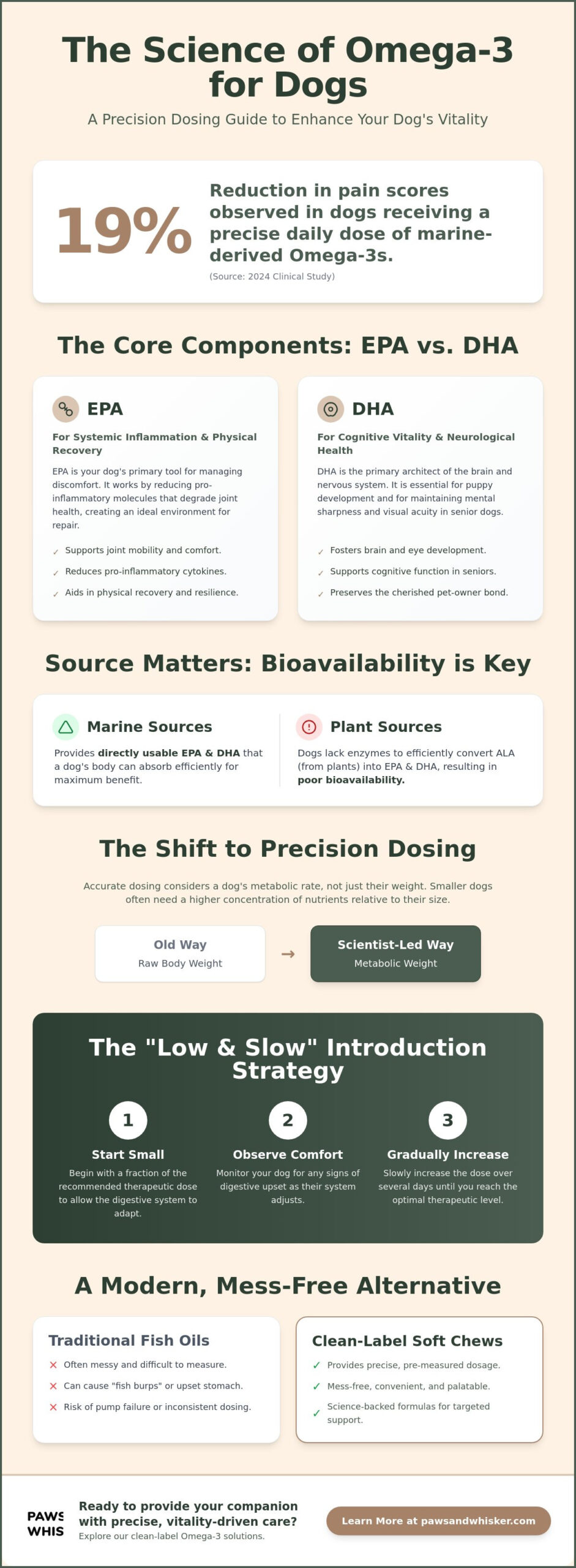
Did you know that a precise daily dose of marine-derived omega-3s can reduce a dog’s pain scores by 19%? It’s a heart-lifting statistic from a 2024 study that proves our companions don’t have to suffer in silence as they navigate the challenges of aging or stiff joints. You likely already know that high-quality oils are a cornerstone of canine wellness; yet, standing in the supplement aisle often feels more like a confusing math test than an act of care. Between cryptic labels and the fear of causing “fish burps” or upset stomachs, many devoted pet parents find themselves paralyzed by the simple question: how much omega 3 should I give my dog?
We believe that deep affection should be paired with clinical precision to truly honor your pet’s health. In this scientist-led guide, you’ll discover the exact EPA and DHA requirements tailored to your dog’s weight and unique biological needs. We’re moving away from a volume-based approach to provide a science-backed dosing framework that prioritizes vitality-driven milligrams. You’ll gain a clear understanding of the specific concentrations required for restoration, giving you the confidence to choose a pure, clean-label source that supports your dog’s journey toward physical vigor and long-term vitality.
Key Takeaways
- Learn to distinguish between EPA for systemic inflammation and DHA for cognitive vitality to ensure your companion receives the specific cellular support they deserve.
- Master our precision dosing framework based on metabolic weight to determine exactly how much omega 3 should I give my dog for optimal restoration and physical vigor.
- Discover why chronic skin irritation requires targeted DHA concentrations to nurture the lipid barrier and bring back the natural shine of a healthy, resilient coat.
- Apply the “low and slow” introduction strategy to safeguard your dog’s digestive health and allow their system to adapt comfortably to therapeutic levels of fatty acids.
- Identify the benefits of switching to clean-label soft chews that provide a mess-free, science-backed alternative to traditional fish oil pumps and liquid supplements.
Understanding the Biological Role of EPA and DHA in Canine Vitality
Every living cell in your dog’s body relies on a foundation of structural integrity provided by Omega-3 polyunsaturated fatty acids (PUFAs). These aren’t just “fats” in the dietary sense; they’re essential building blocks that the canine body cannot produce on its own. When you wonder how much omega 3 should I give my dog, you’re actually asking how much cellular restoration and protection your companion needs to thrive. These molecules act as sophisticated biological messengers, signaling the body to shift from a state of distress and inflammation toward one of active recovery and vitality.
While many products highlight plant-based sources like flaxseed, the science tells a different story. Dogs lack the specific enzymes required to efficiently convert Alpha-Linolenic Acid (ALA) from plants into the usable forms of Eicosapentaenoic Acid (EPA) and Docosahexaenoic Acid (DHA). This metabolic bottleneck means that plant-based oils often fall short of providing the deep, restorative benefits your pet requires. To truly support their well-being, we must look to marine-based sources that provide these fatty acids in their most bioavailable and potent forms.
Distinguishing between the two primary marine acids is vital for precision care. EPA is your dog’s primary tool for managing systemic inflammation and physical recovery, while DHA focuses its efforts on the intricate highways of the brain and eyes. When determining how much omega 3 should I give my dog, you must consider their specific life stage and health challenges. A dog struggling with mobility needs a different balance than a puppy learning new commands or a senior dog whose world is becoming a bit more dim. By focusing on these specific milligrams, you move beyond generic supplementation toward a truly individualized health strategy.
The Inflammation Bridge: How EPA Supports Joint Mobility
EPA serves as a powerful ally in the fight against silent discomfort. It works by reducing the concentration of pro-inflammatory cytokines that often degrade the delicate environment of the joint capsule. This metabolic action creates a beautiful synergy when paired with high-quality joint supplements for dogs, as the Omega-3s prepare the cellular landscape for structural repair. The therapeutic threshold for joint support is the specific milligram concentration of EPA required to effectively suppress the production of pro-inflammatory cytokines within the joint capsule.
The Cognitive Connection: DHA for Brain and Eye Development
While EPA manages the body’s physical resilience, DHA is the primary architect of the nervous system. It constitutes a massive portion of the brain’s gray matter and the retina, making it indispensable for maintaining a dog’s mental sharpness through late life. A nurturing expert recognizes that the role of fatty acids in senior dog diets is not just about nutrition, but about preserving the cherished bond between pet and owner by supporting cognitive function and visual acuity. Whether you are fostering a puppy’s rapid brain growth or protecting a senior’s golden years, DHA provides the neurological integrity needed for a life of clarity and connection.
Calculating the Ideal Omega-3 Dosage by Metabolic Weight
Determining the correct dosage for your companion requires a shift in perspective from raw body weight to metabolic activity. While most pet parents are used to dosing based on simple pounds, a scientist recognizes that a ten pound dog has a significantly higher metabolic rate per pound than a hundred pound giant. This means that finding the answer to how much omega 3 should I give my dog starts with understanding that smaller bodies often require a higher concentration of nutrients relative to their size to maintain cellular integrity. By using metabolic weight, we ensure that every cell receives the exact concentration of EPA and DHA it needs for restoration without overwhelming the system.
Precision is the highest form of care. When you begin this journey, it is essential to distinguish between a maintenance dose and a therapeutic dose. A maintenance dose focuses on the daily preservation of health, keeping the coat lustrous and the immune system resilient. Conversely, a therapeutic dose is a targeted intervention for chronic concerns like osteoarthritis or severe skin allergies. Accessing reliable veterinary information on omega-3s clarifies why these ranges vary so significantly based on the biological intent of the supplement. We always recommend a “low and slow” introduction, starting at the bottom of the maintenance range and gradually increasing over two weeks to allow your dog’s pancreas and digestive tract to adapt comfortably.
Omega-3 Dosing Chart for Dogs (Maintenance vs. Therapeutic)
Use the following framework to identify the target milligrams of combined EPA and DHA for your dog. Always check the supplement label for the actual milligram sum of these two specific acids, rather than just the total “fish oil” volume.
| Dog Weight (lbs) | Maintenance Dose (mg) | Therapeutic Dose (mg) |
|---|---|---|
| Small (Under 20 lbs) | 250-450 mg | 500-1,000 mg |
| Medium (21-50 lbs) | 500-1,200 mg | 1,200-2,500 mg |
| Large (Over 50 lbs) | 1,200-2,500 mg | 2,500-5,000 mg+ |
Why Your Dog’s Current Food Might Not Be Enough
Modern commercial diets are often imbalanced at a molecular level. Most kibble undergoes high heat extrusion, a process that easily oxidizes fragile fish oils and renders them ineffective or, in some cases, inflammatory. Many standard diets also contain an Omega-6 to Omega-3 ratio as high as 30:1, which can drive systemic inflammation. Targeted supplementation restores the natural balance, making high-quality dog supplements an essential part of a restorative diet. To support this delicate equilibrium, you might find that a clean-label soft chew offers the stability and ease your routine requires.
Adjusting Dosage for Skin Allergies, Joints, and Senior Health
Precision dosing is an act of deep empathy. While metabolic weight provides the essential foundation, your dog’s specific health journey dictates the ultimate concentration of fatty acids required for true restoration. If you’re managing a chronic condition, the question of how much omega 3 should I give my dog shifts from basic maintenance to a targeted therapeutic intervention. By aligning dosage with biological intent, we move beyond generic care toward a sophisticated protocol that honors your pet’s internal struggle for balance. This tailored approach ensures that every milligram serves a purpose, whether it’s calming an overactive immune system or lubricating stiff, aging joints.
The Skin Barrier: Omega-3 for Itch and Allergy Relief
Itchy, flaky skin is often a visible sign of a compromised lipid barrier. When this protective shield fails, it leads to transepidermal water loss, leaving the skin vulnerable to environmental irritants and persistent dryness. High concentrations of DHA are particularly effective here, acting as a nurturing architect that reinforces the skin’s cellular walls from the inside out. For pets suffering from “Omega-3 responsive dermatosis,” a condition characterized by chronic scratching and dull fur, increasing the dosage toward the therapeutic range can provide profound relief. These fatty acids modulate the immune response to environmental triggers, serving as a cornerstone for allergy relief for dogs by calming the inflammatory pathways that cause the sensation of an “itch.”
Senior Support: Protecting Aging Hearts and Kidneys
Caring for a senior dog is a legacy project dedicated to their long-term comfort and dignity. As your companion ages, their metabolic efficiency naturally declines, making the purity and bioavailability of their supplements more critical than ever. Research indicates that high-potency omega-3 formulas with elevated EPA levels can reduce joint swelling in aging dogs by up to 40%. This physical rejuvenation is vital for maintaining mobility, but the benefits extend to the body’s most essential organs. EPA provides cardiovascular support by helping to regulate heart rhythm and maintain healthy blood pressure, while the anti-inflammatory properties offer renal-protective benefits for aging kidneys. Following established veterinary guidelines for omega-3 dosage ensures you’re providing enough support to protect these vital systems without causing metabolic stress. This heart-centered approach to senior care focuses on rejuvenating their physical vigor, allowing them to remain an active and present part of your family story.
Safety First: Side Effects and Overdose Prevention
Protecting your dog’s well-being requires a careful balance between therapeutic efficacy and digestive comfort. The most frequent concern for pet parents is whether a new supplement will lead to gastrointestinal distress or diarrhea. It’s a valid worry. While these fatty acids are essential for restoration, a sudden influx of lipids can overwhelm the pancreas if not introduced with meticulous care. When considering how much omega 3 should I give my dog, the answer must always prioritize a gradual adaptation to prevent the unspoken discomfort of an upset stomach.
Signs of omega-3 intolerance often manifest as loose stools, a persistent fishy odor on the breath or skin, or a subtle sense of lethargy. While rare, serious risks like impaired blood clotting or Vitamin A toxicity can occur, particularly when using unrefined sources like cod liver oil. Our commitment to transparency means highlighting these risks so you can act as a truly informed caretaker for your animal family member. By choosing purified, high-potency formulas, you minimize the risk of contaminants while maximizing the potential for physical vigor.
For a precise and gentle way to support your dog’s wellness journey, explore our Skin & Coat Omega-3 Soft Chews, which are formulated for easy digestion and maximum purity.
The “Low and Slow” Introduction Protocol
To ensure a smooth transition toward recovery and strength, follow this structured adaptation period. This method allows your dog’s metabolic pathways to adjust without stress.
- Step 1: Begin with only 25% of the target therapeutic dose for the first five days.
- Step 2: Closely monitor stool consistency and energy levels to ensure their system is processing the oils effectively.
- Step 3: Gradually increase by 25% increments every week until the full dosage is reached.
When to Consult Your Veterinarian
A partnership with a medical professional is the cornerstone of a heart-centered wellness plan. Certain conditions require extra caution before you decide how much omega 3 should I give my dog. Dogs with a history of pancreatitis, bleeding disorders, or those scheduled for upcoming surgery should have their dosage closely managed by a vet. High doses of marine oils can interact with medications like NSAIDs or blood thinners, potentially increasing the risk of bruising. By working alongside a professional, you ensure that your dog’s journey toward rejuvenation remains safe and restorative.
The Paws & Whiskers Standard: Clean-Label Omega-3 Excellence
The journey to restoration begins with a commitment to uncompromising purity. At Paws & Whiskers, our philosophy is rooted in a sophisticated blend of scientific rigor and deep empathy for the animals we serve. We believe that a “Wise Caretaker” shouldn’t have to choose between clinical efficacy and heart-centered care. When you are calculating how much omega 3 should I give my dog, you deserve a product that matches the precision of your math with the purity of its ingredients. Our Skin & Coat Omega-3 Soft Chews are crafted to bridge the gap between nature and the laboratory, ensuring your pet receives a precise, bioavailable dose without the hidden fillers or synthetic dyes that often clutter traditional supplements.
Transparency is the anchor of our mission. We understand the emotional vulnerability of pet ownership, which is why our formulations are meticulously prepared to support organic well-being. By focusing on rejuvenation and physical vigor, we move away from the clinical coldness of traditional supplements toward a more holistic approach to animal wellness. This commitment ensures that every milligram you provide serves as a building block for a life of comfort and movement.
Why Soft Chews Beat Liquid Fish Oil
Precision is difficult to achieve with a liquid pump. Every time you open a bottle of fish oil, the contents are exposed to air and light, triggering a rapid oxidation process that can turn beneficial fats into inflammatory burdens. Liquid dispensers often lead to a “guesstimate” of the actual milligram intake, making it nearly impossible to follow a scientist’s guide to precision dosing. Our soft chews eliminate this uncertainty by providing a consistent dosage-per-chew, ensuring your dog receives exactly what their metabolic weight requires. Beyond the science, we’ve focused on palatability. By transforming a medical necessity into a moment of affection, wellness becomes a joyful ritual rather than a chore.
Purity and Transparency: Our Manufacturing Promise
Trust is built through transparency and meticulous preparation. We source our oils from pristine, cold-water fish, utilizing molecular distillation to remove heavy metals like lead and mercury. Every batch undergoes rigorous third-party testing to validate these standards, and we manufacture exclusively in FDA-registered facilities to ensure regulatory compliance. As a nurturing expert, we choose triglyceride forms of omega-3s because they mirror the way fats occur naturally in the body. Research from 2024 suggests that clinical-grade pet oils with superior distillation and antioxidant preservation can have a 20% higher bioavailability. This commitment ensures that your dog’s journey toward health is supported by the highest standards of integrity.
Nurture your dog’s coat and joints with our Skin & Coat Omega-3 Soft Chews.
Empowering Your Dog’s Journey Toward Lasting Vitality
Our vet-approved formulations are meticulously prepared in FDA-registered US facilities to guarantee the clean-label excellence your animal family members deserve. Every soft chew is a science-backed promise of rejuvenation, free from the oxidation risks of liquid pumps and hidden synthetic fillers. Explore our Nurturing Skin & Coat Omega-3 Soft Chews to provide the precise, restorative care your pet needs to thrive. We’re here to walk this path of hope and physical vigor alongside you and your cherished friend.
Frequently Asked Questions
Can I give my dog human fish oil capsules?
It’s generally not recommended to give human fish oil capsules to your companion. Human products often contain additives like xylitol that are toxic to dogs; additionally, the concentrations of EPA and DHA are calibrated for human metabolic rates rather than canine needs. Using a formula specifically designed for animals ensures you aren’t accidentally introducing harmful fillers while attempting to support their recovery and physical vigor.
How long does it take for Omega-3 to show results in dogs?
Visible improvements in your dog’s condition typically require consistent supplementation over several weeks. You might notice a shinier, more lustrous coat within four to six weeks, while improvements in joint mobility or atopic dermatitis often take eight to twelve weeks to manifest. This steady progression toward restoration reflects the time needed for fatty acids to fully integrate into the cellular membranes and begin their nurturing work.
What is the difference between fish oil and salmon oil for dogs?
Salmon oil is a specific single-source oil, while “fish oil” is often a blend of small cold-water fish like anchovies and sardines. These blends are frequently preferred by scientists because they tend to have higher concentrations of EPA and DHA and a lower risk of heavy metal accumulation. Both provide essential support, but a high-potency blend often offers a more robust profile for rejuvenation and long-term health progress.
Can a dog have too much Omega-3?
Yes, a dog can consume excessive amounts of these fatty acids, which is why determining how much omega 3 should I give my dog with precision is so vital. Overdosing can lead to loose stools, weight gain, or in rare cases, issues with blood clotting and immune function. Following a science-backed dosing framework protects your pet from these metabolic stresses while ensuring they receive the restorative benefits required for cellular integrity.
Is it better to give Omega-3 in the morning or at night?
The specific time of day is less important than consistency and pairing the supplement with a meal. Giving Omega-3s with food significantly increases absorption rates and helps prevent the digestive discomfort or “fish burps” that can occur on an empty stomach. Whether you choose a morning or evening ritual, the goal is to maintain a steady level of these biological messengers in their system for continuous recovery.
Should I give my dog Omega-3 if they are already on a “joint diet” food?
Most dogs benefit from additional supplementation even if their kibble is labeled for joint health. High-heat processing used in commercial manufacturing often oxidizes fragile fish oils, rendering them less effective by the time they reach your dog’s bowl. Additionally, AAFCO standards don’t require minimum EPA or DHA levels for adult maintenance, meaning your dog might still be deficient in the essential molecules needed for true physical vigor.
What happens if I miss a dose of my dog’s Omega-3 supplement?
If you miss a scheduled dose, simply resume the regular routine at the next mealtime without doubling the amount. Omega-3 benefits are cumulative, focusing on the long-term saturation of cellular membranes rather than an immediate physiological spike. Doubling a dose could overwhelm your dog’s pancreas and lead to digestive upset, so it’s better to maintain a steady, nurturing pace toward their wellness goals.
Can Omega-3 help with my dog’s anxiety or storms?
While not a direct sedative for acute storm phobia, DHA plays a critical role in maintaining neurological integrity and cognitive sharpness. Supporting the brain’s gray matter can help senior dogs navigate the world with more clarity and less age-related confusion; however, for complex fear-based issues, iwuffyoudogtraining.com offers behavioral consulting to complement your care. When you provide the correct answer to how much omega 3 should I give my dog, you’re investing in their long-term mental resilience and the preservation of your familial bond.

Disclaimer
The information provided in this article is for educational and informational purposes only and is not intended as veterinary advice. Every dog is unique, and health concerns should be discussed with a licensed veterinarian. Always consult your veterinarian before introducing new supplements, changing your dog's diet, or beginning any health or wellness program, particularly if your dog has a medical condition, is pregnant or nursing, or is taking prescription medications.