

What if the key to quieting your dog’s relentless itching isn’t a synthetic prescription, but a botanical “master switch” found in nature? You’ve likely spent restless nights watching your companion chew at their paws or lick inflamed skin, feeling the heavy anxiety that comes with long-term steroid use. It’s frustrating to face a sea of conflicting online advice when all you want is a safe way to help them heal. Determining the correct quercetin dosage for dogs with allergies is the first step in moving from reactive treatment to proactive restoration.
We believe that every animal deserves a life free from the hidden distress of seasonal triggers. This scientist’s guide provides a precise, weight-based dosage chart rooted in clinical logic to ensure you’re supporting your dog’s immune system safely. We’ll explore the fascinating science of mast cell stabilization and show you how to identify high-bioavailability, clean-label supplements that truly make a difference. You’re about to gain the clarity needed to soothe your dog’s skin and return the physical vigor they’ve been missing.
Key Takeaways
- Master the science of mast cell stabilization to understand how this botanical flavonoid quietens the internal alarm system responsible for your dog’s inflammation.
- Calculate the precise quercetin dosage for dogs with allergies using our weight-based formula of 8mg to 12mg per pound to ensure your pet receives the safest level of support.
- Discover why splitting the total daily amount into two doses is essential for maintaining stable blood levels and providing consistent relief throughout the day.
- Learn how to enhance efficacy by pairing quercetin with synergistic ingredients like bromelain and Omega-3 fatty acids to strengthen the skin’s natural lipid barrier.
- Identify the hallmarks of a clean-label supplement, focusing on high-bioavailability formulations that prioritize purity and avoid common irritants like corn, soy, and wheat.
What is Quercetin and How Does It Help Dogs with Allergies?
Watching your dog chew incessantly at their paws or rub their face against the carpet is a heartbreaking experience for any pet parent. These visible signs of distress, often accompanied by red underbellies and watery eyes, are the body’s way of signaling an overactive immune system. Quercetin is a plant-derived polyphenolic flavonoid found in the skins of apples, berries, and leafy greens. When exploring What is Quercetin?, we find a complex antioxidant capable of neutralizing free radicals and soothing the biological “fire” of inflammation. Unlike synthetic options that merely mask the aftermath of an allergic flare-up, understanding the correct quercetin dosage for dogs with allergies allows you to support your companion’s health at a cellular level.
Many holistic practitioners refer to this compound as “Nature’s Benadryl.” While this comparison highlights its efficacy, it’s actually an understatement of the flavonoid’s true power. Standard antihistamines are reactive; they wait for histamine to be released before attempting to block its receptors. Quercetin, however, acts as a mast cell stabilizer. It works upstream to help prevent the initial release of histamine, providing a proactive layer of defense that restores skin health naturally. This shift from reactive treatment to long-term immune support is a cornerstone of restorative canine wellness.
The Role of Flavonoids in Canine Wellness
Antioxidants like quercetin play a vital role in neutralizing environmental oxidative stress, which can otherwise damage healthy cells. Unfortunately, modern canine diets are often deficient in these essential plant compounds because the high-heat processing of traditional kibble frequently destroys delicate flavonoids. By bridging this nutritional gap, you’re not just treating a symptom; you’re providing the biological tools your dog needs for rejuvenation. While synthetic antihistamines can lead to lethargy, natural stabilizers work in harmony with the body’s existing systems to maintain physical vigor.
Common Allergy Triggers Quercetin Can Address
An overactive immune response can be sparked by various environmental and internal factors. Quercetin is particularly effective at addressing the inflammatory cascade caused by:
- Seasonal Pollens and Grasses: The invisible irritants that turn a walk in the park into a week of itching.
- Environmental Mold Spores: Common triggers in damp climates or older homes.
- Dietary Sensitivities: When certain proteins or grains manifest as chronic skin irritation.
- Flea Bite Hypersensitivity: The intense reaction some dogs have to a single flea, which can spiral into widespread dermatitis.
Identifying these triggers is essential, but finding the right quercetin dosage for dogs with allergies ensures that your pet’s internal “alarm system” doesn’t overreact to every passing breeze or minor irritant.
The Science of Histamine: How Quercetin Calms the Mast Cell Storm
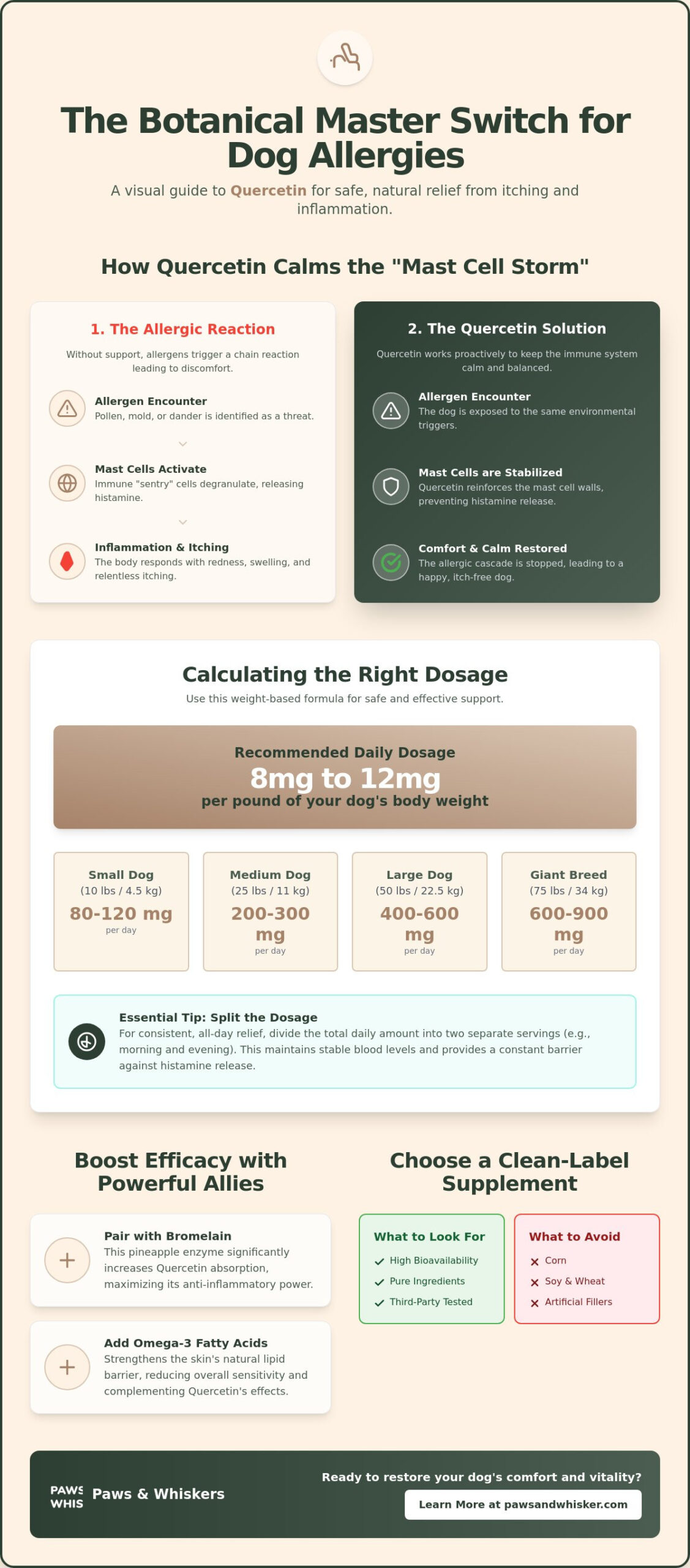
Imagine your dog’s immune system as a vigilant neighborhood watch. The sentries are the mast cells, positioned throughout the skin and respiratory tract, waiting to detect environmental intruders like pollen, mold, or dander. When these sentries perceive a threat, they sound a loud, biological alarm by releasing a flood of histamine. This chemical signal causes blood vessels to dilate and the skin to flush with heat, triggering the intense pruritus, or itching, that keeps your pet awake at night. The ‘Mast Cell Storm’ is the primary biological driver of canine allergic distress.
Quercetin acts as a compassionate ally to your dog’s biology by reinforcing the fragile walls of these sentry cells. It functions as a natural stabilizer, preventing the cells from degranulating and flooding the body with inflammatory chemicals. Beyond simply blocking histamine receptors, this flavonoid inhibits the production of pro-inflammatory cytokines, which are the signaling molecules that keep the immune system in a state of high alert. By calculating the correct quercetin dosage for dogs with allergies, you’re providing the biological tools needed to stop the itching before it starts.
Finding the optimal quercetin dosage for dogs with allergies is about more than just numbers; it’s about quieting that internal noise so your pet can return to a state of calm equilibrium. This methodical approach to immune health moves away from the clinical coldness of traditional treatments and toward a more holistic, heart-centered strategy for animal wellness.
Beyond Itching: Anti-Inflammatory and Antioxidant Benefits
Reducing the fire in the skin is only the beginning of the healing journey. Quercetin provides natural cooling mechanisms that decrease the visible redness and physical heat of inflamed paws and underbellies. For dogs who suffer from seasonal sneezing or watery eyes, this support extends to the respiratory system, helping them breathe easier when the pollen count rises. In our senior companions, the reduction of systemic inflammation is a powerful tool for maintaining physical vigor and strength, ensuring their later years are defined by movement rather than hidden discomfort.
Why Purity Matters in Allergy Management
Managing an allergic dog requires meticulous attention to detail and a commitment to ingredient transparency. Many mass-market products contain “dirty labels” filled with corn, soy, or hidden preservatives that can actually trigger the very immune response you’re trying to soothe. We advocate for science-backed, clean-label supplements, like those discussed in our Allergy Relief for Dogs guide. Ensuring your supplements are produced in FDA-registered facilities is essential for pet safety and regulatory compliance. If you want to support your pet’s long-term health, choosing a pure Allergy & Immune Support Chew is a vital step toward restoration.
Quercetin Dosage for Dogs: Calculating the Right Amount
Precision is the bridge between a supplement that works and one that simply passes through your dog’s system. To move from the distress of constant itching to a state of restoration, you must calculate the correct quercetin dosage for dogs with allergies based on their specific metabolic needs. The standard veterinary-recommended formula is 8mg to 12mg of quercetin per pound of body weight. It’s a range that allows for individual sensitivity; some dogs find relief at the lower end, while those facing more aggressive seasonal triggers may require the higher therapeutic limit.
Stability is just as vital as the amount itself. We recommend splitting the total daily dosage into two equal servings, administered once in the morning and once in the evening. This ensures that blood levels of the flavonoid remain consistent throughout the day, providing a steady shield against the “Mast Cell Storm” we discussed earlier. While synthetic antihistamines often wear off abruptly, a split-dose approach with natural stabilizers creates a smoother, more reliable path to comfort.
Patience plays a key role in this botanical protocol. Most chronic sufferers benefit from a “loading phase,” where the supplement is given consistently for two to four weeks to build up cellular resilience. Once the visible redness subsides and your dog’s physical vigor returns, you can often transition to a lower maintenance dose during the off-season. If your dog’s symptoms are severe, starting at the 12mg per pound mark helps quiet the immune system more rapidly before tapering down to a sustainable level.
Weight-Based Quercetin Dosage Chart
- Small Dogs (Under 20 lbs): For a 10-pound dog, the daily range is 80mg to 120mg. Administration is easiest when the supplement is mixed with a small amount of wet food to ensure every milligram is consumed.
- Medium Dogs (20-50 lbs): A 35-pound companion requires 280mg to 420mg daily. At this weight, it’s important to monitor for digestive tolerance, as larger amounts of plant compounds can occasionally cause mild softening of the stool.
- Large & Giant Breeds (50+ lbs): A 75-pound dog may need 600mg to 900mg. Ensuring these therapeutic levels are met is essential for larger animals, as under-dosing is a common reason why pet parents don’t see the desired results.
Safety Considerations and Potential Side Effects
While quercetin is a gift from nature, it must be used with meticulous care. Always monitor your dog for signs of digestive upset when first introducing the supplement. Quercetin is primarily processed and excreted through the kidneys; because of this, dogs with pre-existing kidney disease require a professional veterinary consultation before beginning this regimen. Additionally, because of its potential impact on blood clotting and enzyme pathways, you should use caution and seek medical advice if your dog is currently taking prescription NSAIDs or blood thinners. Finding the right quercetin dosage for dogs with allergies is a partnership between your intuition as a caretaker and the clinical safety standards of veterinary science.
Maximizing Efficacy: Synergistic Ingredients and Administration
Identifying the appropriate quercetin dosage for dogs with allergies is a vital milestone, but the true transformation occurs when we address bioavailability. In its raw form, quercetin is often difficult for the canine digestive tract to absorb efficiently. This is where the Quercetin-Bromelain connection becomes essential. Bromelain, a proteolytic enzyme extracted from pineapples, acts as a biological escort that increases the absorption of flavonoids. By pairing these two, you ensure that the “master switch” reaches the mast cells where it’s needed most, rather than simply passing through your pet’s system unused.
Purity and synergy work hand in hand to restore your dog’s physical vigor. We often recommend a dual approach that includes Omega-3 fatty acids to create a resilient lipid barrier, supporting skin health from the inside out. While quercetin stabilizes the immune response, Vitamin C acts as a molecular recycler, helping the body reuse quercetin molecules for longer-lasting relief. Quercetin is fat-soluble and is best absorbed when given with a small amount of healthy fat.
Timing Your Dog’s Allergy Support
Precision in timing can significantly amplify the restorative effects of your dog’s regimen. Administering quercetin approximately 20 minutes before a meal allows the compound to be processed without competing with complex proteins for absorption. For dogs with known seasonal triggers, the Wise Caretaker knows that preparation is the best remedy. Starting the protocol at least two weeks before “pollen season” begins allows the body to build a proactive defense. Consistency is the anchor of this process; a daily routine provides the steady immune support your companion needs to avoid the roller coaster of flare-ups and recovery.
Whole Foods vs. Concentrated Supplements
Many pet parents wonder if they can simply add more fresh fruit to their dog’s bowl. This leads to what we call the “Apple Problem.” To reach a therapeutic quercetin dosage for dogs with allergies, a medium-sized dog would need to consume roughly 20 apples a day. This volume of fruit would introduce dangerous levels of sugar and excessive fiber, likely causing severe digestive distress. Concentrated soft chews are the most reliable way to ensure dosage precision without the unwanted additives found in whole food sources. To provide your pet with the meticulous care they deserve, consider our scientifically formulated Allergy & Immune Support Chews which prioritize purity and maximum bioavailability.
Choosing a Clean-Label Quercetin Supplement for Your Dog
It’s a profound irony when a supplement intended to quiet an immune response actually fuels it through poor ingredient choices. Many mass-market options rely on inexpensive fillers like corn, soy, or wheat to bind their chews, yet these are the very proteins that often trigger the “Mast Cell Storm” in sensitive animals. At Paws & Whiskers, we adhere to a standard of meticulous preparation that prioritizes botanical purity. By removing these common irritants and artificial preservatives, we ensure that your dog’s system can focus entirely on restoration rather than defending itself against hidden allergens. Calculating the correct quercetin dosage for dogs with allergies is only half the battle; the source of that dosage determines its ultimate efficacy.
Our Allergy & Immune Support Chews are formulated with a deep understanding of canine physiology. We focus on maximum bioavailability, ensuring the flavonoid is paired with the right carriers to reach the cellular level. Beyond the ingredients, we advocate for rigorous transparency through third-party testing for heavy metals and purity. This clinical reassurance allows you to feel confident in the integrity of what you’re providing to your family member. Transitioning your dog from synthetic pharmaceuticals to natural support should be a gradual, heart-centered process. We recommend working closely with your veterinarian to slowly taper existing medications as the botanical stabilizers begin to build resilience in your pet’s system.
What to Look for on the Supplement Facts Panel
Precision requires looking past the marketing claims and into the data. Always check the Supplement Facts panel for the exact milligram count of active Quercetin Dihydrate, as this is the most stable and well-researched form for canine use. Be wary of “proprietary blends” that hide the specific quercetin dosage for dogs with allergies behind a single number. A trustworthy label will also clearly state its manufacturing standards, such as the NASC quality seal or markers indicating production in an FDA-registered facility. These signatures of quality separate a faceless corporation from a brand dedicated to a legacy of animal wellness.
The Nurturing Path to Restoration
True healing is a journey, not a quick fix. While synthetic antihistamines offer a temporary mask, natural relief takes time to build within the system; set realistic expectations for a two to four-week window before seeing full results. This protocol works best when combined with a clean environment, frequent paw rinses after walks, and a low-stress lifestyle that supports the nervous system. To ensure your dog never faces a gap in their defense, a subscription model can be a wise caretaker’s best tool, providing consistent delivery before peak allergy season arrives. We’re here as your compassionate ally, committed to helping you restore your dog’s physical vigor and the joyful, itch-free life they deserve.
Restore Your Dog’s Vitality and Comfort
Moving from the heavy anxiety of watching your dog suffer to a state of restorative healing requires a blend of clinical precision and deep empathy. You now possess the scientific clarity to determine the ideal quercetin dosage for dogs with allergies, ensuring your pet’s immune “master switch” is supported with meticulous care. By focusing on high-bioavailability ingredients like bromelain and choosing supplements free from hidden irritants like corn or soy, you’re moving away from reactive treatments toward a more holistic path of rejuvenation. This shift doesn’t just address a surface-level symptom; it honors the unspoken bond you share with your companion by prioritizing their long-term organic well-being.
We invite you to take the next step in this journey of restoration and physical vigor. Nurture your dog’s immune resilience with our clean-label Allergy & Immune Support Chews. Each of our vet-approved, science-backed formulas is manufactured in FDA-registered US facilities to ensure the highest standards of safety and purity. We’ve dedicated our mission to providing the clean-label relief your pet needs without the artificial fillers they don’t. Your dog’s path to a vibrant, itch-free life is within reach, and we’re here as your compassionate ally every step of the way.
Frequently Asked Questions
Can I give my dog human quercetin supplements?
You can give your dog human quercetin supplements, but you must be extremely cautious about inactive ingredients. Many human formulations contain xylitol, an artificial sweetener that is highly toxic to dogs, or fillers that may trigger sensitivities. It’s much safer to use a product specifically designed for canine physiology to ensure the correct quercetin dosage for dogs with allergies without hidden risks.
How long does it take for quercetin to start working for dog allergies?
Natural relief is a journey that requires patience, as quercetin typically takes two to four weeks of consistent use to build up in your dog’s system. Unlike fast-acting drugs that mask symptoms, this flavonoid works to stabilize mast cells from within. You’ll likely notice a gradual reduction in redness and itching as the internal “fire” begins to subside over time.
Are there any side effects of quercetin for dogs?
Quercetin is generally very safe, though some dogs may experience mild digestive upset or loose stools when first starting the supplement. Because it’s processed through the kidneys, dogs with pre-existing renal disease should only use it under strict veterinary supervision. Always monitor your companion’s physical vigor and energy levels during the first week of any new botanical protocol to ensure they’re adjusting well.
Can quercetin replace Apoquel or Benadryl for my dog?
Quercetin can serve as a powerful natural alternative to Benadryl or Apoquel, but it shouldn’t be swapped without a transition plan. While Benadryl is a reactive antihistamine, quercetin is a proactive stabilizer that addresses the root of the “Mast Cell Storm.” If your dog is currently on prescription medication, work with your veterinarian to slowly taper those drugs as the natural support takes effect.
Is it safe to give my dog quercetin every day?
Daily administration is the most effective way to maintain stable blood levels and provide continuous immune support. Consistency is the anchor of this botanical strategy, especially during peak pollen seasons when environmental triggers are constant. By ensuring the proper quercetin dosage for dogs with allergies every morning and evening, you provide a steady shield for their skin health and long-term comfort.
Does quercetin help with dog paw licking and hot spots?
Yes, quercetin is highly effective at reducing the systemic inflammation that leads to paw licking and hot spots. By stabilizing the mast cells in the skin, it quietens the intense pruritus that drives your dog to chew or lick incessantly. This allows the skin barrier to heal naturally and prevents the secondary infections often associated with chronic allergic distress.
Can I give quercetin to a pregnant or nursing dog?
We don’t recommend giving quercetin to pregnant or nursing dogs due to a lack of specific clinical research on its safety for developing puppies. During these sensitive life stages, the body’s metabolic demands are unique, and any new supplement could potentially interfere with hormonal balance. It’s always best to prioritize meticulous care and consult your vet for alternative ways to soothe a mother’s allergies.
What should I do if I miss a dose of my dog’s allergy supplement?
If you miss a dose, simply resume the regular schedule with the next scheduled administration. There is no need to double the amount to make up for the missed time, as this could potentially lead to digestive upset. Maintaining a steady, rhythmic routine is more important for long-term restoration than any single serving, so just focus on getting back on track with your next meal.

Disclaimer
The information provided in this article is for educational and informational purposes only and is not intended as veterinary advice. Every dog is unique, and health concerns should be discussed with a licensed veterinarian. Always consult your veterinarian before introducing new supplements, changing your dog's diet, or beginning any health or wellness program, particularly if your dog has a medical condition, is pregnant or nursing, or is taking prescription medications.