

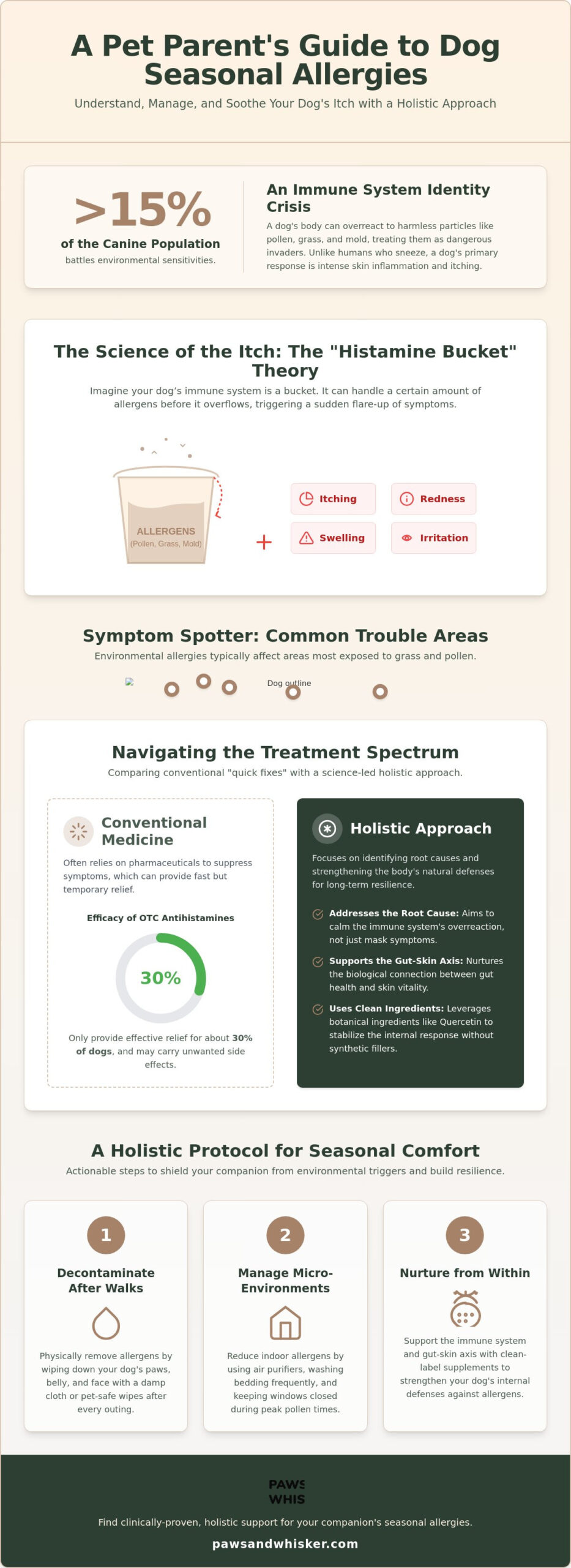
The frantic sound of scratching in the middle of the night is a call for help that every pet parent feels in their soul. You watch your companion paw at their ears until they are raw, feeling that familiar pang of helplessness as another vibrant morning turns into a cycle of physical distress. It is a heartbreaking reality, but finding sustainable dog seasonal allergies relief doesn’t have to mean choosing between your pup’s immediate peace and their long-term health. With over 15 percent of dogs now battling environmental sensitivities, the need for a sophisticated, science-led approach has never been more vital.
A calm, non-itchy dog is the ultimate reward for a proactive caretaker. We understand the fear of relying on pharmaceutical “quick fixes” that might carry unwanted side effects, and you deserve a path that honors your dog’s delicate biology while providing clinical results. This guide bridges the gap between rigorous veterinary science and heart-centered holistic care to help you navigate the 2026 allergy landscape with total confidence. You will learn to identify the root causes of immune overreaction, understand the latest clinical advancements in itch management, and implement a clean-label maintenance routine that supports the vital gut-skin axis for lasting restoration.
Key Takeaways
- Understand why your dog’s skin is the primary site of their immune system’s identity crisis and how a weakened dermal barrier allows allergens to take hold.
- Compare the efficacy of conventional medications against holistic alternatives, including why over-the-counter antihistamines only provide effective dog seasonal allergies relief for about 30 percent of pups.
- Apply a simple protocol of post-walk decontamination and micro-environment management to physically shield your companion from invisible environmental triggers.
- Learn how clean-label supplements use botanical ingredients like Quercetin to stabilize your dog’s internal response without the irritation of synthetic fillers.
Understanding Seasonal Allergies: Why Your Dog’s Skin is the First Line of Defense
Watching your companion struggle with an invisible enemy is emotionally exhausting for any dedicated caretaker. When your dog experiences what we call an “immune system identity crisis,” their body begins to treat harmless particles as dangerous invaders. This condition, known as atopic dermatitis, is a biological misunderstanding where the immune system overreacts to the surrounding world. While humans often respond to allergens with watery eyes or sneezing, dogs possess a unique physiological makeup that directs the majority of their inflammatory response to the skin. This is why finding effective dog seasonal allergies relief starts with looking at the dermis, not the respiratory system.
In 2026, we continue to see a rise in sensitivities to common environmental triggers like tree pollen, various grasses, and mold spores. Your intuition as a caretaker is your most valuable tool; that repetitive paw licking or face rubbing isn’t just a habit. It’s a clear signal that your dog’s skin barrier is under siege. This Overview of canine allergies highlights how these environmental factors create a complex web of discomfort that requires a nuanced, scientific approach to resolve. By understanding these triggers, you can move from a place of helplessness to one of informed advocacy for your pup’s comfort.
The Difference Between Seasonal and Food Allergies
Distinguishing between a reaction to “what they eat” and “where they walk” is crucial for a successful recovery plan. Environmental allergies are significantly more common than food sensitivities, affecting over 15 percent of the canine population. If you notice flare-ups specifically during the spring and fall, you’re likely dealing with a seasonal issue. A helpful rule of thumb is to look at the contact points. Environmental triggers typically affect the feet, belly, and armpits, the areas most exposed to the grass and pollen during a daily walk. Food allergies, by contrast, tend to cause more generalized itching or gastrointestinal upset year-round.
Signs Your Dog is Reaching Their Allergic Threshold
Every dog has an “allergic threshold,” a limit to how much environmental stress their body can handle before symptoms become visible. Once this limit is breached, you’ll see distinct signs of distress. This often manifests as vivid redness between the toes and around the muzzle where the skin is thinnest. Chronic ear irritation is another secondary sign; since the ear canal is lined with skin, frequent head shaking or a yeasty smell often indicates an environmental flare-up. Even the “scooting” mystery can be linked to this; inflammation in the surrounding tissues often mirrors the inflammation seen on the paws. Recognizing these early markers allows you to intervene with dog seasonal allergies relief before the cycle of scratching leads to secondary infections.
The Science of the Itch: How Histamines Disrupt Canine Harmony
To truly help your companion, we must look beneath the surface at the microscopic level where their discomfort begins. Within your dog’s dermis live specialized immune cells known as Mast Cells. These cells act as a biological alarm system. When they encounter a perceived threat, such as a specific pollen or mold spore, they “degranulate,” releasing a flood of histamine into the surrounding tissue. This chemical release is what causes the immediate heat, redness, and swelling you see during a flare-up. By understanding this chemistry, you can better implement a strategy for dog seasonal allergies relief that targets the source rather than just the symptoms.
Many owners feel confused when their dog seems fine one day and miserable the next. This is best explained by the “Histamine Bucket” theory. Imagine your dog’s immune system as a bucket. It can hold a certain amount of environmental stress, such as pollen, dust, or dander, without overflowing. However, once the environmental load hits a specific threshold, the bucket overflows, and symptoms erupt seemingly out of nowhere. Providing proactive immune support can help strengthen your dog’s internal capacity, keeping that bucket from reaching a tipping point during peak seasons.
This internal overflow is often paired with a “leaky” skin barrier. In a healthy dog, the skin cells are tightly packed like bricks in a well-mortared wall. In allergic dogs, those “bricks” are loose, allowing allergens to penetrate deep into the skin where they meet those reactive Mast Cells. Once the reaction begins, the body releases Cytokines, which are the chemical messengers that travel from the site of inflammation to the brain, effectively sending the signal that triggers the uncontrollable urge to scratch.
The Chronic Cycle of Inflammation
Scratching is more than just a reaction; it’s a catalyst for deeper issues. When a dog scratches, they create microscopic tears in the skin barrier. This damage allows opportunistic bacteria and yeast to take hold, turning a simple seasonal reaction into a painful secondary infection. This “Itch-Scratch Cycle” must be broken for real healing to occur. Inflammation isn’t just a surface-level problem. It’s a systemic immune response that can leave your dog feeling lethargic as their body works overtime to fight off perceived invaders.
Why Some Breeds Are More Susceptible
Genetics play a significant role in how a dog handles the world around them. Labrador Retrievers, Golden Retrievers, and Bulldogs are frequently born with a predisposition toward atopy. Their lineages often show a thinner skin barrier or a more reactive immune profile, making environmental management a lifetime commitment for their families. While you can’t change their DNA, you can support their physical vigor by reinforcing the skin barrier through meticulous care and clean-label supplementation, ensuring their genetic tendencies don’t dictate their quality of life.
Natural Relief vs. Conventional Medicine: Navigating the Treatment Spectrum
Choosing a treatment path for your dog is an act of deep affection that requires a clear understanding of the available tools. For many, the first instinct is to reach for pharmaceutical “itch-blockers” like Apoquel or Cytopoint. These medications are highly effective at silencing the neurological signal to scratch, providing near-instant comfort for a suffering animal. However, it’s vital to recognize that while these tools stop the itch, they don’t necessarily address the underlying immune dysregulation. For families seeking sustainable dog seasonal allergies relief, these are often viewed as temporary bridges rather than permanent foundations.
Conventional wisdom often suggests over-the-counter antihistamines as a primary solution. While these are accessible, clinical data suggests they only provide significant relief for approximately 30 percent of dogs with environmental allergies. Unlike humans, dogs have fewer H1 receptors in their skin, meaning drugs like diphenhydramine often cause more drowsiness than actual relief. Steroids are another common intervention, serving as a powerful “off switch” for emergency flare-ups. While life-saving in acute cases, their long-term use can lead to side effects like excessive thirst, panting, and systemic stress on the liver and kidneys.
In 2026, the scientific community is shifting toward “Nutraceuticals” as a sophisticated middle path. These are clean-label, bio-active compounds that work to modulate the immune system’s response rather than simply masking the symptoms. By focusing on botanical origins and purity, these supplements help your dog’s body find its own balance, reducing the frequency and severity of flare-ups over time. This approach honors the animal’s delicate biology while providing the clinical reassurance you need as a wise caretaker.
When to Call the Vet: Identifying Emergency Flare-ups
Sometimes, the immune response escalates beyond home management. If you notice “Hot Spots”—localized areas of intense redness, heat, and moisture—your dog may have a bacterial infection that requires prescription intervention. Signs of systemic stress, such as lethargy or a fever, indicate the body is overwhelmed. A professional diagnosis is also essential to rule out mimics like sarcoptic mange or mites, ensuring your efforts for dog seasonal allergies relief are targeting the correct biological culprit.
The Limitations of Quick Fixes
Relying solely on “quick fixes” can lead to a frustrating “rebound effect.” When certain medications are stopped abruptly, the immune system can respond with an even more aggressive inflammatory surge. Healing is a narrative, not a single event. By building a foundation of resilience through environmental control and high-quality nutrition, you reduce the biological need for heavy pharmaceutical interventions. This long-term focus ensures your companion enjoys a life of movement and vigor without the burden of constant chemical dependency.
A Holistic Protocol for Seasonal Comfort: Actionable Steps for Owners
Creating a sanctuary for your dog requires a shift from reactive care to a proactive daily rhythm. While we can’t control the pollen count outdoors, we can meticulously manage the “micro-environment” your dog inhabits. Effective dog seasonal allergies relief is built on the foundation of reducing the allergen load before it triggers an immune overflow. By following a structured protocol, you can physically shield your companion from the invisible triggers that disrupt their peace.
- Step 1: The Pollen Wipe-Down. After every walk, use a damp cloth to wipe your dog’s paws, underbelly, and muzzle. These are the primary contact points where allergens cling to the fur, eventually migrating to the skin.
- Step 2: Micro-Environment Management. Utilize HEPA air purifiers in the rooms where your dog sleeps and wash their bedding weekly in hot water. This prevents the accumulation of dust mites and trapped pollen within their resting spaces.
- Step 4: Targeted Supplementation. Introduce bio-active compounds like Quercetin, often called “nature’s antihistamine,” and Bromelain. These work together to stabilize mast cells and reduce the systemic inflammatory response.
- Step 5: Monitoring and Documentation. Maintain a simple allergy journal. Note the date, weather conditions, and your dog’s itch level to identify specific patterns that precede a flare-up.
External Soothing: Baths and Topicals
Bathing is a powerful tool, but it must be done with scientific precision. A dog’s skin pH is typically between 6.2 and 7.4, which is much more alkaline than human skin. Using human shampoos can strip their natural oils and worsen the “leaky skin” barrier. Always choose a pH-balanced formula designed specifically for canines. For professional-grade cleaning and care solutions, bonbonpet.com.tw provides specialized products that support skin health. When bathing an inflamed dog, use cool water rather than warm. Cool water helps constrict the blood vessels in the dermis, providing immediate relief from the heat and redness of an allergic reaction. Natural topicals like medical-grade honey or pure Aloe vera can also provide a protective, soothing layer for localized irritations.
Internal Support: The Power of Omega-3s
True resilience starts within the cellular membrane. Incorporating Omega-3 fatty acids for skin barrier health is one of the most effective ways to reinforce the lipid layer of the skin. While plant-based oils like flaxseed contain ALA, dogs are far more efficient at absorbing marine-based EPA and DHA. These fatty acids act as natural anti-inflammatories, helping to “seal” the gaps in a weakened skin barrier. To provide your pup with the concentrated support they need during peak season, consider adding our Skin & Coat Omega-3 Soft Chews to their daily routine to nurture their comfort from the inside out.
Nurturing Resilience: How Clean-Label Supplements Support Long-Term Relief
Sustainable healing is a journey of restoration, not a sprint toward symptom suppression. While previous sections discussed the immediate need to break the itch-scratch cycle, the ultimate goal for any wise caretaker is to foster an internal environment where the immune system no longer views the world as a threat. Achieving true dog seasonal allergies relief requires a shift in focus toward nurturing immune resilience. This means moving away from simply masking a flare-up and moving toward a science-led strategy that stabilizes the body’s reactive pathways from the inside out.
The “Clean Label” philosophy is central to this restorative process. Many mass-market supplements rely on synthetic fillers, artificial colors, and bulk agents that can unintentionally aggravate a sensitive pup’s immune system. When a dog is already in a state of high alert, introducing corn, soy, or chemical preservatives can add unnecessary “fuel” to the inflammatory fire. Our Allergy & Immune Support Chews are formulated with meticulous transparency, utilizing Quercetin, often referred to as “Nature’s Antihistamine,” to help stabilize mast cells before they release the histamines that cause distress.
Beyond botanical support, we must address the vital connection between digestive health and skin integrity, often called the gut-skin axis. By pairing high-quality Colostrum with targeted Probiotics, we provide the immune system with the biological tools it needs to distinguish between actual pathogens and harmless pollen. This dual approach nurtures the body’s natural defenses, ensuring that your dog’s “histamine bucket” remains manageable even during the most challenging seasons.
Ingredient Transparency: What to Look for on the Label
Integrity in manufacturing is the cornerstone of animal wellness. We intentionally avoid corn, soy, and artificial preservatives in our allergy formulas because we believe your dog deserves the same purity you would expect for yourself. Every batch is crafted in USA-based, FDA-registered facilities to ensure rigorous quality control and safety standards. Bioavailability is the critical factor determining how effectively your dog’s body can actually absorb and utilize the botanical compounds provided in each chew. Without high bioavailability, even the best ingredients cannot fulfill their promise of rejuvenation.
Building a Legacy of Health
True biological change takes time and dedication. While pharmaceutical “quick fixes” offer immediate silence, the natural modulation of the immune system typically requires a “30-60 day window” of consistent support to reach peak efficacy. This period allows the bio-active ingredients to build up within the system, creating a protective foundation for long-term allergy management. To ensure your companion never experiences a gap in their care, many families find a subscription model helpful for maintaining that essential, daily protective dose. By committing to this rhythm, you aren’t just managing a seasonal struggle; you’re building a legacy of comfort and physical vigor for the animal you love.
Empowering Your Journey Toward Lasting Comfort
Your journey toward a calm, non-itchy companion is a path of both science and soul. By understanding that your dog’s skin is their primary defense and managing their internal “histamine bucket,” you’ve already taken the most important step toward providing lasting dog seasonal allergies relief. You now have the essential tools to implement a daily protocol of environmental management and targeted nutrition that supports the gut-skin axis rather than just masking the immediate symptoms.
At Paws & Whiskers, we believe in meticulous preparation and ingredient transparency. Our vet-approved, clean-label formulas are manufactured in FDA-registered US facilities to ensure every chew meets the highest standards of purity. With over 1,000 5-star reviews from dedicated pet parents, our approach has become a trusted ally for those seeking a more holistic restoration of their dog’s vigor and physical peace.
Nurture your dog’s immune resilience today with our Allergy & Immune Support Chews. Your companion’s comfort is a legacy of care that begins with a foundation of integrity and scientific rigor. We’re honored to walk beside you in this mission of hope and healing.
Frequently Asked Questions
Can I give my dog human Benadryl for seasonal allergies?
You can give your dog human Benadryl under professional guidance, but it’s often less effective for canines than for humans. While it’s a common over-the-counter option, clinical data suggests only about 30 percent of dogs experience significant relief. Always ensure the formula contains only diphenhydramine and lacks toxic sweeteners like xylitol, which can be fatal to animals.
How can I tell if my dog has seasonal allergies or a food allergy?
The timing of the flare-up and the location of the itch are the clearest indicators for a wise caretaker. Seasonal allergies typically peak in spring or fall and focus on contact points like paws, bellies, and armpits. Food allergies often persist year-round and may be accompanied by chronic gastrointestinal issues or ear infections that don’t follow environmental patterns.
What are the best natural ingredients for dog allergy relief?
Quercetin, Bromelain, and marine-based Omega-3 fatty acids are among the most effective bio-actives for sustainable dog seasonal allergies relief. Quercetin acts as a natural stabilizer for mast cells, while Omega-3s reinforce the skin’s lipid barrier from the inside out. These ingredients work together to modulate the immune response rather than simply masking symptoms with harsh chemicals.
How long does it take for allergy supplements to start working?
Most high-quality allergy supplements require a consistent “30-60 day window” to reach peak efficacy within the animal’s body. Unlike pharmaceutical “quick fixes,” natural modulators need time to build up in the system and strengthen the gut-skin axis. Consistency is the secret to success when nurturing long-term immune resilience and physical vigor in your companion.
Why is my dog licking his paws so much during the spring?
Your dog’s paws are their primary point of contact with environmental triggers like grass and tree pollen during daily walks. When these microscopic allergens penetrate a weakened skin barrier, they trigger an inflammatory response that leads to intense heat and itching. Licking is your dog’s instinctive way of trying to soothe the hidden distress caused by these seasonal invaders.
Can seasonal allergies in dogs cause ear infections?
Seasonal allergies are a leading cause of recurrent ear infections because the ear canal is lined with sensitive skin. When environmental triggers cause systemic inflammation, the ears often become red, swollen, and yeasty. Managing the underlying dog seasonal allergies relief is the only way to break the cycle of chronic ear distress and prevent secondary bacterial growth.
Is there a cure for dog seasonal allergies or just management?
There is currently no permanent cure for atopic dermatitis, so the clinical focus is always on long-term management. By focusing on environmental control and clean-label supplementation, you can keep your dog below their “allergic threshold.” This proactive approach allows them to live a vibrant, comfortable life without the burden of constant immune overreaction.
What months are worst for dog seasonal allergies in the US?
The peak months for environmental sensitivities in the US are typically April through May for tree pollen and September through October for weed pollen. However, these timelines can shift significantly depending on your specific climate and local mold spore counts. Tracking flare-ups in a dedicated journal can help you anticipate these high-risk periods and adjust your dog’s routine accordingly.

Disclaimer
The information provided in this article is for educational and informational purposes only and is not intended as veterinary advice. Every dog is unique, and health concerns should be discussed with a licensed veterinarian. Always consult your veterinarian before introducing new supplements, changing your dog's diet, or beginning any health or wellness program, particularly if your dog has a medical condition, is pregnant or nursing, or is taking prescription medications.