

What if the soft stools and sudden gas you see today aren’t signs of a failing supplement, but the audible start of a microscopic revolution inside your dog’s gut? It’s natural to feel a sense of hesitation when introducing something new; especially when you’ve already spent months managing your companion’s digestive sensitivities or persistent skin allergies. You want scientific reassurance that you’re doing the right thing rather than just adding to the noise of conflicting advice. Learning exactly what to expect when starting dog on probiotics helps transform that initial worry into a confident, nurturing partnership with your pet’s internal health.
This guide provides a week-by-week roadmap of the 28-day microbiome reset, moving from the delicate initial adjustment phase to a state of restored vitality. In 2026, the standard for excellence has shifted toward multi-strain synbiotics that combine live cultures with prebiotics and postbiotic metabolites for comprehensive immune support. We’ll explore how these advanced formulations work within the body to produce firm stools and a lustrous, itch-free coat. You’ll discover the clinical reality of how a balanced microbiome serves as the foundation for your dog’s long-term strength and happiness.
Key Takeaways
- Understand why your dog’s microbiome acts as a “second brain,” influencing everything from emotional well-being to physical mobility.
- Learn exactly what to expect when starting dog on probiotics during the first 72 hours, including how to interpret signs of a successful “microbial war” against pathogens.
- Follow a clear 28-day roadmap that tracks your companion’s journey from initial digestive stabilization to improved nutrient absorption and firmer stools.
- Master the “Low and Slow” dosage method for sensitive systems to help you confidently distinguish between a healthy microbiome reset and a genuine intolerance.
- Explore the vital connection between gut health and systemic inflammation, including how digestive support works in synergy with Joint Support Chews for aging dogs.
The Science of the Second Brain: Why Your Dog Needs a Microbiome Reset
Your dog’s belly is much more than a simple processing plant for kibble; it’s a vibrant, living ecosystem of trillions of microorganisms known as the microbiome. This internal world acts as a “second brain,” sending constant signals to the nervous system that influence everything from your pup’s morning energy to their evening mood. To understand what probiotics are, we must first view them as biological peacemakers designed to restore order to this complex landscape. When this ecosystem flourishes, your dog feels vibrant and engaged. When it falters, they suffer in silence through subtle shifts in behavior and physical comfort.
Modern life often disrupts this delicate balance. Processed diets, environmental toxins, and daily stressors can lead to “dysbiosis,” a state where harmful bacteria outnumber the beneficial ones. This isn’t just a temporary stomach ache; it’s a systemic crisis that leaves your dog’s gut in a state of hidden distress. Knowing what to expect when starting dog on probiotics begins with acknowledging that you aren’t just fixing a symptom. You’re initiating a cellular reset that reconnects the gut-brain axis, helping your dog feel calmer and less reactive to the world around them.
Understanding the Gut-Immune Connection
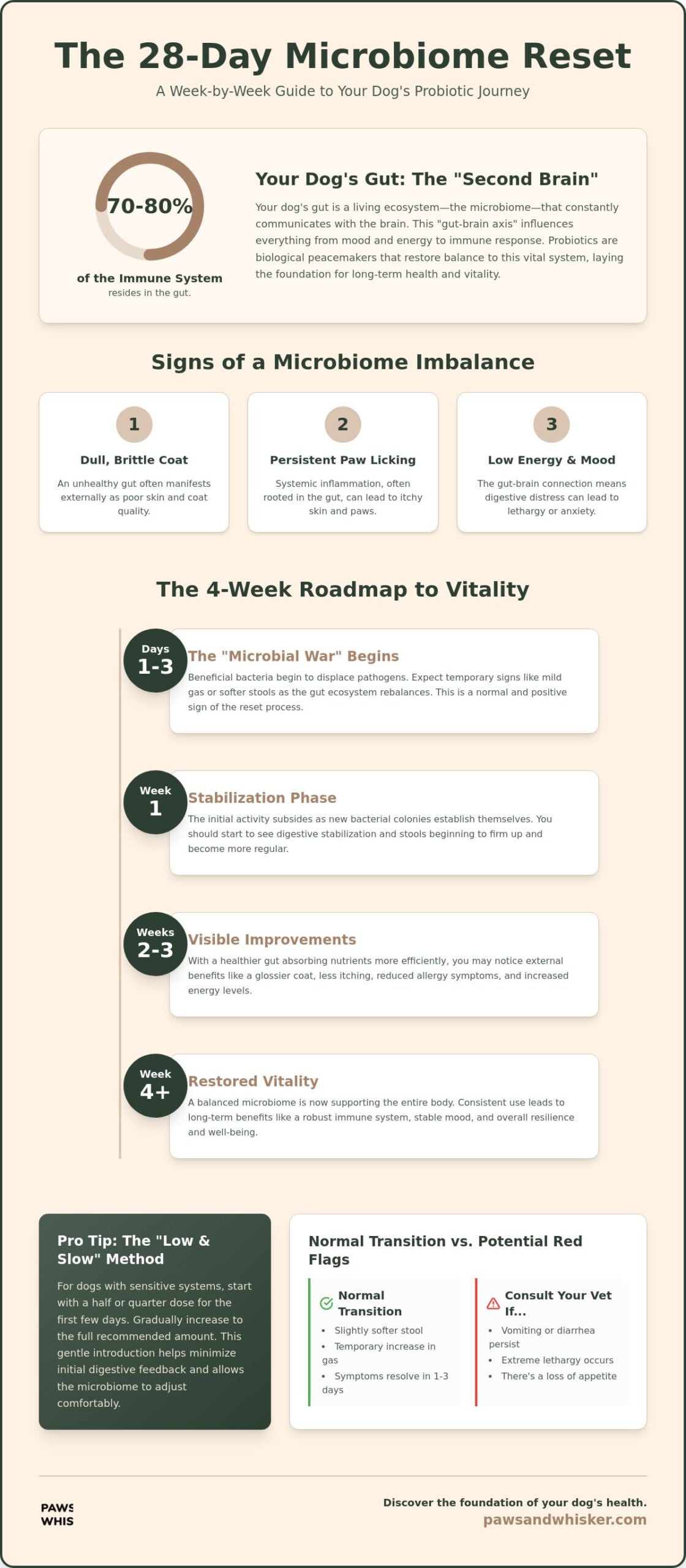
Between 70% and 80% of a dog’s immune system resides directly within the digestive tract. These beneficial bacteria serve as a primary defense against seasonal allergens and environmental pathogens that can cause systemic inflammation. Gut-associated lymphoid tissue, or GALT, acts as the primary engine of canine health by coordinating immune responses across the entire body. By nurturing this tissue through proper supplementation, you provide your companion with the tools they need for long-term immune resilience.
Signs Your Dog’s Microbiome Is Out of Balance
Internal distress often manifests in ways that seem entirely unrelated to the bathroom. You might notice a dull, brittle coat, persistent paw licking, or a sudden lack of interest in their favorite toys. These are often quiet cries for help from an imbalanced gut, especially after a course of antibiotics which can clear out both good and bad bacteria. As you learn what to expect when starting dog on probiotics, you’ll see that this reset is a commitment to restoring their natural vitality. For those managing itchy skin alongside digestive woes, understanding Allergy Relief for Dogs: A Scientist’s Guide to Nurturing Immune Resilience (2026) can help bridge the gap between gut health and skin comfort.
By choosing to intervene now, you’re starting a journey of restoration. This microbiome reset is more than a quick fix; it’s a science-led approach to ensuring your dog lives a life of comfort and strength. Understanding the science behind this “second brain” makes the 28-day roadmap ahead much easier to navigate with confidence.
The First 72 Hours: Navigating the Initial Adjustment Phase
The first three days of any microbiome reset are often the most active for your dog’s internal ecosystem. When you begin this journey, a “Microbial War” ensues within the intestinal lining. Beneficial strains like Lactobacillus acidophilus and Bifidobacterium animalis begin to displace opportunistic pathogens, competing for space and nutrients. This displacement is a necessary step toward restoration, yet it can create temporary digestive feedback. Understanding what to expect when starting dog on probiotics helps you remain a calm, supportive observer during this invisible transition.
Within the first 48 hours, these newly introduced bacteria begin fermenting fiber to produce Short-Chain Fatty Acids (SCFAs) like butyrate. These compounds are essential for fueling the cells of the colon and reducing local inflammation. This biological shift is a primary driver behind the many benefits of probiotics for dogs, laying the groundwork for firmer stools and improved nutrient uptake later in the month. Maintaining a steady routine during these first three days is critical, as it allows the new bacteria to establish a stable colony without the disruption of changing variables.
Is This Normal? The 3-Day Check-in
During this initial window, you might notice “The Transition Shift.” This often manifests as mild flatulence or increased borborygmus, which is just a scientific term for stomach rumbling. While it’s tempting to stop the supplement at the first sign of a loose stool, doing so interrupts the colonization process before it can take hold. Instead, focus on nurturing your companion with plenty of fresh water and consistent meal times. Recognizing what to expect when starting dog on probiotics during this window helps you distinguish between a healthy cellular adjustment and a genuine intolerance.
The Importance of Clean-Label Strains
Many pet owners find that “side effects” are actually reactions to hidden fillers or artificial binders found in low-quality supplements rather than the bacteria themselves. With 62% of dog probiotics on the market priced between $20 and $50, it is vital to look beyond the price tag for markers of true quality like the NASC Quality Seal. At Paws & Whiskers, we prioritize ingredient transparency and botanical purity to ensure your dog’s system isn’t fighting unnecessary irritants. Adhering to FDA-registered manufacturing standards ensures the purity and potency required for a successful microbiome reset. If your dog is currently navigating seasonal sensitivities, our Allergy & Immune Support Chews provide a clean-label way to support their internal defense system during this delicate transition.
The Roadmap to Vitality: A Week-by-Week Guide to Probiotic Progress
The journey toward a balanced microbiome is a steady marathon rather than a sprint. Once you move past the initial 72-hour adjustment phase, your dog’s internal landscape begins a series of predictable, positive shifts. Knowing what to expect when starting dog on probiotics helps you celebrate these subtle milestones, transforming your role from a concerned observer into a confident caretaker. Over the next 28 days, you’ll witness a cellular transformation that begins in the digestive tract and eventually radiates through their coat, energy levels, and even their mood.
As the Cornell University College of Veterinary Medicine explains, the right probiotic strains don’t just sit in the gut; they actively modulate the immune system and metabolic pathways. This week-by-week progression serves as your scientific guide to the restoration of your companion’s organic well-being.
- Week 1: Stabilization. The “intestinal storm” begins to calm. Digestive enzymes start to balance, and the frequency of gas or stomach rumbling significantly decreases as the new bacteria establish their presence.
- Week 2: Absorption. With a more stable environment, your dog’s body can finally focus on nutrient uptake. You’ll likely notice firmer stools and a subtle shift in their energy levels as they extract more fuel from their daily meals.
- Week 3: The Glow. The gut-skin axis becomes the star of the show. Beneficial bacteria support the skin barrier from the inside out, often resulting in less scratching and the emergence of a softer, more lustrous coat.
- Week 4: Systemic Resilience. By the end of the first month, the microbiome is firmly established. This foundation supports long-term immune resilience and helps reduce the inflammatory load that can impact joint comfort.
Week 1-2: The Digestive Foundation
During the first fourteen days, the primary goal is structural recovery. Firm stools are the most reliable indicator that the intestinal lining is healing and that water absorption has normalized. You may also notice a reduction in “dog breath” as the fermentation processes in the upper GI tract stabilize. For a deeper look at how these biological shifts contribute to long-term health, refer to our guide on Dog Supplements: A Scientist’s Guide to Nurturing Your Dog’s Vitality (2026).
Week 3-4: Visible Vigor and Behavioral Calm
As you enter the second half of the month, the benefits move beyond the gut. Many owners report a noticeable reduction in “allergy-style” paw licking, which often stems from systemic inflammation rooted in the digestive system. A balanced microbiome also supports the production of neurotransmitters like serotonin, which can lead to a calmer, more relaxed pup. Don’t be surprised if you see a return of the “zoomies” or playful energy. This renewed vigor is a beautiful sign of internal comfort and the successful reset of your dog’s second brain.
Distinguishing ‘Normal’ Transition from Red Flags
While we have discussed the cellular reset that occurs during the first month, it is vital to recognize when your dog’s system is signaling a genuine intolerance rather than a healthy adjustment. Understanding what to expect when starting dog on probiotics means being able to tell the difference between a productive “microbial war” and a biological red flag. While mild gas is a sign of shifting bacteria, certain symptoms require an immediate pause and professional veterinary consultation to ensure your companion’s safety.
If you observe persistent vomiting, bloody stools, or extreme lethargy, these are not part of a standard microbiome reset. These signs suggest that your dog’s system is either reacting to a specific ingredient or that an underlying condition requires medical attention. A wise caretaker remains observant, always prioritizing the immediate physical comfort of their companion over the completion of a supplement course. In most cases, these severe reactions are rare when using high-quality, species-specific formulations, but your intuition as a pet owner is a powerful tool for monitoring hidden distress.
The Human Probiotic Trap
Adverse reactions are frequently tied to using supplements designed for humans rather than canines. The canine gut operates at a significantly different pH level than ours, which directly impacts bacterial survival and efficacy within the digestive tract. Human supplements often contain hidden irritants like high dairy content or, more dangerously, sweeteners like Xylitol which are toxic to dogs. By choosing species-specific strains, you ensure that the formulation respects the botanical and biological purity your dog’s body requires for rejuvenation and strength—a standard also prioritized by Purrlys in their premium dental probiotics for cats.
Managing a Sensitive System
For dogs with highly sensitive systems, the “Low and Slow” method is the most nurturing approach. Starting with a half-dose for the first seven days allows the intestinal lining to adapt without the overwhelming pressure of a full colony reset. This gradual introduction minimizes the “intestinal storm” we previously identified, making the transition much smoother for your pet’s internal world. Synbiotics serve as the nurturing duo of canine gut health, pairing beneficial probiotics with the prebiotic fiber required to feed and sustain them.
If your dog struggles with seasonal sensitivities or a particularly reactive gut, choosing a meticulously formulated supplement is the first step toward restoration. Our Allergy & Immune Support Chews are designed with this level of scientific rigor and empathy, providing the clean-label support your companion deserves for long-term health.
Beyond the Gut: Holistic Support for Mobility and Comfort
The 28-day reset you’ve embarked upon is more than a digestive fix; it’s the cornerstone of a holistic wellness strategy. When you understand what to expect when starting dog on probiotics, you begin to see how internal balance radiates outward into every aspect of your companion’s life. By lowering the inflammatory load within the gut, you’re effectively quieting the biological noise that often leads to systemic discomfort and premature aging. This connection is why we view the microbiome as the foundation of our entire wellness philosophy at Paws & Whiskers.
Nurturing the “whole dog” means looking beyond the immediate symptoms of gas or loose stools to see the intricate web of systems that keep your pet vibrant. A balanced gut acts as a filter, ensuring that only beneficial nutrients enter the bloodstream while keeping harmful pathogens and inflammatory triggers contained. This internal harmony is essential for maintaining physical vigor, especially as your dog transitions into their senior years and requires more meticulous care to stay active.
Nurturing Joint Mobility Through Gut Health
One of the most profound connections in canine science is the link between intestinal health and musculoskeletal comfort. A compromised gut barrier, often called “leaky gut,” allows inflammatory markers to escape into the bloodstream, where they can settle in the joints and cause stiffness. Pairing a high-quality probiotic with targeted Natural Joint Supplements for Dogs: The Scientist’s Guide to a Nurturing Wellness Journey (2026) provides a dual-action approach to mobility. While ingredients like Glucosamine and Chondroitin support the structural integrity of the cartilage, the probiotic strains manage the underlying inflammation that often makes movement painful for aging dogs.
Your Journey Starts Here
Choosing the right supplement is an act of advocacy for your dog’s long-term well-being. At Paws & Whiskers, we believe that manufacturing in FDA-registered facilities is a non-negotiable standard for safety and purity. This commitment ensures that every chew you provide is free from the hidden irritants that can derail a microbiome reset. As you continue to observe what to expect when starting dog on probiotics, consider the role of consistency. A subscription care model ensures your dog’s internal ecosystem never faces a lapse in support, allowing beneficial bacterial colonies to remain strong and resilient through every season of life.
Our mission is to bridge the gap between the laboratory and the living room, providing you with the scientific reassurance you need to be the best possible caretaker. This journey of restoration is a testament to the bond you share with your companion, moving away from the clinical coldness of traditional supplements toward a more heart-centered approach to wellness. Because a healthy gut is the quietest way to tell your dog you love them.
A New Chapter of Shared Vitality
Your dog’s transition to a balanced microbiome is a quiet revolution that reshapes their health from the inside out. We’ve mapped the first 72 hours of cellular adjustment and the 28-day journey toward firmer stools, a lustrous coat, and renewed energy. Understanding exactly what to expect when starting dog on probiotics empowers you to act as a knowledgeable ally, distinguishing between a healthy reset and the rare red flags that require a pause. This journey is a testament to your dedication as a caretaker, moving beyond temporary fixes to build a foundation of organic well-being.
You can move forward with the clinical reassurance of vet-approved, clean-label formulas designed for long-term immune and joint support. Every chew is manufactured in US-based, FDA-registered facilities to ensure the highest standards of purity and potency for your companion. By addressing the gut-brain axis and systemic inflammation, you’re providing holistic care that supports every stage of their life story.
Nurture your dog’s gut health with Paws & Whiskers science-backed supplements and embrace a science-led approach to their restoration. This commitment is the most profound way to ensure your companion enjoys a lifetime of movement, comfort, and joy.
Frequently Asked Questions
How long does it take for probiotics to start working in dogs?
It typically takes 24 to 72 hours for beneficial bacteria to begin colonizing the intestinal tract. While initial digestive stabilization happens quickly, a full microbiome reset usually requires a consistent 28-day cycle. Understanding what to expect when starting dog on probiotics involves recognizing that deep, systemic changes like improved skin health and immune resilience take several weeks to manifest fully.
Can probiotics cause diarrhea or gas when first starting?
Mild gas, stomach rumbling, or temporary changes in stool consistency are normal signs of a shifting internal ecosystem. These symptoms indicate that the beneficial strains are successfully displacing opportunistic pathogens in the gut. This adjustment phase usually resolves within the first three days as the digestive tract achieves a new, healthier equilibrium and the initial “microbial war” subsides.
Is it okay to give my dog probiotics every day?
Daily supplementation is highly encouraged to provide consistent support against modern environmental stressors and processed diets. Because the microbiome is a dynamic environment, a daily dose ensures that beneficial colonies remain strong and resilient. This steady routine is the most effective way to maintain long-term digestive comfort, consistent energy levels, and robust immune strength.
What happens if I give my dog too many probiotics at once?
Giving a dog too many probiotics at once generally leads to temporary digestive distress, such as loose stools or mild vomiting. While probiotics are remarkably safe, a sudden, massive influx of bacteria can briefly overwhelm the system’s natural balance. If an accidental overdose occurs, provide plenty of fresh water and monitor your pet for any persistent red flags like extreme lethargy.
Should I give my dog probiotics on an empty stomach or with food?
Most veterinarians recommend giving probiotics with a meal to help protect the live cultures from harsh stomach acids. The presence of food acts as a natural buffer, ensuring more beneficial bacteria reach the small and large intestines safely. This practice maximizes the efficacy of the supplement while making the transition smoother for dogs with particularly sensitive stomachs.
Can puppies start taking probiotics, and what should I expect?
Puppies can safely begin probiotics as they transition to solid food to help build a robust immune foundation. You should expect to see more consistent stools and a reduction in the digestive upsets that often accompany growth and dietary changes. Starting early helps program the “second brain” for a lifetime of organic well-being and physical vigor.
How do I know if the probiotics are actually helping my dog?
You’ll know the reset is working when you observe firmer stools, less flatulence, and a noticeable reduction in itchy skin or paw licking. Knowing what to expect when starting dog on probiotics also means watching for behavioral shifts. Many owners report a return of playful energy and a calmer temperament as internal inflammation and digestive discomfort finally subside.
Can I give my dog human probiotics like yogurt or capsules?
Human probiotics are not recommended because they are formulated for a different gut pH and may contain ingredients that are toxic to dogs. Additives like Xylitol or high levels of dairy can cause severe adverse reactions in a canine’s system. Choosing species-specific strains ensures the supplement is both safe and biologically effective for your companion’s unique digestive needs.

Disclaimer
The information provided in this article is for educational and informational purposes only and is not intended as veterinary advice. Every dog is unique, and health concerns should be discussed with a licensed veterinarian. Always consult your veterinarian before introducing new supplements, changing your dog's diet, or beginning any health or wellness program, particularly if your dog has a medical condition, is pregnant or nursing, or is taking prescription medications.