

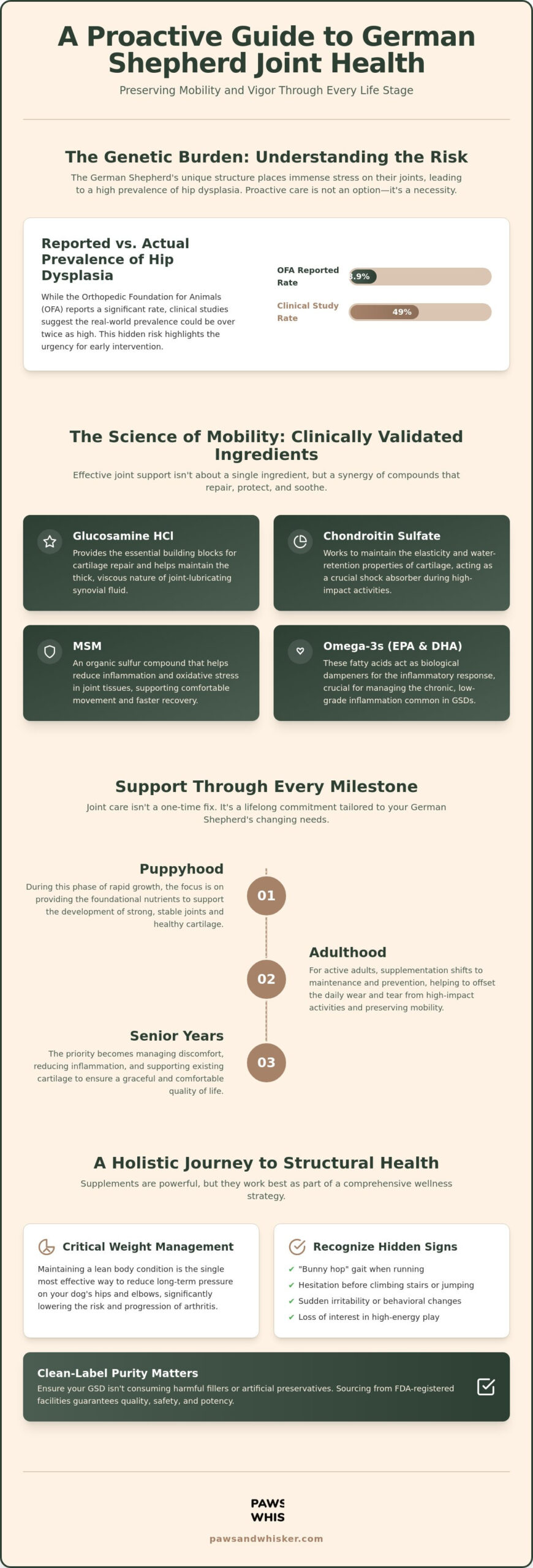
Did you know that while the Orthopedic Foundation for Animals reports an 18.9% rate of hip dysplasia in German Shepherds, some clinical studies suggest the true prevalence could be as high as 49%? It is a staggering reality that weighs heavily on every parent who has watched their once-tireless companion struggle to rise from the floor or hesitate at the bottom of the stairs. You want more than just a temporary fix; you’re looking for a way to preserve that puppy-like vigor well into their senior years. Finding the right joint supplements for german shepherds shouldn’t feel like a guessing game played with complex labels and mysterious filler ingredients.
We understand the deep anxiety that comes with your dog’s genetic history, and we believe that proactive structural support is an act of preservation rather than a late-stage reaction. This guide bridges the gap between heartfelt empathy and rigorous clinical data to help you navigate your dog’s wellness journey with confidence. You’ll discover how to protect your German Shepherd’s mobility through every life stage with science-backed, clean-label joint support. We’re going to explore the specific ingredients that make a clinical difference for large breeds and provide the scientific validation you need to ensure your companion stays active for years to come.
Key Takeaways
- Understand why the German Shepherd’s unique skeletal structure and high-drive nature make early joint intervention a necessity rather than an option.
- Learn how to identify high-quality joint supplements for german shepherds by looking for clinically validated ingredients like Glucosamine, Chondroitin, and MSM.
- Discover how to tailor your dog’s support system through every milestone, from the rapid growth of puppyhood to the graceful maintenance of their senior years.
- Recognize the importance of clean-label purity and why sourcing from FDA-registered facilities ensures your GSD isn’t consuming harmful fillers or artificial preservatives.
- Explore holistic strategies for structural health, including the critical link between weight management and reducing long-term pressure on your dog’s hips.
Understanding the German Shepherd Joint: Why Proactive Care is Non-Negotiable
The German Shepherd is a marvel of canine engineering, yet its iconic silhouette carries a hidden cost. That distinct sloping topline and powerful, reaching gait are the very traits that make the breed so capable in the field, but they also place immense mechanical stress on the pelvic region. For a dog weighing over 60 pounds, every step is a calculation of force and friction. Over time, this repetitive impact leads to the degradation of cartilage and the depletion of synovial fluid. Because of this structural reality, introducing joint supplements for german shepherds isn’t a wait and see strategy. It’s an essential part of responsible ownership that recognizes the unique physical demands placed on this athletic breed.
These dogs are defined by their work ethic and unwavering loyalty to their families. A German Shepherd will often ignore significant internal discomfort to complete a task, follow you on a hike, or guard the home. This high pain tolerance is admirable, but it’s also dangerous for their long-term health. It means that by the time you see a visible limp or a struggle to stand, the underlying inflammation has likely been present for months or even years. Treating joint health as an act of structural preservation allows you to support the joint’s integrity before the damage becomes irreversible, ensuring your companion stays mobile and comfortable throughout their life.
The Genetic Burden: Hip and Elbow Dysplasia in GSDs
Many German Shepherds are born with a genetic predisposition toward joint laxity. This instability triggers micro-trauma, chronic inflammation, and the eventual breakdown of protective tissues. Canine hip dysplasia is a malformation of the ball-and-socket joint that requires lifelong management. Understanding this hereditary burden helps you choose joint supplements for german shepherds that provide the necessary biological support to offset these developmental risks.
Identifying the ‘Hidden’ Signs of Discomfort
Your dog’s body language often speaks long before they let out a whimper. Watch for a “bunny hop” gait or hesitation before climbing stairs. These aren’t quirks; they’re adaptations to avoid pain. Behavioral shifts, such as sudden irritability or a lack of interest in high-energy play, can also signal aching joints. Recognizing these subtle signs early allows for intervention before mobility is severely compromised, helping your dog maintain their puppy-like energy into their senior years.
The Science of Mobility: Essential Ingredients for Large-Breed Structural Support
The structural integrity of a German Shepherd relies on a delicate biological balance. While we see the power of their stride, the microscopic reality involves a complex interplay of cartilage, fluid, and connective tissue. Choosing the right joint supplements for german shepherds requires moving beyond marketing buzzwords and looking at the clinical synergy of specific compounds. When these ingredients work in harmony, they do more than just mask symptoms; they provide the raw materials necessary for cellular repair and maintenance.
Glucosamine and Chondroitin serve as the fundamental architecture for joint health. Glucosamine provides the raw material needed for cartilage repair, while Chondroitin helps maintain the elasticity of that tissue. It is a technical distinction that matters: Glucosamine Hydrochloride is often preferred for its higher purity levels over sulfate versions. When these are paired with MSM (Methylsulfonylmethane), you introduce organic sulfur to the system. This helps reduce oxidative stress in the tissues, facilitating a smoother recovery after a day of herding or high-impact play. Choosing a formula that includes MSM ensures that joint supplements for german shepherds address the cellular health of the connective tissue as much as the bone itself.
Inflammation is the silent enemy of the large-breed joint. Omega-3 fatty acids, specifically EPA and DHA, act as biological dampeners for the inflammatory response. This is particularly vital for GSDs, as noted in this veterinary overview of CHD, where chronic inflammation accelerates joint degradation. While many owners look for a “silver bullet” ingredient, the reality is that the most effective support comes from a multi-action formula. By combining structural building blocks with anti-inflammatory agents, you create a comprehensive safety net that single-ingredient supplements simply cannot match.
Cartilage Regeneration and Fluid Viscosity
Chondroitin does more than just build; it protects. It actively inhibits the enzymes that work to break down joint tissue during periods of high activity. For a high-impact breed like the German Shepherd, maintaining the ‘shock absorber’ effect of synovial fluid is critical. This viscous fluid lubricates the joint, preventing the bone-on-bone friction that leads to long-term discomfort and structural erosion.
Natural Anti-Inflammatories: Turmeric and Green Lipped Mussel
Nature offers powerful tools for managing daily wear and tear. Curcumin, the active compound in Turmeric, helps manage inflammation without the potential side effects associated with long-term NSAID use. Similarly, Green Lipped Mussel provides a unique profile of Omega-3s and glycosaminoglycans not found in standard fish oil. These ingredients are most effective when delivered in bioavailable formats, such as scientifically formulated joint support chews, which ensure your dog actually absorbs the nutrients intended for their recovery. Using a soft chew format often improves the absorption rate of these botanical origins compared to hard tablets, making it an ideal choice for daily, long-term administration.
Timing the Support: From Playful Puppies to Gracious Seniors
German Shepherds don’t just grow; they transform. In their first year, these dogs experience rapid skeletal development that can leave their joints vulnerable if the pace of growth outstrips the strength of their connective tissues. This “Puppy Phase” is a critical window where supporting bone density and cartilage formation can help prevent developmental issues before they take root. By introducing joint supplements for german shepherds early, you’re providing the biological building blocks necessary to support their high-energy exploration and rapid physical maturation.
Proactive Care: Starting Before the Stiffening
Waiting for a visible limp often means waiting until structural damage has already occurred. For a breed as stoic as the German Shepherd, starting joint support as early as 12 months is a logical step in life-stage management. This proactive approach helps extend their active years by maintaining the integrity of the joint capsule before chronic inflammation sets in. For a deeper look at how nutritional needs evolve, you can explore our Natural Joint Supplements for Dogs guide, which provides a detailed life-stage analysis for large breeds.
Managing the Senior Shepherd’s Golden Years
In the “Senior Care” phase, our goal shifts toward rejuvenation and the preservation of independence. Supplements at this stage aren’t a “cure” for age-related changes, but they are a powerful tool for enhancing quality of life and managing the progression of discomfort. It’s also helpful to understand the FDA’s regulation of pet supplements, as being a discerning consumer helps you choose products that are safe for the long-term, daily use required by aging dogs. Helping a senior GSD regain the ability to climb onto the sofa or go for a gentle evening walk is about more than just physics; it’s about honoring the emotional bond you’ve built over a lifetime by restoring their sense of physical vigor.
Beyond the Label: Why Clean-Label Purity Matters for GSD Health
Many owners don’t realize that the “inactive ingredients” in their supplements might be working against their dog’s health. It’s a frustrating paradox. You provide a chew to support their mobility, yet synthetic additives like artificial preservatives can actually trigger systemic inflammation. This counteracts the very benefits of the active ingredients you’re paying for. For a breed already prone to inflammatory joint conditions, these hidden triggers can make a difficult situation worse. True wellness requires transparency from the botanical origin of every ingredient to the final chew your dog enjoys.
In 2026, manufacturing in an FDA-registered facility is a non-negotiable safety standard. This ensures that the facility follows rigorous protocols to prevent cross-contamination and maintain ingredient integrity. When you choose joint supplements for german shepherds, you aren’t just buying a product; you’re trusting a brand with your dog’s internal environment. A clean-label promise means avoiding the corn, soy, and wheat binders that often serve as cheap fillers in lower-quality alternatives. These common allergens can disrupt the delicate balance of a GSD’s digestive system and contribute to the very inflammation we’re trying to soothe.
The Paws & Whiskers Manufacturing Standard
We prioritize small-batch production because it’s the only way to ensure maximum ingredient potency. Large-scale manufacturing often relies on high-heat processes that can degrade delicate enzymes and botanical compounds before they even reach your dog. Our commitment to US-based production and rigorous quality control is detailed in our Dog Supplements guide. Every batch undergoes third-party testing to verify that the concentration of active ingredients matches what’s printed on the label, providing the scientific validation you need for your purchase decision.
The Problem with Fillers in Large-Breed Supplements
For a German Shepherd, weight management is a critical component of joint health. Many “treat-style” supplements are loaded with excessive sugars and starches to make them more palatable, but these empty calories contribute to weight gain. Even a few extra pounds can add significant pressure to a dog’s hips and elbows. Choosing cold-pressed chews is a superior alternative because this method uses pressure instead of high heat to form the chew. This preserves the structural integrity of the active nutrients, ensuring your dog gets the full benefit of our Joint Support Chews without the inflammatory burden of synthetic additives or unnecessary fillers.
A Holistic Journey: Maximizing the Efficacy of Joint Support Chews
Supplements are the nutritional foundation of a mobility-first lifestyle, but they aren’t a standalone silver bullet. To truly honor the physical needs of a German Shepherd, we must look at the scaffolding that surrounds their daily life. While high-quality joint supplements for german shepherds provide the internal raw materials for repair, lifestyle factors like weight management and exercise intensity determine how quickly those materials are depleted. Think of it as a dual philosophy: the supplement heals from within, while your caretaking decisions protect from without.
The physics of a large-breed dog are unforgiving. For every extra pound of body weight a German Shepherd carries, an additional four pounds of pressure is exerted on their hips and knees with every stride. This mechanical stress accelerates the breakdown of cartilage and can render even the most potent supplements less effective. By maintaining a lean physique, you significantly delay the onset of dysplasia symptoms and ensure that the active ingredients in your dog’s regimen can focus on rejuvenation rather than just managing the damage caused by excess weight.
The Synergy of Nutrition and Weight Control
Achieving a lean body condition is one of the most impactful gifts you can give your companion. It’s a delicate balance. When you introduce soft chews as daily supplements, it’s important to monitor their total caloric intake, as these nutrient-dense bites do contribute to their daily limit. We recommend that owners consult their veterinarian for a formal Body Condition Score (BCS) assessment at least once a year to ensure their dog’s weight remains in the optimal range. This professional oversight, combined with consistent use of joint supplements for german shepherds, creates a powerful defense against the progressive nature of joint wear.
Creating a Mobility-Friendly Environment
Your home environment should be a sanctuary for your dog’s skeletal health. For large breeds, the repetitive impact of jumping off a high bed or slipping on hardwood floors can cause micro-trauma to the spine and pelvic joints. Simple adjustments can make a profound difference:
- Strategic Ramps: Use ramps for vehicles and furniture to eliminate high-impact landings.
- Orthopedic Support: Invest in a high-quality orthopedic bed that promotes proper spinal alignment and cushions heavy joints during rest.
- Non-Slip Surfaces: Place runners or yoga mats on slick flooring to provide the traction a GSD needs to stand and move with confidence.
Preserving the Stride of Your Loyal Companion
Your German Shepherd’s life is a story of movement, purpose, and unwavering devotion. Protecting their ability to explore the world by your side requires a proactive strategy that balances clinical evidence with deep empathy. As we’ve discussed, maintaining a lean body condition and choosing the right joint supplements for german shepherds provides the structural safety net this breed inherently needs. By prioritizing transparency and avoiding the synthetic fillers that trigger inflammation, you’re making a choice that honors their internal health as much as their external strength.
We believe that every dog deserves a life of restoration and physical vigor. Our vet-approved formulas are meticulously prepared in FDA-registered US facilities to ensure the highest standards of clean-label purity. Nurture your Shepherd’s mobility with our science-backed Joint Support Chews and provide the foundation they need to stay active from puppyhood into their golden years. You’re not just buying a supplement; you’re investing in the quality of your best friend’s life. We’re honored to be part of your caretaking journey.
Frequently Asked Questions
When should I start giving my German Shepherd joint supplements?
You should ideally begin introducing joint supplements for german shepherds when your dog reaches 12 months of age. While many owners wait for visible signs of stiffness, starting during early adulthood provides proactive care that maintains the integrity of the joint capsule before chronic inflammation occurs. This early intervention supports their high-drive lifestyle and helps preserve their mobility as they transition from active adult to senior years.
Can joint supplements reverse hip dysplasia in German Shepherds?
Joint supplements cannot reverse the physical malformation of hip dysplasia because it’s a structural skeletal issue. However, they are essential for managing the secondary inflammation and cartilage wear that accompany the condition. By providing the building blocks for synovial fluid and cartilage repair, these supplements improve daily comfort and help maintain a higher quality of life for dogs living with this genetic burden.
Are there any side effects to long-term joint supplement use?
Quality joint supplements are designed for safe, long-term daily use with minimal risk of side effects. Some dogs with sensitive digestive systems might experience mild gastrointestinal upset when first starting a new regimen. Choosing clean-label formulas that avoid synthetic fillers and artificial preservatives significantly reduces the likelihood of adverse reactions while supporting your dog’s overall systemic health.
How long does it take to see results from joint chews?
You can typically expect to see visible improvements in your dog’s comfort and mobility within 4 to 6 weeks of consistent daily use. Unlike pharmaceutical painkillers that offer immediate but temporary relief, nutritional supplements work cumulatively to rebuild joint tissues and dampen chronic inflammation. This steady, restorative process requires patience but leads to more sustainable long-term health outcomes for your loyal companion.
Can I give my German Shepherd human glucosamine supplements?
It is not advisable to give your dog human glucosamine supplements because they are formulated for human biology and may contain ingredients that are toxic to canines. Many human products include xylitol, certain sweeteners, or dosages of additives that are unsafe for pets. Canine-specific joint supplements for german shepherds ensure the correct concentration of active compounds while maintaining a safe, pet-friendly ingredient profile.
What is the difference between Paws & Whiskers Joint Support and standard store-bought brands?
Paws & Whiskers Joint Support Chews distinguish themselves through clinical transparency and a commitment to clean-label purity. While many store-bought brands rely on high-heat manufacturing and synthetic fillers like corn or soy, we utilize cold-pressed, small-batch production in FDA-registered US facilities. This preserves the structural integrity of every enzyme and botanical origin, ensuring your dog receives maximum potency without unnecessary inflammatory triggers.
Is it safe to give joint supplements alongside my dog’s current allergy medication?
Joint supplements are generally safe to administer alongside most standard allergy medications, including antihistamines or common immunosuppressants. Because our formulas rely on natural, botanical origins rather than harsh synthetics, they rarely interfere with other treatment protocols. We always recommend a quick consultation with your veterinarian to ensure a coordinated and safe approach to your dog’s specific health profile.
Do German Shepherd puppies need joint supplements during growth spurts?
German Shepherd puppies benefit immensely from joint support during their rapid growth phases to help stabilize developing connective tissues. It’s critical to choose a supplement that provides the building blocks for cartilage without disrupting their delicate calcium and phosphorus balance. Providing this early structural support helps manage the intense physical demands of their growth spurts and sets a foundation for lifelong skeletal health.

Disclaimer
The information provided in this article is for educational and informational purposes only and is not intended as veterinary advice. Every dog is unique, and health concerns should be discussed with a licensed veterinarian. Always consult your veterinarian before introducing new supplements, changing your dog's diet, or beginning any health or wellness program, particularly if your dog has a medical condition, is pregnant or nursing, or is taking prescription medications.