

Watching your companion hesitate at the foot of the stairs is a silent heartbreak that every devoted pet parent understands. You want the fastest relief possible, yet the choice between a dog joint supplement vs prescription medication is rarely a simple matter of speed. It’s a delicate balance between managing acute discomfort and investing in the long-term health of their cellular structure. You aren’t alone in feeling torn between the immediate results of a pharmaceutical and the gentle, restorative promise of natural support.
We understand that you want a science-backed plan that doesn’t force you to choose between safety and efficacy. This guide provides a clear look at how reactive drugs and proactive supplements function within your dog’s body, helping you create a strategy that prioritizes both comfort and longevity. You’ll discover how to decode complex labels and understand the multimodal approach that many modern veterinarians now recommend. By the end of this article, you’ll have the clarity needed to choose a path that restores your dog’s mobility and protects their well-being for years to come.
Key Takeaways
- Understand the fundamental distinction between a dog joint supplement vs prescription medication, where one nurtures structural integrity while the other manages immediate pain signals.
- Identify the critical scenarios, such as post-surgical recovery or advanced osteoarthritis, where pharmaceutical intervention is essential for your dog’s immediate comfort.
- Learn why “clean label” transparency and the exclusion of fillers are vital when choosing botanical-based support for long-term joint health and rejuvenation.
- Discover how to use a mobility severity scale to determine if your dog needs foundational structural support, a prescription, or a combined multimodal strategy.
- Shift from a reactive mindset to a proactive, heart-centered approach that prioritizes your dog’s healthspan and physical vigor through consistent, science-backed care.
Understanding the Fundamental Difference Between Supplements and Medications
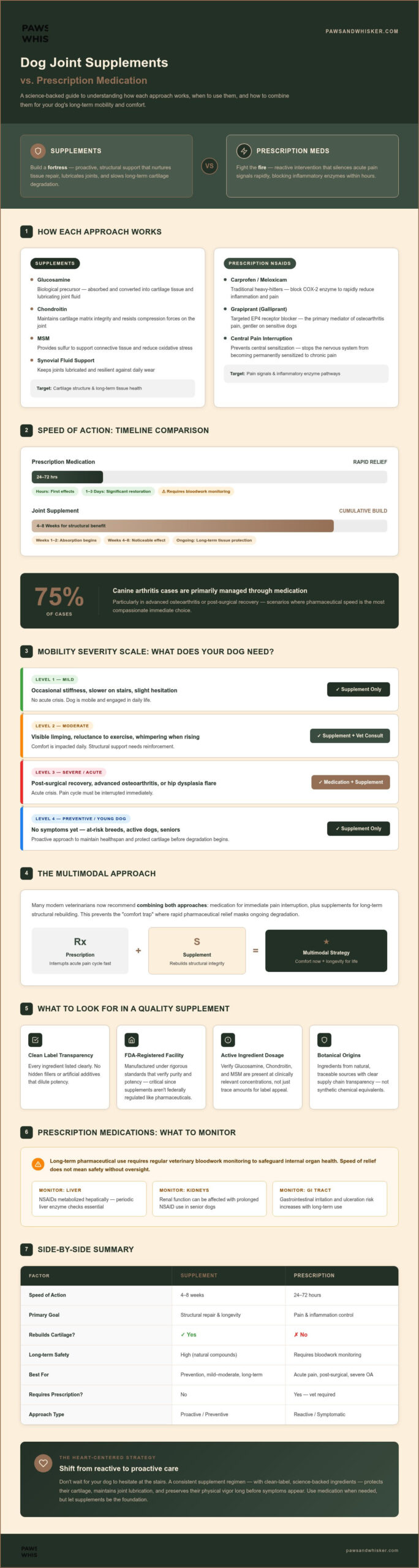
Deciding between a dog joint supplement vs prescription medication is a choice between fighting a fire and building a fortress. Prescription medications act as reactive interventions, designed to silence the immediate alarm bells of pain that ring when a dog’s mobility is compromised. In contrast, joint supplements serve as proactive nutraceuticals that provide the cellular building blocks required for tissue repair and maintenance. While one treats the symptom, the other nurtures the source of the struggle.
The Role of Prescription NSAIDs
Non-Steroidal Anti-Inflammatory Drugs (NSAIDs) are the primary tools veterinarians use for acute distress. These medications work by targeting the COX-2 enzyme to reduce inflammation rapidly, offering relief that is often visible within hours. For conditions like Canine hip dysplasia, where structural abnormalities lead to severe flare-ups or post-surgical pain, these prescriptions are often non-negotiable. It’s vital to recognize that these are symptom-masking agents. They do not rebuild the joint; they simply allow the dog to move more freely by dampening the pain signals sent to the brain.
The Mechanism of Joint Supplements
Joint supplements focus on the quiet, steady work of rejuvenation. They support the health of the synovial fluid and the cartilage matrix, ensuring the joint remains lubricated and resilient against daily wear. Biological precursors are the raw chemical compounds that a dog’s body absorbs and converts into specialized tissues like cartilage or lubricating joint fluid. By providing ingredients like Glucosamine, Chondroitin, and MSM, you’re giving your dog the materials needed to maintain their own biological shock absorbers. This structural support is essential for slowing the cycle of degradation that leads to chronic stiffness.
The timeline of action represents the most significant gap between these two paths. Medications provide immediate relief for acute injury, but they don’t offer the cumulative structural benefits of a dedicated supplement regimen. Because the supplement industry doesn’t face the same federal oversight as pharmaceuticals, choosing products manufactured in FDA-registered facilities is a critical safety step. This ensures that the botanical origins and active ingredients meet rigorous standards for purity and potency. For those seeking a heart-centered approach to long-term mobility, our Joint Support Chews bridge the gap between rigorous science and natural well-being, providing a clean-label foundation for your dog’s physical vigor.
Prescription Medications: Immediate Action for Acute Distress
When a dog is in acute crisis, the conversation shifts from long-term wellness to immediate intervention. While we often weigh the benefits of a dog joint supplement vs prescription medication, there are moments where the clinical speed of a pharmaceutical is the only compassionate choice. Statistics from 2026 indicate that over 75% of canine arthritis cases are primarily managed through medication, particularly when a dog faces advanced osteoarthritis or is recovering from major orthopedic surgery. In these high-stakes scenarios, the goal is to interrupt the pain cycle as rapidly as possible to prevent central sensitization, a condition where the nervous system becomes permanently winded by chronic discomfort.
The “rapid relief” promise is the hallmark of pharmaceutical care. Most owners observe a significant restoration of movement within 24 to 72 hours of the first dose. However, this speed comes with a requirement for clinical vigilance. Long-term pharmaceutical use necessitates regular veterinary bloodwork to monitor internal organ health, ensuring that the path to comfort doesn’t inadvertently compromise other vital systems.
Commonly Prescribed Canine Medications
Veterinary experts categorize these medications based on how they interact with the body’s inflammatory pathways. Carprofen and Meloxicam remain the traditional heavy-hitters, acting as potent inhibitors of the enzymes that trigger swelling and pain. For dogs with sensitive systems, Grapiprant (often known as Galliprant) offers a more targeted approach. It specifically blocks the EP4 receptor, which is the primary mediator of osteoarthritis pain, significantly reducing common gastrointestinal risks. When discomfort involves a neurological component, adjunct medications like Gabapentin are frequently introduced to soothe overactive nerve endings and provide a more comprehensive layer of relief.
Potential Side Effects and Monitoring
Safety is the cornerstone of responsible pharmaceutical management. Reading the FDA facts on pain relievers for pets reveals that while these drugs are highly effective, they require strict professional oversight to protect the gastrointestinal lining and renal function. As a “Wise Caretaker,” you must remain alert for subtle shifts in your companion’s behavior, such as lethargy, appetite loss, or changes in drinking habits, which can signal that the dosage needs adjustment.
Transitioning between different medications also requires meticulous care. Veterinarians mandate a “washout period,” a designated timeframe where the dog is free of all medication, to prevent dangerous drug interactions that could lead to stomach ulceration. If your dog is experiencing mild stiffness rather than acute distress, a targeted Joint Support Chew may provide the structural foundation they need without the systemic load of pharmaceuticals. This proactive support allows you to reserve the heavy-hitters for when they are truly essential, maintaining a balanced and heart-centered approach to your dog’s lifetime mobility.
Joint Supplements: The Long-Term Strategy for Structural Support
Building a foundation for mobility requires patience and a shift in perspective. While we previously discussed the rapid fire-fighting capabilities of pharmaceuticals, the choice of a dog joint supplement vs prescription medication often comes down to the desired outcome: temporary relief or permanent structural resilience. Supplements act as the daily maintenance for your dog’s internal machinery, nurturing the joint environment to slow the natural cycle of degradation. By consistently replenishing the synovial fluid and supporting cartilage density, these nutraceuticals help maintain the healthspan of your companion’s movement.
Bioavailability remains the most critical hurdle in this journey. It isn’t enough for an ingredient to be present on a label; it must be formulated with the molecular precision required to reach the canine joint capsule. This scientific nuance is why many generic options fail to produce results. Ensuring that the active compounds can cross the biological barriers and settle where they are needed most is the difference between a wasted treat and a transformative health intervention.
Science-Backed Ingredients for Mobility
True restoration begins with high-purity building blocks. Glucosamine and Chondroitin serve as the foundational duo, providing the essential matrix for cartilage resilience and shock absorption. To modulate systemic inflammation without the harshness of drugs, many caretakers integrate Salmon Oil, which is rich in Omega-3 fatty acids that soothe the joint environment from the inside out. Botanical allies like Turmeric and Boswellia further support this process, offering nature’s answer to the inflammatory response by gently calming the tissues surrounding the joint and promoting physical vigor.
Why Quality Manufacturing is Paramount
The supplement industry often hides behind a lack of regulation, leading to the prevalence of mystery fillers and synthetic preservatives that can trigger sensitivities. We believe that what is omitted from a chew is just as important as the active ingredients. In canine nutraceuticals, a clean-label refers to a commitment to ingredient transparency where every component is recognizable, purposeful, and free from synthetic additives or deceptive fillers. Paws & Whiskers utilizes FDA-registered facilities to ensure that every batch meets the highest standards of purity and potency. When weighing a dog joint supplement vs prescription medication, the purity of the supplement’s manufacturing becomes the deciding factor for long-term safety and heart-centered care.
Comparative Analysis: When to Choose Supplements, Meds, or Both
Determining the right intervention requires a clear look at the severity of your dog’s discomfort. We use a mobility scale to guide this journey, moving from “slightly stiff” after a long nap to “immobile” during a painful flare-up. For dogs in the early stages of aging or large-breed puppies prone to structural issues, a “Supplement First” approach provides a gentle, proactive foundation. This strategy focuses on long-term healthspan rather than just suppressing the symptoms of a chronic illness. Investing in structural integrity early on often reduces the need for heavy pharmaceutical intervention later in life.
The choice between a dog joint supplement vs prescription medication is not always binary. While medications are essential for managing acute crises, they represent a significant cost-benefit trade-off over time. Long-term pharmaceutical use requires constant clinical monitoring and carries risks to internal organ health. Supplements offer a sustainable alternative for daily maintenance, allowing you to reserve potent drugs for moments when your dog’s physical vigor is truly compromised.
A Side-by-Side Comparison of Roles
Understanding the distinct roles of these treatments is essential for any Wise Caretaker. Each path serves a specific purpose in the journey toward restoration:
- Speed of Action: Prescription medications offer rapid relief, often working within hours. Supplements require a cumulative phase, typically taking 4 to 6 weeks to show visible results.
- Primary Goal: Medications focus on pain suppression and interrupting the inflammatory cascade. Supplements prioritize tissue support and replenishing the joint’s natural lubrication.
- Side Effect Profile: Pharmaceuticals carry moderate to high risks for the liver and kidneys. High-quality, botanical supplements have a minimal to non-existent side effect profile, making them safe for lifetime use.
The Decision Matrix for Pet Parents
Identifying where your dog sits on the spectrum of need helps you act with confidence and empathy. Consider these common scenarios when weighing a dog joint supplement vs prescription medication:
Scenario A: The High-Energy Athlete. If your dog only shows minor stiffness after a day of hiking or intense play, botanical support is often sufficient. This proactive care maintains their resilience without the need for synthetic drugs.
Scenario B: The Senior Companion. For the dog struggling with cold mornings and steep stairs, a multimodal approach is often the most compassionate choice. Combining the immediate relief of a prescription with the structural support of our Joint Support Chews can actually allow for a lower pharmaceutical dose over time, protecting their internal health while restoring movement.
Scenario C: The Recovery Phase. After a ligament tear or orthopedic surgery, medications are non-negotiable for immediate crisis management. Once the acute phase passes, supplements provide the essential building blocks for the long road to structural restoration.
The Paws & Whiskers Philosophy: Clean-Label Support for Lifetime Mobility
The journey toward restoration is rarely found in a single bottle. While the debate of dog joint supplement vs prescription medication often centers on which is better, our philosophy embraces a more holistic truth. We believe in moving beyond the cold, clinical distance of traditional pharmaceuticals toward a heart-centered wellness journey. This approach treats your dog as an integral family member whose comfort is as vital as our own. By bridging the gap between botanical purity and medical validation, we help you create a life where your companion doesn’t just survive but thrives with physical vigor.
True mobility is achieved through a multimodal approach. This strategy recognizes that supplements are most effective when integrated with meticulous weight management and controlled, low-impact exercise. By reducing the physical load on the joints while simultaneously strengthening the surrounding musculature, you create an environment where rejuvenation can actually take place. It’s about looking at the whole animal, not just the ailment.
Designing a Personalized Mobility Protocol
A successful plan starts with foundational nutrition and proper tissue hydration. Integrating Salmon Oil alongside your joint support regimen provides the essential fatty acids needed to soothe systemic inflammation. Consistency remains the secret to structural success. Because these building blocks require steady, daily intake to maintain the cartilage matrix, our subscription model ensures you never miss a dose. We encourage you to partner closely with your veterinarian to monitor progress. Together, you can adjust the balance of your protocol as your dog ages, ensuring their plan remains as dynamic as their spirit.
Restoring the Joy of Movement
There is an unmistakable emotional reward in watching a senior dog rediscover their puppy-bound energy. It is the moment they choose the stairs over the floor, or the way they greet you at the door with a wag that involves their entire body. Our commitment to transparency means we never use shortcuts. We exclude the mystery fillers and synthetic preservatives common in low-tier products, focusing instead on clean-label integrity and medical validation. You can nurture your dog’s mobility with our Joint Support Soft Chews, knowing every ingredient is chosen with affection and scientific rigor. For more insights on this journey, explore A Scientist’s Guide to Nurturing Your Dog’s Vitality.
Choosing a Path of Sustained Vitality
The journey toward restoration is not a choice between two extremes. It’s an intentional balance between immediate relief and long-term structural resilience. While medications manage the acute fires of inflammation, a high-quality supplement provides the steady building blocks for a healthier cartilage matrix. Deciding on a dog joint supplement vs prescription medication requires you to look at your dog’s specific mobility needs; whether they’re a senior struggling with stiffness or a young athlete requiring proactive care. By combining these tools with a multimodal approach, you’re investing in their future healthspan.
Our mission is to provide heart-centered wellness through a vet-approved clean-label formula. Manufactured in FDA-registered US facilities, our chews carry a 4.9/5 star rating from over 10,000 dog parents who have seen their companions regain physical vigor. You don’t have to navigate this alone. We’re here to help you restore the joy of movement for your furry family member. Empower your dog’s vitality with our science-backed Joint Support Chews and embrace a future filled with vibrant, pain-free adventures together.
Frequently Asked Questions
Can I give my dog joint supplements and prescription pain meds at the same time?
Yes, many veterinarians recommend a combined approach to maximize comfort. While prescription drugs interrupt pain signals, supplements provide the essential precursors for tissue repair. This dual strategy allows you to address the immediate distress while simultaneously nurturing the joint’s internal structure. It’s a heart-centered way to manage mobility; however, you should always discuss the specific combination with your vet to ensure the safest balance for your dog’s unique health profile.
How long does it take for a natural joint supplement to start working?
You should expect to see visible results within 4 to 6 weeks of consistent daily use. Unlike prescription medications that offer relief in hours, natural supplements work through a cumulative process. They gradually saturate the joint tissues and replenish the synovial fluid. This slower pace is a sign of structural rejuvenation rather than a temporary chemical mask. Patience is key when building a foundation for your companion’s long-term physical vigor.
Are there any side effects to long-term dog joint supplements?
High-quality, botanical supplements typically have a minimal to non-existent side effect profile. When choosing a dog joint supplement vs prescription medication, the lack of systemic load is a major benefit. While long-term pharmaceutical use requires regular bloodwork to monitor liver and kidney function, clean-label supplements are designed for safe, lifetime consumption. This makes them an ideal choice for the “Wise Caretaker” who prioritizes their dog’s overall wellness alongside mobility.
Does my dog really need a prescription if they are only slightly stiff?
Early-stage stiffness often responds beautifully to a proactive supplement regimen without the need for pharmaceuticals. If your dog only shows minor hesitation on cold mornings, starting with structural support can slow the cycle of degradation. Reserving prescription medications for acute crises or advanced osteoarthritis protects your dog from potential side effects while they are still in the early phases of aging. It’s about choosing the gentlest, most effective tool for the current situation.
What is the best age to start my dog on a joint support supplement?
Large-breed dogs can benefit from joint support as early as 12 months of age. Because these dogs are biologically prone to structural issues, proactive care helps maintain their cartilage density before visible stiffness begins. For other breeds, starting around age five or six is a wise strategy to support their transition into the senior years. Early intervention is the most compassionate way to ensure your dog maintains their “puppy-bound” energy for as long as possible.
Can I use human joint supplements for my dog instead of canine-specific ones?
You should avoid giving your dog human-grade supplements because the dosages and ingredients are specifically tailored for a different biological system. Some human products contain additives like xylitol or high levels of sodium that are toxic or harmful to canines. Canine-specific formulations ensure that the molecular building blocks are bioavailable for a dog’s joint capsule. Using products designed for their unique physiology is the only way to guarantee safety and efficacy.
What happens if I stop giving my dog their joint supplements?
If you stop the regimen, the structural benefits will gradually dissipate over several weeks. Your dog’s body requires a steady supply of precursors like glucosamine to maintain the cartilage matrix and synovial fluid quality. Without these daily building blocks, the joint environment returns to its previous state of vulnerability. Consistency is the anchor of this wellness journey; this is why we recommend a subscription model to ensure your companion never experiences a gap in care.
Is it worth giving a supplement to a dog with severe, late-stage arthritis?
Even in late-stage arthritis, supplements play a vital role in a multimodal management plan. They help improve the quality of the remaining joint fluid and support the surrounding soft tissues, which can lead to a noticeable improvement in daily comfort. When weighing the use of a dog joint supplement vs prescription medication in senior dogs, the supplement may even allow your vet to reduce the dosage of stronger drugs, protecting your companion’s internal organ health.

Disclaimer
The information provided in this article is for educational and informational purposes only and is not intended as veterinary advice. Every dog is unique, and health concerns should be discussed with a licensed veterinarian. Always consult your veterinarian before introducing new supplements, changing your dog's diet, or beginning any health or wellness program, particularly if your dog has a medical condition, is pregnant or nursing, or is taking prescription medications.