

If you reached for a bottle of joint support chews today, would you be surprised to learn that the government hasn’t actually “approved” them for your dog’s safety? Many pet parents assume a federal seal of approval protects these integral family members, yet the reality is that the FDA doesn’t recognize a separate “dietary supplement” category for animals. This means the products we rely on to support our companions’ vitality often exist in a complex regulatory gray area. Understanding are dog supplements regulated by the fda is the first step in moving past the confusion of conflicting label claims and ensuring your pet receives only the purest ingredients.
It is deeply unsettling to realize that the oversight for your dog’s wellness routine isn’t as clear-cut as it is for your own vitamins. You want to provide the best care possible, yet the fear of hidden contaminants can make choosing a supplement feel like a high-stakes guessing game. This article will reveal the truth about pet supplement regulations and teach you how to identify high-quality products in a crowded market. We’ll explore the differences between “food” and “drug” classifications, the role of voluntary standards, and a clear framework for identifying brands that prioritize your dog’s safety and long-term health progress.
Key Takeaways
- Learn the surprising truth about how the FDA classifies wellness products and why the lack of a traditional approval process makes your role as a guardian even more vital.
- Understand why the question of are dog supplements regulated by the fda reveals a regulatory gap, as these products are legally categorized as animal food rather than human-grade dietary supplements.
- Master a professional safety checklist to identify reputable brands by looking for NASC seals and GMP-certified manufacturing standards that ensure ingredient transparency.
- Identify the red flags of poor manufacturing, from hidden fillers to label inaccuracies, so you can protect your companion from ingredients that don’t belong in their bowl.
- Gain the scientific confidence to navigate the market with peace of mind, choosing formulations that bridge the gap between nature and the laboratory for your dog’s restoration.
Are Dog Supplements Regulated by the FDA? The Truth About the “Gray Area”
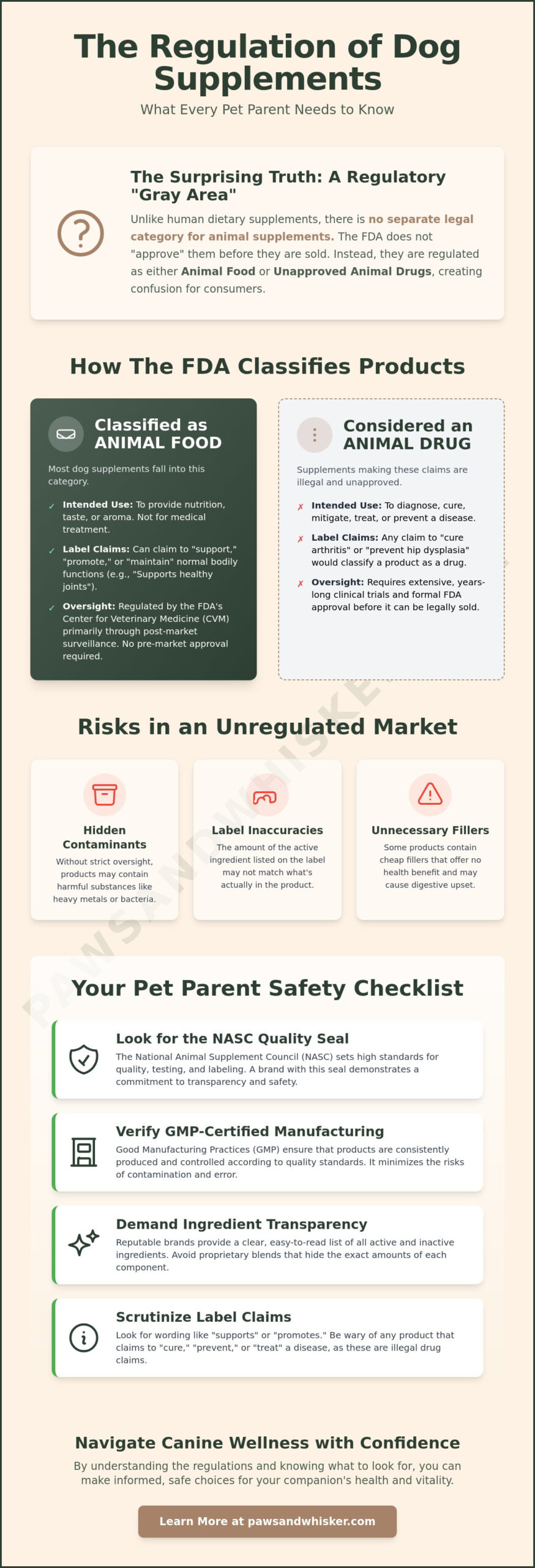
The short answer is no; the FDA does not “approve” dog supplements in the same way it reviews and validates human pharmaceuticals. This realization often brings a sense of unease to pet parents who view their companions as integral family members. While we expect a rigorous safety net, the reality is that are dog supplements regulated by the fda through a framework that differs significantly from human standards. The Dietary Supplement Health and Education Act (DSHEA) of 1994, which provides a clear legal category for human vitamins, specifically excludes animals. Because of this loophole, your dog’s wellness products are caught in a regulatory “gray area,” often treated as either food or unapproved drugs depending on their label claims.
Understanding the landscape of Pet food regulation helps clarify why an “FDA Approved” seal is absent from your favorite bottle of chews. In the eyes of the law, a product is either a food that provides nutrition or a drug that treats a condition. There is no middle ground for “supplements.” However, the absence of a federal seal isn’t a sign of poor quality; it’s simply a reflection of a legal system that hasn’t yet caught up to the sophisticated needs of modern pet wellness. Premium brands often choose to follow voluntary clinical standards to ensure the purity and safety that the law doesn’t strictly mandate.
The Role of the Center for Veterinary Medicine (CVM)
The CVM acts as the watchful eye over what our pets consume, focusing on the safety of animal feed and the efficacy of veterinary medicines. Unlike human drugs that undergo years of pre-market clinical trials, most supplements enter the market without prior FDA vetting. Instead, the agency relies on post-market surveillance and adverse event reporting to identify products that might cause harm. As of 2026, the CVM serves as the primary oversight body for pet supplement safety by monitoring manufacturing facilities and investigating adverse event reports to ensure products do not pose a risk to animal health.
The Legal Distinction: Supplement vs. Drug
The line between a wellness aid and a medication is drawn by “intended use.” If a brand claims their product can “cure” hip dysplasia, the FDA classifies it as an unapproved drug. This is why reputable joint supplements for dogs are carefully labeled to “support” mobility or “maintain” healthy cartilage. By focusing on rejuvenation and vigor rather than clinical “treatment,” these brands comply with the law while providing the botanical purity your dog deserves. This distinction ensures that while the product isn’t a prescription drug, it is formulated with the meticulous preparation required to support your pet’s natural vitality.
How the FDA Classifies Pet Wellness Products: Food vs. Drugs
The Federal Food, Drug, and Cosmetic Act (FD&C Act) is the cornerstone of animal health safety, yet its rigid definitions often leave pet parents searching for clarity. Under this act, the agency doesn’t recognize “supplements” as a unique category. Instead, products are funneled into two distinct streams: food or drugs. This binary choice is central to understanding how are dog supplements regulated by the fda. Most soft chews, like those used for daily wellness, are legally classified as “animal food” or “feed additives” because they’re intended to provide nutrition, aroma, or taste rather than medical intervention. This classification allows brands to focus on rejuvenation and vigor without the decade-long approval process required for pharmaceuticals.
According to the FDA’s Regulation of Pet Food, any product that claims to diagnose, cure, or prevent a disease is automatically classified as a drug. This means a single word on a label can trigger a massive shift in regulatory requirements. For a product to remain in the “food” category, it must rely on ingredients that are Generally Recognized as Safe (GRAS). These are substances with a long history of safe use or scientific consensus regarding their purity and safety for a specific species. When you choose a wellness aid for your companion, ensuring the ingredients meet this standard is the best way to guarantee their long-term health progress and physical vigor.
Intended Use and Labeling Rules
The “intended use” of a product is determined by the claims made on its packaging, marketing materials, or website. Supplements cannot legally claim to “cure” hip dysplasia, eliminate skin allergies, or stop clinical anxiety; such language belongs exclusively to the world of prescription pharmaceuticals. Instead, reputable brands use “structure-function” claims. These statements describe how a nutrient supports the normal function of the body, such as maintaining a healthy inflammatory response or supporting joint mobility. If a company makes unsubstantiated medical claims, the FDA has the authority to investigate, issue warning letters, or seize products to protect the public from misleading promises.
The AAFCO Connection
While the FDA provides the federal framework, the Association of American Feed Control Officials (AAFCO) plays a vital role in defining what actually goes into the bowl. AAFCO isn’t a government agency, but it sets the ingredient definitions and labeling standards that most states adopt into law. They distinguish between “complete and balanced” food, which must meet all a dog’s daily nutritional needs, and supplemental chews intended for intermittent or supplemental use. This partnership between federal and state-level regulators helps ensure that even if a product isn’t “FDA approved” like a drug, it still meets established safety criteria. For those seeking a higher standard of care, choosing meticulously prepared wellness chews ensures your pet’s routine is built on a foundation of transparency and scientific integrity.
The Risks of an Unregulated Market: What Pet Owners Must Know
Trust is the foundation of the bond we share with our animals, yet the supplement industry often tests that foundation through a lack of oversight. Because are dog supplements regulated by the fda under food guidelines rather than drug standards, manufacturers aren’t required to prove a product’s efficacy or safety before it hits the shelf. This creates a landscape where “label claim” inaccuracies are tragically common. Independent studies have shown that many products contain significantly less of the active ingredient than promised, while others may harbor hidden contaminants that were never screened during the manufacturing process.
Safety goes beyond a simple “Made in the USA” stamp on the back of a jar. While domestic manufacturing is a positive step, it doesn’t guarantee the purity of the raw ingredients, which may still be sourced from regions with lax environmental controls. Without mandatory pre-market testing, heavy metals like lead or arsenic can find their way into a formula, accumulating in your dog’s system over time. This lack of a federal safety net means that the clinical reassurance we seek must come from a brand’s own commitment to rigorous formulation and third party validation.
The Hidden Dangers of Low-Quality Fillers
Many mass market chews rely on cheap bulkers to create a palatable texture, but these additions often come at a cost to your pet’s internal well-being. Common “junk” ingredients like corn, soy, and artificial colors are frequent triggers for digestive upset and skin sensitivities. These fillers don’t just take up space; they can actively counteract the benefits of premium actives. For example, a high dose of inflammatory fillers can negate the soothing effects of Omega-3 fatty acids, leaving your pet in a cycle of discomfort despite your best efforts to help them.
- Corn and wheat gluten used as inexpensive binding agents.
- Artificial red or yellow dyes that serve no nutritional purpose.
- Excessive sugars or syrups to mask the taste of low-quality botanicals.
Why Ingredient Transparency is the New Gold Standard
The “Clean Label” movement is a response to this lack of oversight, prioritizing ingredient transparency over marketing fluff. It moves beyond the basic legal requirements to offer pet parents a window into the laboratory. Choosing dog supplements that emphasize bioavailable ingredients ensures that every milligram in the chew is designed for absorption and rejuvenation. Natural doesn’t always mean safe, but when nature is paired with clinical validation, it creates a path toward lasting physical vigor and peace of mind for the wise caretaker.
The Pet Owner’s Safety Checklist: How to Vet a Supplement Brand
The following checklist serves as your scientific compass for navigating the crowded wellness market. Before adding any new chew to your pet’s routine, ensure the brand meets these five non-negotiable standards:
- The NASC Quality Seal: This yellow icon is the most reliable indicator of a company’s commitment to quality control and adverse event reporting.
- GMP-Certified Facilities: Verify that the product is manufactured in a facility that follows Good Manufacturing Practices, ensuring consistent purity and strength.
- Expert Formulation: Look for “Vet-Formulated” credentials, which indicate the recipe was designed by professionals who understand canine physiology and botanical synergy.
- Active vs. Inactive Transparency: Scrutinize the list for bioavailable active ingredients and ensure the inactive list is free from inflammatory fillers like corn or soy.
- On-Demand COAs: A reputable company should provide a Certificate of Analysis for every batch upon request.
Understanding the NASC Quality Seal
The National Animal Supplement Council (NASC) is a nonprofit industry group that stepped in to fill the gaps left by federal oversight. To display the yellow NASC seal, a brand must pass a rigorous comprehensive audit every two years and maintain strict labeling standards. This organization acts as the most trusted watchdog in the industry, requiring members to have a robust system for monitoring product safety. When you see this seal, you know the manufacturer has moved beyond basic legal requirements to embrace a higher standard of animal wellness.
The Importance of Third-Party Testing
Independent validation is the only way to ensure that what is promised on the label is actually present in the jar. Leading brands partner with third-party laboratories to screen for pathogens like Salmonella and E. coli, as well as heavy metal contaminants that can accumulate over time. A Certificate of Analysis proves a product’s integrity by providing a laboratory-verified breakdown of ingredient purity and the absence of harmful pathogens. For those seeking the highest level of clinical reassurance, choosing meticulously tested wellness chews is the surest path to rejuvenation and peace of mind. If a brand hesitates to share these results, it’s a clear signal to look elsewhere for your pet’s care.
Navigating Canine Wellness with Confidence: The Paws & Whiskers Standard
While the question of are dog supplements regulated by the fda often leaves pet parents feeling vulnerable, Paws & Whiskers was founded to bridge the gap between regulatory silence and clinical excellence. We don’t wait for the law to mandate safety; we treat your companion’s health as our own legacy project. By operating exclusively in FDA-registered and GMP-compliant facilities within the United States, we ensure that every soft chew is produced under the same rigorous scrutiny applied to high-end human food production. This meticulous preparation is our promise to you and your integral family members.
Choosing a brand that uses an FDA-registered facility is a critical step in ensuring purity. Registration means our manufacturing partners are known to federal authorities and are subject to inspections under the Food Safety Modernization Act (FSMA). This framework requires strict adherence to hygiene, equipment maintenance, and allergen control. We pair this oversight with a “Clean Label” philosophy, intentionally omitting the artificial preservatives, corn, and soy that so often trigger sensitivities. Our goal is to provide a sophisticated blend of nature and science that prioritizes your dog’s organic well-being over manufacturing convenience.
From Lab to Kennel: Our Rigorous Formulation Process
Our formulation process moves from the laboratory to the kennel with a singular focus on restoration and strength. As a “Wise Caretaker,” we understand that a senior dog’s needs differ from a vibrant puppy’s, which is why our recipes balance potent actives with gentle, botanical bases. We meticulously select each ingredient for its bioavailability, ensuring that your pet actually absorbs the nutrients they need for long-term health progress. For those navigating the complexities of immune sensitivity or seasonal skin issues, we invite you to explore our guide on allergy relief for dogs to see how we nurture resilience from the inside out.
Safety You Can See: Why We Prioritize Transparency
Movement is the heartbeat of a dog’s life, and our movement-supporting chews are designed to provide the physical vigor your companion needs to enjoy every backyard game. Transparency isn’t just a buzzword for us; it is a commitment to providing the clinical reassurance you deserve through third party validation and clear labeling. To ensure this rejuvenation is never interrupted, our recurring subscription model provides a steady rhythm of wellness, so your pet never misses a vital dose of support. Looking toward the future of canine nutraceuticals in 2026, we remain committed to a mission-driven advocacy where scientific rigor and deep affection walk hand in hand to improve the quality of life for every animal we serve.
Empowering Your Dog’s Wellness Journey
Your dog’s vitality is the heartbeat of your home, and protecting it requires moving beyond the surface of marketing claims. We have explored how the question of are dog supplements regulated by the fda reveals a complex landscape where traditional oversight is limited. By prioritizing third party certifications and demanding ingredient transparency, you transform from a concerned pet parent into a Wise Caretaker who leads with scientific confidence. This intentional approach ensures that every wellness aid you provide contributes to long term health progress rather than internal discomfort.
You deserve the peace of mind that comes from meticulous preparation and medical validation. Our formulations are trusted by thousands of families nationwide because we choose a path of integrity over convenience. Every chew is manufactured in FDA registered US facilities using science backed, filler free ingredients that prioritize rejuvenation and physical vigor. Your companion relies on your intuition and research to navigate this market with safety as the top priority.
Shop our Vet-Approved, Clean-Label Joint Support Chews and join a community of guardians dedicated to botanical purity and clinical excellence. Your dog’s best days are still ahead; we are honored to be your ally in their journey toward lasting vigor.
Frequently Asked Questions
Is it illegal for a dog supplement to not be FDA approved?
No, it isn’t illegal for a product to lack FDA approval, as the agency doesn’t “approve” dog supplements in the same category as human vitamins. Instead, these products are regulated under the framework of animal food. Brands must still ensure their ingredients are safe and their labels are truthful, but the absence of a federal approval stamp is a standard part of the current regulatory landscape.
What does “FDA-registered facility” mean on a dog supplement label?
An FDA-registered facility is a manufacturing site that has officially notified the agency of its operations and is subject to federal inspections. This designation ensures the facility follows the Food Safety Modernization Act (FSMA) standards for hygiene and safety. While it doesn’t mean the individual supplement is approved, it provides clinical reassurance that the product was prepared in a controlled, professional environment.
Can the FDA pull a dog supplement off the market if it is dangerous?
Yes, the FDA maintains the authority to remove dangerous products from the market through recalls or seizures. If a supplement is found to be contaminated with pathogens or contains unlisted, toxic ingredients, the agency can intervene to protect animal health. This post-market surveillance is a vital safety net that helps identify bad actors after a product has already reached your dog’s bowl.
How do I know if my dog’s joint chews are actually working?
You can often observe the efficacy of joint chews through subtle shifts in your pet’s daily movement and physical vigor. Look for a newfound willingness to climb stairs, a faster “warm-up” period after morning naps, or an increase in playful energy during walks. These behavioral cues are the most reliable way to witness the rejuvenation and restoration occurring within your dog’s internal systems.
Are there any dog supplements that are officially FDA approved?
There are no dog supplements that carry an “FDA Approved” label because that status is reserved exclusively for prescription veterinary drugs. The legal reality of how are dog supplements regulated by the fda means they are treated as food or feed additives. If a supplement brand claims to be “FDA Approved,” it is a significant red flag regarding their transparency and legal compliance.
What is the NASC seal and why should I look for it?
The NASC seal is a voluntary quality mark from the National Animal Supplement Council that signifies a brand’s commitment to rigorous safety standards. To earn this seal, a manufacturer must pass comprehensive audits and maintain strict adverse event reporting systems. It serves as a beacon of trust for the wise caretaker, providing proof of purity that exceeds basic federal requirements.
Do vets recommend supplements that aren’t FDA regulated?
Vets frequently recommend supplements that aren’t FDA regulated, provided the brand demonstrates scientific integrity and ingredient transparency. Because many clinicians recognize the restorative power of botanical and clinical ingredients, they often suggest high-quality options that have undergone third-party testing. Always share your dog’s full wellness routine with your veterinarian to ensure every chew supports their specific health progress.
What happens if my dog has a bad reaction to a supplement?

Disclaimer
The information provided in this article is for educational and informational purposes only and is not intended as veterinary advice. Every dog is unique, and health concerns should be discussed with a licensed veterinarian. Always consult your veterinarian before introducing new supplements, changing your dog's diet, or beginning any health or wellness program, particularly if your dog has a medical condition, is pregnant or nursing, or is taking prescription medications.