
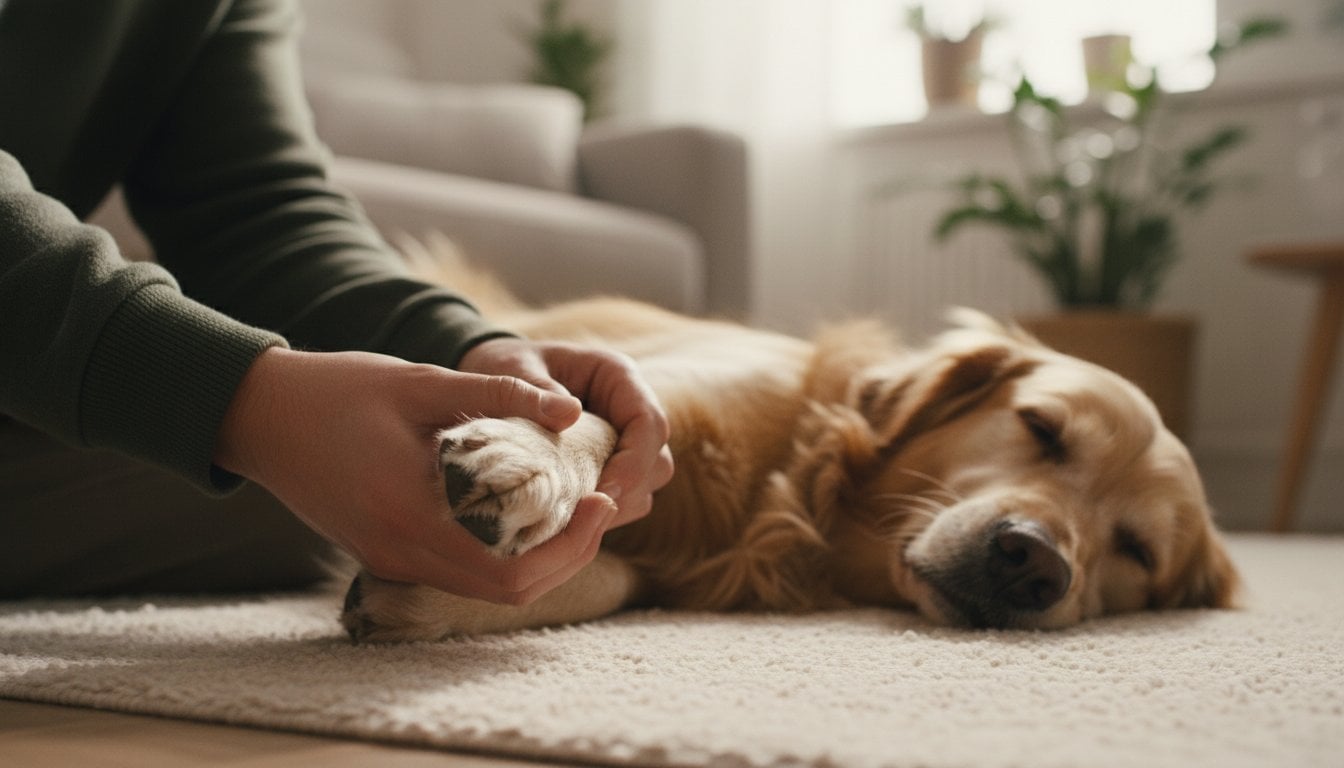
It is 2 AM, and the rhythmic, wet sound of your dog’s tongue against their skin is the only thing breaking the silence. You look down to see those once-soft paws turned an angry, inflamed red, a sight that brings an immediate wave of guilt and worry. When you are dealing with a dog licking paws raw allergy, the frustration is compounded by the confusion of whether the culprit is the backyard grass or the food in their bowl. You aren’t just looking for a way to stop the noise; you are looking for a way to stop their suffering and the recurring cycle of hot spots and brown saliva staining.
We believe that healing begins with understanding the delicate intersection of biology and environment. You’ll discover the specific internal triggers that cause the immune system to overreact and how to restore your companion’s skin health through targeted, clean-label support. We will guide you through the science of the skin barrier and provide a clear, evidence-based path to stop the obsessive licking and prevent secondary infections naturally. It is time to move away from temporary fixes and toward a life of sustainable, heart-centered wellness for your dog.
Key Takeaways
- Learn to distinguish between routine grooming and the destructive itch-lick cycle that leads to visible skin trauma.
- Discover why a compromised skin barrier and an overactive immune system are the biological drivers behind a dog licking paws raw allergy.
- Identify the specific triggers affecting your pet by contrasting the patterns of seasonal environmental sensitivities with year-round food allergies.
- Implement a dual-action relief strategy that pairs immediate soothing paw soaks with the long-term restorative power of Omega-3 fatty acids.
- Find out how targeted, clean-label immune support can help your dog maintain internal equilibrium and resist future inflammatory triggers.
Understanding the Silent Cry: Why Dogs Lick Their Paws Raw
When your companion spends hours focused on their feet, it is rarely just about cleanliness. For many pet owners, the sound of rhythmic licking in the middle of the night becomes a source of deep anxiety. You see the skin turning from a healthy pink to an angry red, and you feel the dampness that never seems to dry. This behavior is a physiological signal that something is fundamentally wrong. A 2024 survey found that 28.7% of dog owners in the US reported their pets had skin-related health issues, a statistic that highlights how common this struggle has become. Understanding a dog licking paws raw allergy requires us to look past the surface of the skin and listen to what our animals are trying to tell us through their discomfort.
Your intuition as a pet parent is your most valuable tool. If you feel that your dog’s licking has transitioned from a routine habit into a desperate attempt at relief, you are likely correct. This isn’t just a “quirk” or a way to pass the time; it is a clinical symptom of internal distress. Allergies in dogs often manifest in the extremities because the paws are high-traffic areas for environmental allergens and contain a high density of mast cells that react to triggers. By recognizing these early warning signs, you can step into the role of a wise caretaker and intervene before the damage becomes irreversible.
Normal Grooming vs. Obsessive Licking
Distinguishing between healthy hygiene and an obsessive struggle is a matter of timing and physical evidence. Normal grooming usually occurs after a meal or a walk and lasts only a few minutes. In contrast, an allergic response leads to licking sessions that can last for thirty minutes or more, often occurring repeatedly throughout the day. You may notice the fur on their paws turning a rusty, brownish color. This staining is caused by porphyrins, which are iron-containing molecules found in canine saliva that oxidize when exposed to air. When licking transitions from a cleaning ritual to a pain-response mechanism, the dog is trying to “numb” the area through mechanical stimulation, even though the friction eventually leads to self-trauma and raw, weeping skin.
The Emotional Toll of Chronic Itching
The “itch-lick cycle” creates a profound emotional burden for your pet. Constant irritation prevents deep, restorative sleep, which can lead to a noticeable shift in temperament. A dog who was once playful may become irritable, lethargic, or anxious because they are trapped in a state of perpetual sensory overload. As a caretaker, you aren’t just managing a skin condition; you are protecting your dog’s mental well-being. Early intervention is an act of deep compassion. By addressing the root cause of the inflammation now, you prevent the development of secondary bacterial infections and restore the sense of peace your companion deserves. Healing is a journey that moves from the heart to the laboratory, pairing your affection with the scientific rigor needed to break the cycle for good.
The Biology of an Allergic Flare-Up: Why the Paws?
The paws are the front line of your dog’s interaction with the world, making them the primary site for a dog licking paws raw allergy flare-up. While we often think of allergies as a respiratory issue, in dogs, the immune system primarily expresses its distress through the skin. When your dog encounters a harmless protein like ragweed or certain food molecules, their immune system identifies it as a dangerous invader. This triggers a cascade of defensive measures that result in intense, localized inflammation. Unlike humans, who might sneeze or develop watery eyes, a dog’s body sends its inflammatory signals straight to the skin, particularly the areas with the highest concentration of specialized cells.
The “barrier” theory explains why some dogs suffer more than others. A healthy skin microbiome acts as a biological shield, but in allergic dogs, this barrier is often “leaky.” This structural weakness allows microscopic allergens to penetrate deep into the tissue rather than being blocked at the surface. Paws are uniquely vulnerable to this penetration because they contain sweat glands and a high density of hair follicles, creating a moist environment that invites irritants to linger. Because the pads are in constant contact with the ground, they are perpetually exposed to triggers, making the feet the “ground zero” for allergic discomfort. For dogs struggling with these external penetrations, supporting the skin from the inside out with targeted nutrients can help fortify that natural shield.
The Histamine Response in Extremities
Within the tissue of the paws, silent sentinels called mast cells stand guard. During an allergy flare, these cells rupture and release histamines, which are the chemicals responsible for that maddening itch. Because the paws have a rich supply of blood flow and sensitive nerve endings, the histamine release is felt more acutely here than anywhere else on the body. This intense sensation is what drives the obsessive licking as the dog attempts to “wash away” an internal fire they cannot reach. As explained by Cornell University on atopic dermatitis, these reactions are often part of a larger clinical picture of skin sensitivity. Atopy is the genetic tendency to develop allergic diseases.
Secondary Infections: The Yeast and Bacteria Connection
The damage rarely stops at simple itching. As a dog licks, the warmth and moisture trapped between the toes create a perfect incubator for Malassezia, a type of yeast that lives naturally on the skin but grows out of control when the environment shifts. You might recognize the distinct, slightly sweet “corn chip” smell as a sign of this overgrowth. This yeast, along with opportunistic bacteria, causes a condition known as Pyoderma. Once the skin is raw and broken, it becomes a gateway for more serious systemic staph infections. This transition from a simple allergy to a complex infection is why addressing the dog licking paws raw allergy early is essential for preventing a long-term medical crisis.
Deciphering the Trigger: Food Allergies vs. Environmental Sensitivities
Finding the source of your companion’s distress is the first step toward lasting restoration. When you are managing a dog licking paws raw allergy, the calendar often holds the most important clues. If the obsessive behavior persists through the snowy depths of winter and the heat of summer, your dog is likely reacting to something they encounter every day, often in their food bowl. Conversely, if the licking peaks during the vibrant bloom of spring or the ragweed season of autumn, environmental factors are the probable culprits. Understanding this distinction allows you to move away from guesswork and toward a targeted, clinical strategy that respects your dog’s unique biology.
The “Allergic Threshold” is a concept every caretaker should understand. Think of your dog’s immune system as a bucket. A small amount of dust mites might not cause a reaction on its own, but when you add grass pollen and a specific protein from their diet, the bucket overflows. This overflow is what we see as raw, inflamed skin. It’s also essential to address the grain-free myth. While marketing often points to grains as the primary villain, scientific data shows that true grain allergies are quite rare, with wheat accounting for only about 13% of cases. Most food-related triggers are actually found in common protein sources, making the search for the right diet a matter of biological precision rather than following marketing trends.
Identifying Food Sensitivities
The gold standard for diagnosing a food allergy remains the elimination diet. This process involves feeding a novel or hydrolyzed protein diet for a period of 8 to 12 weeks to allow the immune system to reset. A 2016 systematic review identified the most common food allergens for dogs as beef (34%), dairy products (17%), and chicken (15%). It’s vital to distinguish between a true allergy, which involves an immune system overreaction, and a digestive sensitivity or intolerance. While an intolerance might cause temporary upset, a true allergy will consistently trigger that maddening itch every time the protein is consumed, requiring a permanent change in their nutritional profile.
Environmental and Contact Allergens
Environmental triggers are often more difficult to control because they’re literally in the air your dog breathes. Pollen tracking occurs when your dog walks through grass and brings microscopic particles back into their bed, where they continue to irritate the skin long after the walk is over. Dust mites, ragweed, and even common household cleaners can contribute to the “pollen load” on your dog’s skin. This genetic predisposition to react to environmental triggers is a common struggle. As detailed by Cornell University on Atopic Dermatitis, these sensitivities often manifest as chewing at the feet and can progress if the skin barrier isn’t fortified. Simple acts like wiping paws with a damp cloth after outdoor excursions can significantly reduce the allergen burden and provide immediate, nurturing relief.
Breaking the Cycle: A Multi-Layered Approach to Relief
Restoring your companion’s comfort is a journey that begins with immediate relief and ends with systemic resilience. When you are managing a dog licking paws raw allergy, a single solution is rarely enough to break the deep-seated itch-lick cycle. You must approach the problem through multiple layers of care, addressing both the external trauma on the skin and the internal overreaction of the immune system. This methodical strategy focuses on nurturing the body’s natural defenses while removing the environmental stressors that keep your dog in a state of perpetual irritation.
The first step is mechanical relief. Simple, lukewarm paw soaks can physically wash away the “pollen load” we discussed earlier, providing a moment of calm for inflamed tissue. Use a soft cloth to gently pat the area dry; leaving moisture between the toes only invites the yeast overgrowth that complicates the healing process. From there, you can transition into long-term biological support. By strengthening the skin barrier and modulating the immune response, you move away from temporary fixes and toward a life of sustained wellness.
The Power of Omega Fatty Acids
Omega-3 fatty acids, specifically EPA and DHA, act as the biological architects of skin health. These essential fats work at a cellular level to decrease the production of inflammatory chemicals, helping to “turn down the volume” on the allergic response. Bioavailability is the most critical factor here. Not all fish oils are created equal; the body requires high-quality, purified sources to ensure these nutrients actually reach the skin tissue. Interestingly, Natural Joint Supplements for Dogs often utilize these same fatty acids to manage systemic inflammation. They are just as vital for fluid movement as they are for maintaining a calm, non-itchy coat.
Gut Health and Immune Resilience
Scientific consensus suggests that approximately 70% of the canine immune system resides within the gut. This means that the secret to a calm skin barrier often lies in the digestive tract. Probiotics and targeted enzymes can help “re-train” the immune system, teaching it to distinguish between actual threats and harmless proteins like grass or chicken. When the gut is in equilibrium, the entire body is less prone to the inflammatory spikes that lead to raw paws. Pairing a clean diet with Allergy & Immune Support Chews provides the building blocks for this internal balance, helping your dog find relief from the inside out. Finally, ensure your home environment is a sanctuary by frequently washing pet bedding in hypoallergenic detergents and using pet-safe floor cleaners to minimize contact triggers.
Nurturing Resilience: How Targeted Supplements Support Immune Balance
Choosing a supplement is an act of trust between you and the laboratory. When you are confronted with a dog licking paws raw allergy, the instinct is to reach for any immediate fix, yet many over-the-counter options contain hidden triggers that can exacerbate the very inflammation you are trying to soothe. A ‘Wise Caretaker’ approach prioritizes clean labels and meticulous formulation, ensuring that every ingredient serves a restorative purpose. Our Allergy & Immune Support Chews are designed to provide the essential building blocks for a balanced immune response, moving beyond temporary suppression toward true biological harmony.
Nature offers powerful tools for calming the storm of paw irritation. Colostrum provides vital antibodies and growth factors that help fortify the immune system and repair damaged tissue from the inside out. We pair this with Quercetin, a plant-derived flavonoid often called ‘nature’s Benadryl’ for its ability to stabilize mast cells and reduce the release of histamines. By sourcing these ingredients with clinical precision and manufacturing them in FDA-registered facilities, we ensure a level of safety and purity that respects your dog’s vulnerability and your need for peace of mind.
What to Look for in an Allergy Supplement
The purity of a supplement is just as important as its active ingredients. Many generic chews rely on soy, corn, or artificial flavors to improve palatability, but these fillers are common allergens that can keep your dog trapped in the itch-lick cycle. Seek out vet-approved formulations that emphasize transparency and botanical integrity. For those who wish to understand the deeper mechanics of these defensive systems, our guide on Allergy Relief for Dogs offers a comprehensive look at building long-term immune resilience.
A Holistic Vision for Vitality
Visible skin health is a profound reflection of your dog’s internal well-being. When we address the root cause of allergic overreaction, we aren’t just healing the paws; we are rejuvenating the entire animal. A consistent supplement routine is especially vital for aging dogs, whose immune systems may require additional support to maintain equilibrium against environmental stressors. This journey toward restoration is a legacy project of affection and empirical data, ensuring your companion can return to their favorite activities without the shadow of discomfort. Because a life without the itch is a life full of joy.
Restoring Your Companion’s Natural Vitality
Breaking the cycle of a dog licking paws raw allergy requires more than just local treatment; it demands a fundamental shift in how we support the canine immune system. By identifying the specific triggers in their environment and fortifying the skin barrier with essential fatty acids, you move from managing symptoms to nurturing genuine recovery. We’ve explored how the majority of the immune system resides in the gut, making internal balance the most critical factor in achieving a life free from constant irritation.
Your role as a wise caretaker is to provide the purest tools for this transformation. Nurture your dog’s immune health with our clean-label Allergy & Immune Support Chews. Our vet-approved, science-backed formulas use clean-label ingredients with zero synthetic fillers and are manufactured in FDA-registered US facilities to ensure the highest standards of safety. You possess the knowledge and the heart to lead your companion back to a state of peace. A future of comfortable walks and restful nights is well within your reach.
Common Questions About Allergic Paw Licking
Is it okay for my dog to lick their paws a little bit?
Occasional licking after a walk or a meal is a normal part of a dog’s grooming ritual. However, you should be concerned if the licking becomes a persistent focus that lasts longer than a few minutes or occurs multiple times a day. When grooming transitions into a repetitive struggle that leaves the fur damp or the skin pink, it is no longer a cleaning ritual but a physiological response to an underlying itch or pain.
Can I give my dog human Benadryl for paw licking?
While diphenhydramine is frequently used in veterinary medicine, you must never administer any human medication without first consulting a professional for the correct dosage. It is also vital to understand that antihistamines often only mask the symptoms rather than addressing the biological trigger. Many caretakers find that long-term relief for a dog licking paws raw allergy is better achieved through targeted immune support and skin barrier fortification.
Why are my dog’s paws brown and smelling like Fritos?
The rusty brown staining is a result of porphyrins in your dog’s saliva oxidizing when they hit the air during obsessive licking. That distinct “corn chip” or Frito smell is a classic indicator of a yeast overgrowth, specifically Malassezia. This yeast thrives in the warm, damp environment created by constant saliva, and it requires both the moisture to be removed and the skin’s microbiome to be restored to find lasting relief.
How long does it take for a food allergy to stop after changing diet?
It typically takes between 8 and 12 weeks for a dog’s immune system to fully reset after you remove an offending protein. This duration is necessary because inflammatory markers can linger in the tissue for months after the last exposure. During this elimination phase, it is essential to be meticulous; even a single scrap of human food or a flavored treat can reset the biological clock and trigger a fresh flare-up.
Can anxiety cause a dog to lick their paws raw?
Yes, obsessive licking can function as a self-soothing mechanism for dogs experiencing stress, boredom, or separation anxiety. This behavior can eventually develop into a habit known as an acral lick granuloma, where the licking itself provides a sensory release. However, because most cases begin with a physical itch, it is essential to rule out a dog licking paws raw allergy before assuming the behavior is purely psychological.
What is the best natural soak for raw, irritated dog paws?
A lukewarm soak using povidone-iodine diluted to the color of weak tea is one of the most effective ways to mechanically remove allergens and soothe raw skin. You can also use an Epsom salt bath to help draw out toxins and reduce localized swelling. The most critical step in this process is ensuring the paws are patted completely dry afterward, as any remaining moisture between the toes will only encourage further yeast growth.
When should I stop home treatment and see a veterinarian for paw licking?
You should seek professional veterinary care if you notice signs of a deep infection, such as pus, bleeding, a foul odor, or if your dog begins limping. These symptoms suggest that the skin barrier has been significantly compromised and may require prescription intervention to manage a secondary staph infection. While proactive home care is excellent for maintenance, clinical signs of systemic distress or extreme pain require an immediate expert assessment.
Do certain breeds suffer more from paw allergies than others?
Certain breeds possess a genetic predisposition to atopic dermatitis, making them more vulnerable to environmental triggers. Labradors, Golden Retrievers, French Bulldogs, and West Highland White Terriers are frequently identified as having a higher sensitivity to allergens due to their unique skin barrier structures. If you share your life with one of these breeds, being a wise caretaker means starting immune support early to maintain their natural resilience before a chronic cycle begins.
Disclaimer
The information provided in this article is for educational and informational purposes only and is not intended as veterinary advice. Every dog is unique, and health concerns should be discussed with a licensed veterinarian. Always consult your veterinarian before introducing new supplements, changing your dog's diet, or beginning any health or wellness program, particularly if your dog has a medical condition, is pregnant or nursing, or is taking prescription medications.