

The sky darkens, the first low rumble of thunder rolls in, and you see your dog’s ears flatten in immediate distress. It’s a heart-wrenching moment when you realize that simply offering a supplement isn’t enough if the timing is off. Many pet parents find themselves asking how long do calming chews take to work for dogs while their pet is already in the middle of a panic. This confusion often leads to wasted resources and, more importantly, continued distress for your animal family member.
We understand that seeing your dog in a state of panic feels like a personal failure. Biological relief takes time. These botanical formulations rely on precise biological windows rather than instant magic. We’ll reveal the exact timeline for canine calming chews to take effect and show you how to optimize your dog’s metabolic response for faster, more reliable relief. You’ll discover the science behind ingredient absorption and gain a clear schedule so you can act with confidence before the next firework or car ride begins.
Key Takeaways
- Recognize the 30 to 90-minute biological window required for active ingredients to transition from the digestive tract to the nervous system for full effect.
- Identify the specific variables, such as metabolic rate and body weight, that determine how long do calming chews take to work for dogs in your care.
- Master the “Anxiety Threshold” strategy to ensure botanical support is fully active before environmental triggers cause adrenaline to flood your dog’s system.
- Learn how to balance absorption speed with digestive comfort by understanding the impact of administering chews on an empty stomach versus with a meal.
- Select high-quality Calming & Anxiety Relief Chews formulated in FDA-registered facilities to ensure both ingredient purity and predictable physiological results.
The Science of Patience: Why Calming Chews Aren’t Instant ‘Off Switches’
Watching your dog pace, whine, or tremble is a deeply visceral experience that triggers an immediate desire to help. It’s natural to want a solution that works as quickly as a light switch, but the canine body operates on a metabolic clock that cannot be rushed. When asking how long do calming chews take to work for dogs, it’s vital to recognize that these supplements are designed to gently support the nervous system rather than sedate or “drug” the brain. Unlike prescription sedatives that may leave a pet feeling disconnected, botanical chews encourage a state of relaxed alertness. They work in harmony with your dog’s internal chemistry to soften the edges of their distress, allowing for a more graceful restoration of peace. This approach respects the animal’s natural physiology while addressing the unspoken discomfort that manifests during thunderstorms, vet visits, or travel.
The 30-to-90 Minute Window
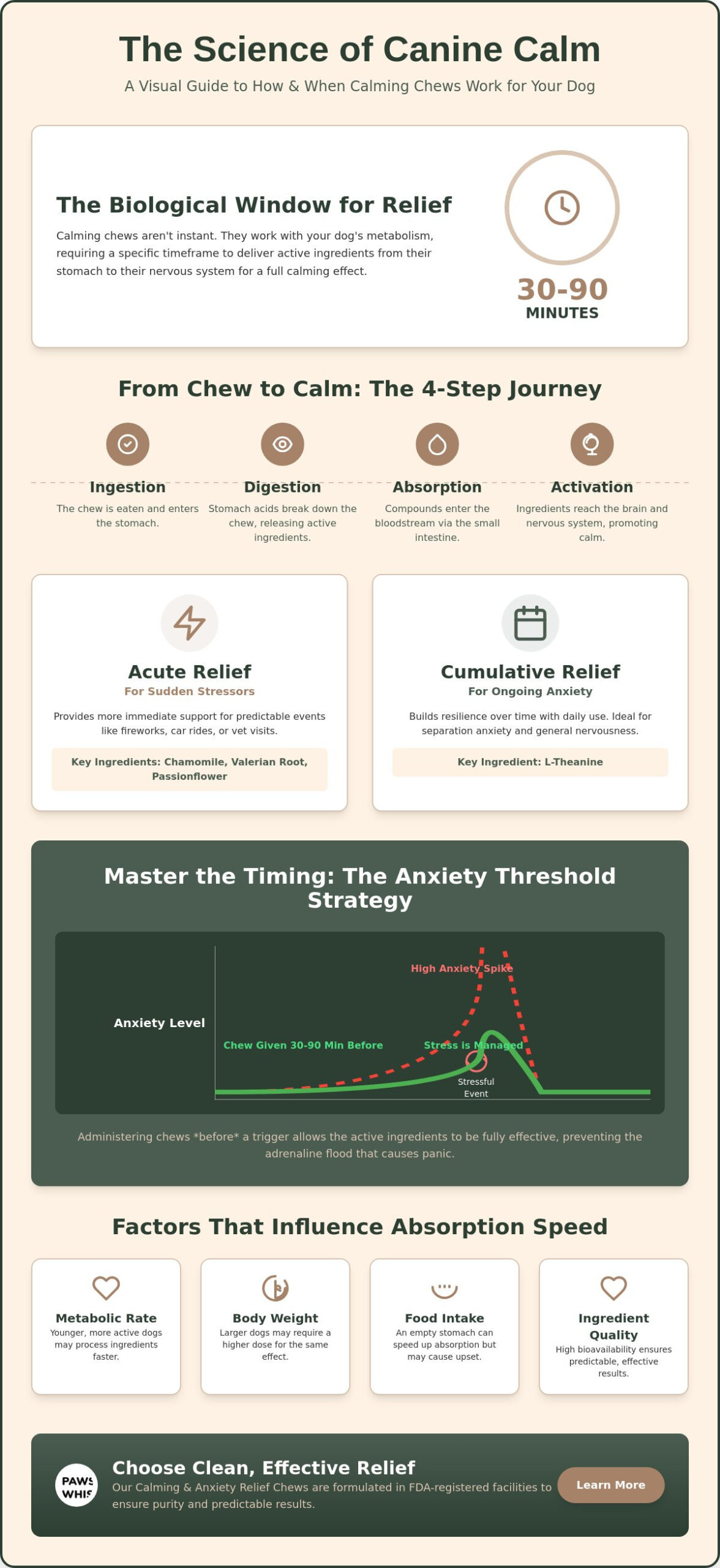
The journey from a tasty soft chew to a calmer state of mind typically spans between 30 and 90 minutes. The first half-hour is dedicated almost entirely to the digestive process as the stomach breaks down the chew and prepares the active botanicals for the small intestine. Once the nutrients reach the intestinal walls, they begin their transition into the circulatory system. Peak efficacy occurs once the ingredients cross the blood-brain barrier, a point where the calming signals are most receptive within the central nervous system. Bioavailability is the rate at which these specific ingredients enter the bloodstream and become available for the body to use. Factors like the quality of the carrier oils and the purity of the extracts play a significant role in how efficiently this process unfolds for your dog.
Acute vs. Cumulative Calming
Effective anxiety management often requires a two-tiered approach that balances immediate needs with long-term wellness. Certain ingredients, like chamomile or valerian root, provide more immediate “acute” relief for sudden stressors by encouraging muscle relaxation and gentle quietude. Other powerful components, such as L-theanine, offer cumulative benefits that build over several days of consistent use. For dogs struggling with chronic issues like Separation anxiety in dogs, daily administration is key. This regular routine helps lower baseline cortisol levels, which is the primary hormone responsible for the “fight or flight” response. By maintaining a steady level of these calming agents in the system, you effectively raise your dog’s threshold for stress. For a deeper look at the ingredients that make this possible, explore our Calming Chews for Dogs: A Science-Backed Guide to Anxiety Relief (2026). This proactive strategy ensures that when a stressful event occurs, your dog’s nervous system is already in a resilient, supported state.
Understanding the Biological Clock: How Your Dog Processes Calming Ingredients
The moment your dog swallows a supplement, a sophisticated biological sequence begins. It’s not just about digestion; it’s about the precise delivery of botanical relief to the nervous system. After the chew passes through the stomach, where gastric juices begin the breakdown, the active compounds move into the small intestine. This is the primary site of absorption. Here, the ingredients enter the bloodstream to begin their journey to the brain’s receptors. Understanding this internal transit is essential to answering how long do calming chews take to work for dogs, as the speed of relief depends on this metabolic path. By combining multiple extracts, we achieve the “entourage effect.” This is a synergistic relationship where ingredients like passionflower and valerian root work together to enhance each other’s efficacy, creating a more comprehensive sense of peace than any single herb could provide alone. These formulations are often categorized under the FDA’s Regulation of Pet Food, which oversees how these treats and supplements are marketed for animal health.
L-Theanine and the Alpha Wave Response
L-theanine is widely considered the gold standard for achieving relaxation without sedation. This amino acid, naturally found in green tea, works by stimulating the production of alpha brain waves. These waves are associated with a state of “relaxed alertness,” allowing your dog to feel settled without appearing “drugged” or lethargic. Typically, L-theanine begins its work around the 40-minute mark as it crosses the blood-brain barrier. It’s the difference between a dog that is simply too tired to react and one that feels internally secure enough to remain calm. This nuanced approach to wellness is why many pet parents choose our Calming & Anxiety Relief Chews to support their pet’s emotional resilience during stressful transitions.
The Role of Magnesium and Thiamine
While botanicals provide the visible shift in behavior, minerals and vitamins provide the foundation. Magnesium and thiamine (Vitamin B1) act as essential co-factors in the production of neurotransmitters like serotonin and dopamine. When a dog is deficient in these foundational elements, their anxiety can feel more acute and their reactions more explosive. Magnesium specifically helps regulate the pituitary-adrenal axis, preventing the overproduction of stress hormones. Thiamine supports the healthy maintenance of the central nervous system, ensuring that nerve transmissions remain steady rather than frantic. By addressing these underlying nutritional needs, you aren’t just masking a symptom; you are providing the biological tools required for long-term vitality and a balanced temperament.
Valerian root further supports this process by interacting with GABA receptors in the brain. GABA is an inhibitory neurotransmitter that acts as a natural brake for the nervous system. By inhibiting excessive nerve transmission, Valerian root helps quiet the mental “noise” that leads to pacing and vocalization. This multi-layered approach ensures that your dog receives support at every stage of the biological response, from the first digestive breakdown to the final calming signal in the brain.
The Strategic Dose: Timing Your Dog’s Anxiety Relief for Maximum Efficacy
Success in managing canine stress is often a matter of beating the body’s internal alarm system. If you wait until your dog is already hiding under the bed or pacing frantically, you’ve likely missed a critical biological window known as the “Anxiety Threshold.” Once a dog crosses this line, their system is flooded with adrenaline and epinephrine. These powerful survival hormones are designed to keep the body on high alert, and they can easily override the gentle, restorative signals sent by common ingredients in calming chews. To achieve the best results, you must act before the “fight or flight” response takes hold. By understanding how long do calming chews take to work for dogs, you can implement a pre-emptive strategy that settles the nervous system before the environment becomes challenging.
We recommend a simple three-step protocol for administering relief before a predicted stressor. First, anticipate the event by checking weather forecasts or your travel schedule. Second, administer the chew in a low-arousal environment where your dog feels safe and unhurried. Finally, engage in a quiet, bonding activity like gentle brushing to help the body transition into a restful state as the ingredients begin to circulate.
The Window of Opportunity
For most predictable events, such as a holiday celebration or a scheduled vet visit, dosing 60 minutes prior is the ideal strategy. This allows the digestive system to process the botanical extracts and deliver them to the bloodstream before the first trigger occurs. Monitoring weather apps for incoming storms gives you the lead time necessary to act while your dog is still in a baseline state of calm. We also suggest a “test dose” strategy on a perfectly normal, quiet day. This allows you to observe your specific dog’s reaction and timing without the added variable of external stress, giving you the confidence to act decisively when it truly matters.
Dosing for Travel and Separation
Travel and separation require a slightly different approach to timing. For car rides, administer the chew 90 minutes before departure. Motion and changing scenery can be highly stimulating, so giving the supplement extra time to reach peak efficacy ensures your dog is fully settled before the engine even starts. When addressing separation concerns, follow the “30-minute quiet exit” rule. Offer the chew half an hour before you plan to leave, and keep your departure routine low-key to avoid spiking their cortisol levels as you head out the door. For pet parents looking to support their dog’s long-term resilience, maintaining a foundation of health is just as important as acute timing. You can learn more about holistic wellness in our guide on Dog Supplements: A Scientist’s Guide to Nurturing Your Dog’s Vitality (2026). This comprehensive approach ensures that your dog isn’t just reacting to the world, but is biologically prepared to navigate it with grace.
Why Some Dogs Respond Faster: Variables That Influence Absorption Speed
No two dogs process wellness in exactly the same way. While we provide general guidelines for how long do calming chews take to work for dogs, several physiological factors can accelerate or delay that timeline. Your dog’s unique metabolic rate, their age, and even what they ate for breakfast all play a role in how quickly those calming molecules reach their destination. Understanding these variables allows you to fine-tune your approach. This ensures your pet receives the support they need exactly when they need it most, moving them from a state of agitation to one of quiet restoration.
Metabolism and Body Weight
Smaller dogs often possess higher metabolic rates, which can lead to a faster onset of effects compared to their larger counterparts. While a toy breed might show signs of relaxation within 30 minutes, a giant breed may require the full 90-minute window for the ingredients to distribute through their larger body mass. Weight-based dosing is critical for both safety and efficacy. It ensures the concentration of active botanicals is high enough to cross the blood-brain barrier and begin its work. A dog’s metabolic age can shift the onset window by up to 20%, meaning seniors often require a bit more lead time as their systems process supplements more deliberately than younger, more vigorous animals.
The Impact of Mealtime
The “Empty Stomach” debate is a frequent topic of conversation among pet parents. Administering a chew without a full meal generally leads to the fastest absorption because the digestive system can focus entirely on the supplement. On the other hand, a high-fiber meal can slow down the absorption of calming actives by creating a physical barrier in the gut. We suggest a “light snack” compromise. Offering the chew with a small amount of protein or fat can protect a sensitive stomach without significantly delaying the onset. Consistency is your best ally here. When you maintain a regular schedule, your dog’s body learns to anticipate the relief, often leading to a more predictable response. If you are ready to provide this tailored support, our Calming & Anxiety Relief Chews are formulated to work in harmony with your dog’s natural rhythm.
Age affects more than just energy levels; it impacts how the liver and kidneys process everything from food to supplements. Senior dogs may have a slower filtration rate, which can extend the time it takes for a chew to work while also prolonging the duration of the effect. Additionally, certain breeds may have genetic sensitivities to specific botanical extracts. Starting with a smaller dose allows you to monitor for these subtle variations and ensures a safe, restorative experience for your companion. By observing these small details, you act as a wise caretaker, bridging the gap between clinical science and the individual needs of your dog.
The Paws & Whiskers Standard: Clean-Label Calming & Anxiety Relief Chews
Choosing a supplement for your dog is an act of deep affection and responsibility. It’s the culmination of your journey as a wise caretaker, seeking to bridge the gap between their unspoken discomfort and the clinical reassurance of modern science. Our Calming & Anxiety Relief Chews represent the logical conclusion of this research, offering a meticulously prepared solution for pet parents who refuse to compromise on quality. Every chew is manufactured in an FDA-registered facility under rigorous standards to ensure that what you give your dog is as pure as it is effective. By prioritizing botanical integrity, we provide a path toward hope and restoration for families dealing with the daily challenges of canine distress.
Science-Backed, Nurture-Focused Ingredients
Our formulation relies on a specific synergy of Hemp, Chamomile, and L-theanine to create a balanced physiological response. While Chamomile offers gentle muscle relaxation, L-theanine works on the brain’s alpha waves to encourage a settled mind. The inclusion of Hemp provides a broader spectrum of support, helping to stabilize the nervous system during high-pressure events. This combination ensures faster and more predictable bioavailability, allowing you to plan your dog’s relief with greater accuracy. We stand behind this science with a 100% satisfaction guarantee, offering pet parents the confidence they need to invest in their dog’s long-term serenity.
Join the Paws & Whiskers Family
Restoring peace to your household is a journey that requires consistency and dedication. To help you maintain your dog’s progress, we offer a recurring subscription that ensures you never run out of support before a major trigger like a holiday or a vet visit. This mission-driven advocacy is at the heart of everything we do; we don’t just sell a product, but partner with you to improve the quality of life for dogs of every size and breed. Your dog’s story is part of our legacy, and we’re committed to helping you write a chapter filled with movement, strength, and quiet joy. Secure your dog’s serenity with our Calming & Anxiety Relief Chews today.
Empowering Your Dog’s Path to Peace
Every dog deserves to feel safe within their own home, even when the world outside becomes loud or overwhelming. We have seen that the 30 to 90-minute biological window is essential for proper absorption, ensuring that botanical relief reaches the nervous system before the “Anxiety Threshold” is crossed. By focusing on proactive timing and selecting clean-label, filler-free formulas, you provide your companion with the best possible chance for a calm and graceful response to stress. Knowing exactly how long do calming chews take to work for dogs transforms you from a worried bystander into an empowered advocate for your pet’s emotional health.
Our Calming & Anxiety Relief Chews are meticulously manufactured in FDA-registered US facilities to provide nurturing support for dogs of all sizes. These supplements are designed to work in harmony with your pet’s natural physiology, offering a sophisticated blend of empathy and science. Shop our Vet-Approved Calming & Anxiety Relief Chews to begin this journey toward restoration and quiet joy. You have the tools to protect your dog’s serenity, and we are honored to be your partner in their care.
Frequently Asked Questions
How long do calming treats for dogs last once they kick in?
Most calming treats provide relief for approximately 4 to 8 hours once they have fully entered the system. This duration varies based on your dog’s specific metabolic rate and the intensity of the environmental trigger. For sustained events, such as a long travel day, you may need to re-administer the chew based on the packaging instructions. Always prioritize your dog’s comfort by monitoring their behavior as the effects begin to taper off.
Can I give my dog more than the recommended dose if they are still anxious?
You should always adhere to the weight-based dosing instructions found on the label. Increasing the dose beyond recommendations doesn’t necessarily lead to faster relief; instead, it may cause digestive upset. If your dog remains highly distressed, the issue is likely related to timing rather than the amount given. Focus on administering the supplement earlier to beat the “Anxiety Threshold” rather than increasing the quantity.
What happens if I give the calming chew after my dog is already panicking?
Giving a chew after your dog is already panicking is significantly less effective because adrenaline can override the botanical signals. When a dog reaches a state of high arousal, their survival instincts take over, making it difficult for the nervous system to process calming agents. This is why understanding how long do calming chews take to work for dogs is so critical; you must act before the panic begins to ensure the ingredients can work effectively.
Are calming chews safe to use every day for separation anxiety?
Yes, high-quality calming chews are generally safe for daily administration to support dogs with chronic separation anxiety. Consistent use helps lower baseline cortisol levels, creating a more resilient foundation for your pet’s emotional health. This daily routine allows the active ingredients to build up in the system, making them more effective over time. We recommend consulting with your veterinarian for long-term behavioral support plans. For those in the Roanoke area, or as an example of the specialized support available, Pepper Paws Concierge offers boutique, in-home care that ensures your dog feels safe while you are away.
Will calming chews make my dog sleepy or lethargic?
Calming chews are formulated to encourage “relaxed alertness” rather than heavy sedation or lethargy. Unlike prescription medications that might leave your dog feeling “drugged,” botanicals like L-theanine promote alpha brain waves that help your dog feel settled while remaining fully aware. You should see a dog that is simply more capable of resting, not one that is unable to wake up or engage with their family.
Is it better to give calming chews on an empty stomach?
While absorption is technically faster on an empty stomach, we often recommend a “light snack” to prevent potential digestive sensitivity. A small amount of food can act as a buffer for the stomach lining without significantly delaying the onset of relief. If you choose to give the chew with a full meal, remember that high fiber content may extend the time of how long do calming chews take to work for dogs by up to 30 minutes.
How do I know if the calming chew is actually working?
You’ll know the chew is working when you observe subtle shifts in your dog’s body language and vocalization. Look for a decrease in heavy panting, a softening of the eyes, and a cessation of rhythmic pacing or whining. Instead of frantic searching for an exit, a settled dog will often choose to lie down in a favorite spot or engage in gentle, calm sniffing. These cues indicate the nervous system has successfully moved into a restorative state.
Can puppies take calming & anxiety relief chews?
Puppies can typically begin taking calming & anxiety relief chews once they are at least 12 weeks old. During this early stage of development, their systems are highly receptive, making it an ideal time to support them through the stress of socialization and crate training. Always start with the lowest recommended dose for their weight. This ensures their developing digestive system handles the new botanical ingredients with ease and comfort.

Disclaimer
The information provided in this article is for educational and informational purposes only and is not intended as veterinary advice. Every dog is unique, and health concerns should be discussed with a licensed veterinarian. Always consult your veterinarian before introducing new supplements, changing your dog's diet, or beginning any health or wellness program, particularly if your dog has a medical condition, is pregnant or nursing, or is taking prescription medications.