
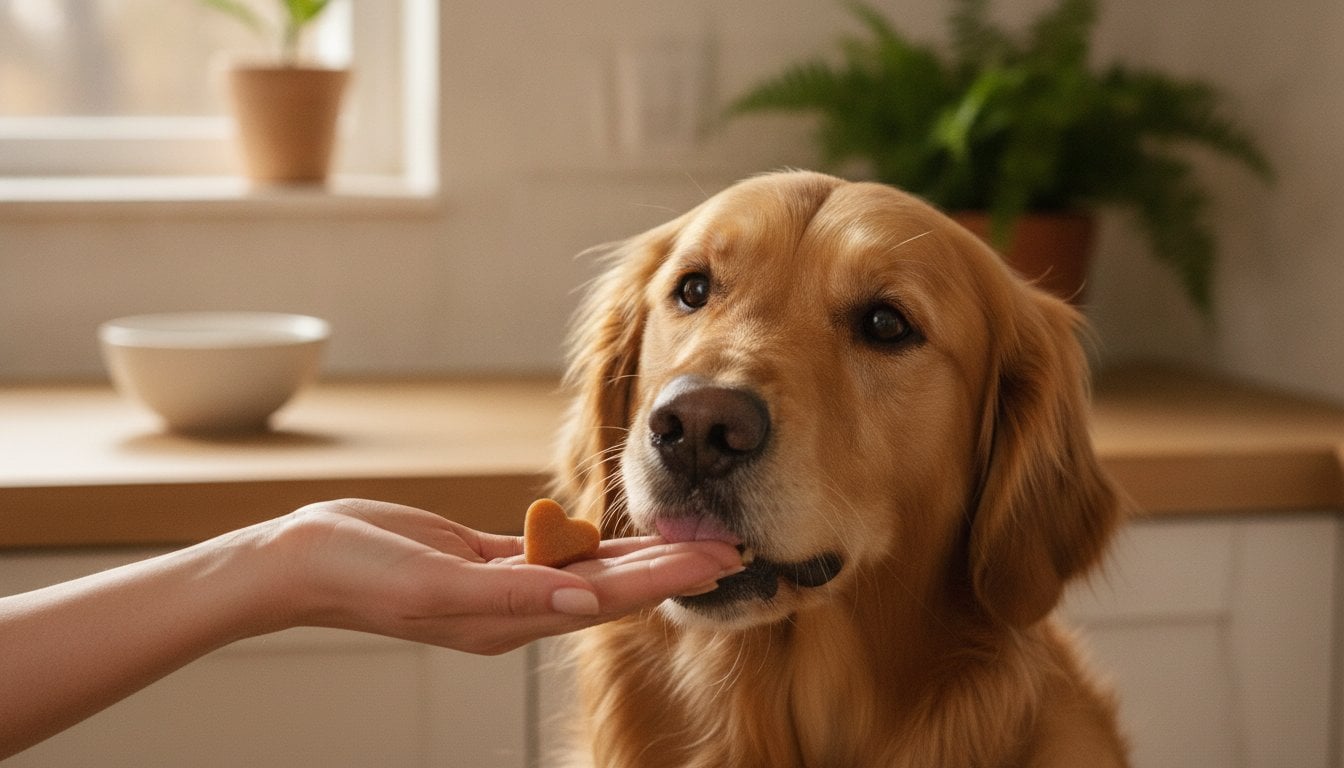
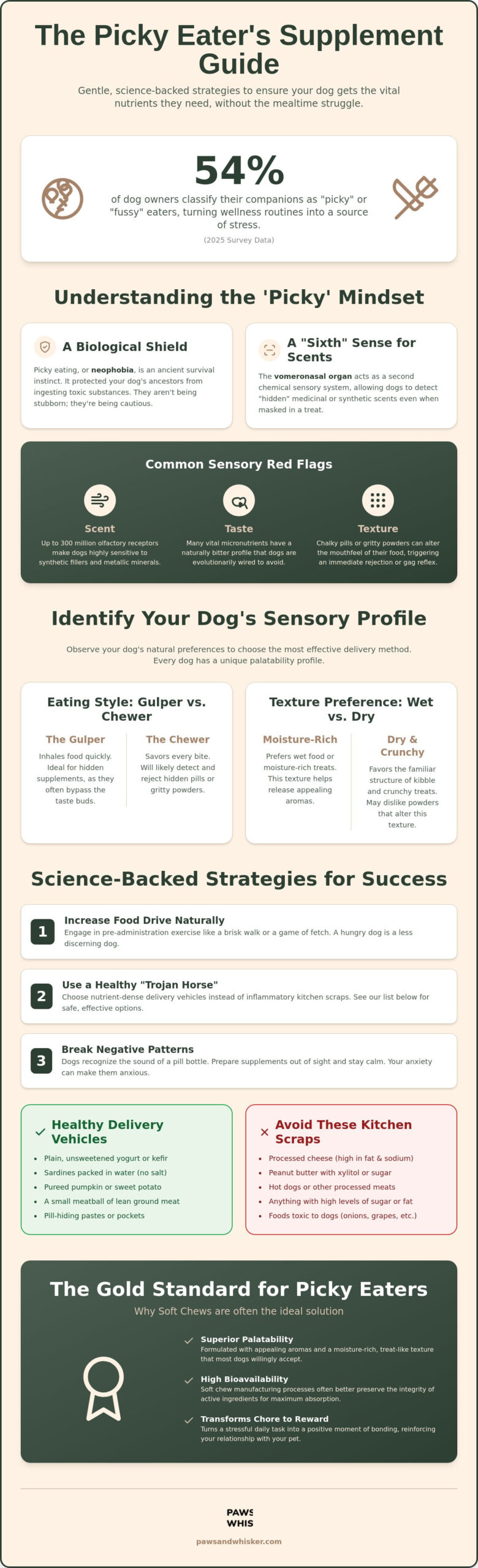
Recent 2025 surveys indicate that up to 54% of dog owners now classify their companions as “picky” or “fussy” eaters. This often turns a well-intentioned wellness routine into a source of daily stress and wasted investment. You’ve likely felt the quiet frustration of watching an expensive supplement go untouched, followed by the guilt of knowing your dog is missing out on vital support for their mobility or coat. Learning how to get a picky dog to eat supplements shouldn’t feel like a battle of wills; it should be an extension of the deep bond you share with your pet.
We believe that successful supplement delivery is a blend of sensory science and behavioral empathy. You deserve the confidence that comes with knowing your dog is receiving their full, effective dose without the mealtime struggle. This guide provides gentle, science-backed strategies to nurture success, from understanding canine palatability to selecting high-quality soft chews that meet rigorous 2026 NASC standards. By matching the delivery method to your dog’s unique profile, you can restore their vitality and enjoy a stress-free routine that prioritizes their long-term well-being.
Key Takeaways
- Understand the biological roots of your dog’s caution, including the role of the vomeronasal organ in detecting hidden medicinal scents.
- Identify your pet’s unique sensory profile to determine if they respond better to moisture-rich textures or high-aroma triggers.
- Master how to get a picky dog to eat supplements by using behavioral strategies like pre-administration exercise to naturally increase their food drive.
- Learn to select healthy “Trojan Horse” delivery vehicles that provide vital nutrients without the inflammatory sugars or fats found in common kitchen scraps.
- Discover why soft chews offer the ideal balance of bioavailability and palatability, transforming a stressful chore into a moment of reward.
Understanding the ‘Picky’ Mindset: Why Dogs Reject Supplements
Selective eating isn’t a personality flaw; it’s a biological shield. This behavior, known as neophobia, is a survival mechanism that protected your dog’s ancestors from ingesting toxic or spoiled substances in the wild. When you’re researching how to get a picky dog to eat supplements, it helps to realize that your dog isn’t being stubborn. They’re responding to an internal alarm that flags unfamiliar smells or synthetic textures as potential threats to their well-being. This innate caution is why a dog might eagerly devour a piece of plain chicken but treat a nutrient-dense tablet with deep suspicion.
A dog’s perception of “food” is far more sophisticated than our own. They possess a vomeronasal organ, also called Jacobson’s organ, which acts as a secondary chemical sensory system. This specialized tool allows them to detect the specific chemical signatures of “hidden” medications or concentrated vitamins even when they’re buried inside a treat. While we see a piece of cheese, they process a complex map of synthetic binders and botanical extracts that clash with their natural canine dietary needs. Understanding this biological context is the first step in learning how to get a picky dog to eat supplements without damaging the delicate bond you share.
It’s also essential to distinguish between a lifelong “discerning” palate and a sudden loss of appetite. If a normally enthusiastic eater suddenly rejects their meals, it often signals an underlying medical issue like dental pain or nausea. However, long-term pickiness is usually a sensory or behavioral hurdle. Forcing a supplement during these times can create a “pressure cooker” environment at mealtime. This stress doesn’t just lead to wasted supplements; it can cause your dog to associate your presence with discomfort, eroding the trust that is central to their emotional health.
Sensory Red Flags: Scent, Taste, and Texture
Your dog’s nose contains up to 300 million olfactory receptors, making them incredibly sensitive to the “off” smells of processed supplements. Common sensory barriers include:
- Scent: The smell of synthetic fillers or metallic minerals can be overwhelming to a sensitive nose.
- Taste: Many micronutrients have a naturally bitter profile that dogs are evolutionarily programmed to avoid.
- Texture: A chalky pill that sticks to the throat or a gritty powder that changes the mouthfeel of their food can trigger an immediate gag reflex.
Behavioral Barriers and Supplement Fatigue
Dogs are masters of pattern recognition. They quickly learn to associate specific bowls, the sound of a plastic bottle, or even your “anxious” tone of voice with a hidden pill. This often leads to supplement fatigue, where a dog might accept a new routine for a week before their internal alarm system fully engages, leading to a sudden and total rejection. Your own emotional state plays a role too. Dogs are highly attuned to human cortisol levels; if you approach mealtime with stress and anticipation of failure, your dog will mirror that anxiety, reinforcing their belief that the food offered is unsafe.
Sensory Profiling: Identifying Your Dog’s Delivery Preference
To truly master how to get a picky dog to eat supplements, you must look beyond the bowl and begin observing your companion’s specific sensory world. Every dog has a unique “palatability profile” that dictates what they consider safe and rewarding. We often mistake texture aversion for general pickiness, but these are distinct biological responses. By conducting a simple “Wet vs. Dry” test, you can determine if your dog prefers moisture-rich delivery, which often facilitates a better release of aromatic compounds, or if they favor the structural familiarity of dry kibble. This profiling process is the most reliable way to learn how to get a picky dog to eat supplements without causing mealtime stress.
Analyzing whether your dog is a “gulper” or a “chewer” provides critical data for your strategy. A “gulper” who inhales their food is an ideal candidate for hidden supplements, as the item often passes the taste buds before the brain can register a medicinal scent. However, a “chewer” who savors every bite will likely detect a hard tablet or a gritty powder immediately. A scientific study on dog food preferences highlights how texture and macronutrient content are primary drivers in food selection, suggesting that many dogs prioritize mouthfeel as much as scent. If your dog is a discerning chewer, heat can be your greatest ally. Warming a delivery vehicle increases the kinetic energy of fat molecules, releasing a more potent, natural aroma that can effectively mask clinical smells.
The Texture-Sensitive Dog
Some dogs possess a high sensitivity to “crunch” and may reject hard tablets because they feel unnatural or cause discomfort, especially in seniors with dental sensitivity. For these companions, a malleable, soft texture is far more successful. You can use the “sandwich” method by layering a supplement between two pieces of a favorite soft food. This creates a consistent mouthfeel that prevents the dog from separating the supplement from the treat. If your dog prefers a softer touch, they may find the gentle consistency of Joint Support Chews much more inviting than a traditional pill.
The Scent-Driven Detective
For dogs with a highly active vomeronasal organ, the “Scent First” approach is essential. You can overwhelm their investigative senses by using healthy, high-aroma fats like salmon oil. This creates a sensory “smoke screen” that prioritizes savory notes over the scent of synthetic binders. Use the 10-second rule: offer the supplement immediately after preparing it. This ensures the dog consumes it before their nose has time to fully process and isolate the medicinal scent. Clean-label options like Skin & Coat Omega-3 Soft Chews are particularly effective here because they use natural flavorings that align with a dog’s biological cravings rather than masking them with artificial chemicals.
The ‘Trojan Horse’ Method: Choosing Healthy Delivery Vehicles
Hiding wellness in junk food is a counterproductive compromise. While high-sodium deli meats or processed cheese slices are common recommendations on community forums, these options introduce inflammatory fats and excessive salt into a dog’s system. A scientist’s approach to how to get a picky dog to eat supplements prioritizes vehicles with high nutrient density and low caloric impact. This ensures that the delivery method supports, rather than undermines, the very health goals you’re trying to achieve. Using lean, organic options like those from Ruff Bar prevents the digestive upset often associated with “hiding” pills in fatty human foods while providing a grain-free, protein-rich incentive.
If you use peanut butter, it’s vital to ensure it is both salt-free and entirely free of Xylitol, a sweetener that is toxic to canines. For a more sophisticated behavioral bypass, try the Three-Treat Monte. By offering three treats in rapid succession; a plain “primer” treat, the supplement-loaded “Trojan Horse”, and a final “chaser” treat; you leverage a dog’s natural excitement and competition for food. The speed of the sequence often prevents them from pausing to investigate the middle treat’s contents. As noted in Cornell University’s guide to medicating dogs, using a small amount of highly palatable food is often more effective than trying to hide a supplement in a full meal where it might be left behind.
Clean-Label Mix-ins That Work
For a seamless experience, choose mix-ins that offer their own functional benefits. Plain, non-fat Greek yogurt or kefir provides a probiotic boost that aids digestion. Organic pumpkin puree is another excellent choice; it’s a fiber-rich, low-calorie masking agent that coats supplements effectively. If you’re dealing with powders, bone broth is the ultimate liquid delivery system. Its deep, savory aroma overwhelms the medicinal scent while providing essential hydration and collagen for joint health.
Avoiding Common ‘Pill-Hiding’ Mistakes
Success often depends on meticulous preparation. One common error is putting supplements in a full bowl of food. If the dog doesn’t finish the meal, they don’t get the full dose, leaving you unsure of their actual intake. You should also never crush a pill or open a capsule without checking with a vet first, as some coatings are designed for timed release. Finally, watch for cross-contamination. If you touch a supplement and then handle the “clean” treat, your dog’s sensitive nose will detect the scent on the outside, immediately triggering their neophobic defense. Always wash your hands between handling the supplement and preparing the final delivery vehicle.
5 Science-Backed Strategies to End the Mealtime Struggle
Ending the daily friction of supplement administration requires shifting from a mindset of “tricking” to a strategy of behavioral alignment. When you’re struggling with how to get a picky dog to eat supplements, it’s often more effective to change the context of the interaction than to simply hide the pill better. By leveraging their natural instincts and metabolic states, you can transform a moment of suspicion into a high-value reward. These five strategies move beyond the bowl to address the psychological barriers that lead to rejection.
- Step 1: Exercise before administration. Physical activity increases a dog’s metabolic demand and “food drive.” A dog that has just finished a vigorous walk or play session is naturally hungrier and less likely to over-analyze a treat’s scent or texture.
- Step 2: The ‘Competition’ effect. Dogs are social eaters. Using training cues or even pretending to “drop” a treat near a second dog, even an imaginary one, triggers a competitive instinct that often bypasses neophobic caution.
- Step 3: Texture Transitioning. Gradually move from a heavily masked supplement to a standalone chew. Start by coating the supplement in a favorite puree and slowly reduce the amount of “masking” food over several days until the dog accepts the chew on its own.
- Step 4: Positive Reinforcement. Don’t just pair the supplement with food. Pair it with the start of a favorite activity, like a car ride or a walk. This ensures the supplement becomes the “key” that unlocks a high-value experience.
- Step 5: The ‘Clean Slate’ approach. If your dog has developed negative associations with their food bowl, change the location. Offer the supplement in the backyard or a different room to break the psychological cycle of mealtime avoidance.
The Power of Training Cues
Turning supplement time into a game of ‘Catch’ or ‘Find it’ can be remarkably effective. When a dog is focused on catching an object in mid-air, they rely on their motor skills rather than their analytical olfactory system. A ‘sit-stay-release’ sequence also increases the perceived value of the supplement, framing it as a hard-earned reward rather than a suspicious addition to their diet. While “sneaky” delivery can erode trust if discovered, a “boring,” matter-of-fact delivery during a training session often leads to higher long-term compliance. If your dog is currently struggling with seasonal irritants, using these cues with our Allergy & Immune Support Chews can turn their daily relief into a bonding activity.
Micro-Dosing and Frequency
Sometimes the sheer size of a supplement is the primary barrier. Breaking larger soft chews into smaller, pea-sized pieces can prevent the dog from feeling overwhelmed and makes it easier to use the “pavement” method. This involves tossing small pieces of the supplement ahead of you while on a walk. The high-distraction environment of the outdoors helps the dog focus on the movement and the reward rather than the specific ingredients. Finding the right balance between consistency and novelty is key; while some dogs thrive on a strict routine, others need the excitement of a new delivery location to keep their “detective” instincts at bay. Learning how to get a picky dog to eat supplements is ultimately about patience and observing which of these variables your specific pet responds to most favorably.
Why Soft Chews are the Gold Standard for Picky Eaters
Traditional tablets and compressed pills often fail the sensory test because they rely on synthetic binders and high-heat manufacturing that compromises both flavor and nutrient integrity. When considering how to get a picky dog to eat supplements, the delivery format is just as critical as the active ingredients. Soft chews represent an evolution in pet wellness, offering superior bioavailability compared to hard tablets. Because they aren’t subjected to the extreme pressure of pill presses, the botanical compounds remain potent and the texture stays moist and inviting, aligning with the moisture-rich preferences we identified earlier in our sensory profiling.
Our “Treat-First” philosophy ensures that the supplement is indistinguishable from a high-value reward. This psychological shift is transformative for owners who have spent years hiding pills in unhealthy human foods. Take, for example, the case of a senior golden retriever named Cooper. His owners struggled for months with hard tablets, eventually leading to mealtime avoidance and visible stress. By transitioning him to Joint Support Chews, they replaced a clinical chore with a moment of connection. Within days, Cooper’s neophobic response vanished because the chew’s sensory profile matched his natural biological cravings for savory, meat-based proteins.
The Paws & Whiskers Difference: Science Meets Flavor
We believe that purity shouldn’t come at the expense of palatability. Our dog supplements are meticulously formulated without corn, soy, or wheat binders, which are often the culprits behind digestive sensitivities and rejection. Instead, we use real chicken and beef profiles that appeal directly to canine biology. Every batch is cold-pressed to preserve the delicate structure of the nutrients and the natural aromas that drive acceptance. This scientific rigor ensures that learning how to get a picky dog to eat supplements becomes a journey of success rather than a cycle of wasted investment.
Simplifying Your Routine with a Subscription
Consistency is the heartbeat of restoration. A subscription ensures you never run out of the specific formulas your dog has grown to trust, maintaining the momentum of their health progress. You gain the peace of mind that comes from using a vet-approved, FDA-registered formula that prioritizes efficacy and safety. By removing the stress of the daily fight, you can focus on what truly matters: watching your companion move with more vigor and comfort. Discover our full range of highly palatable soft chews today.
Restoring the Joy of Mealtime Wellness
Your dog’s discerning palate is a testament to their biological heritage, not a barrier to their health. By embracing sensory profiling and behavioral alignment, you transform a daily struggle into a moment of shared trust. You’ve learned that the secret of how to get a picky dog to eat supplements lies in matching the delivery method to your pet’s unique neophobic profile, whether that involves high-aroma masking or the gentle texture of a cold-pressed chew.
We’re committed to bridging the gap between clinical efficacy and irresistible flavor. Our scientist-led formulations are manufactured in FDA-registered US facilities using clean-label, natural ingredients that honor your dog’s internal chemistry. You don’t have to choose between nutritional purity and your pet’s willingness to eat. It’s time to replace mealtime anxiety with the confidence that your companion is receiving the vital support they need for a long, active life.
Shop Our Vet-Approved, Picky-Eater-Friendly Soft Chews
Your journey toward a more vibrant, stress-free routine starts with a single, rewarding bite. We’re honored to be your partner in nurturing your dog’s vitality and happiness.
Frequently Asked Questions
Is it okay to crush my dog’s supplements into their food?
You should only crush a supplement if the label or your veterinarian specifically confirms it is safe for the active ingredients. Some tablets utilize a timed-release coating that is destroyed by crushing, leading to a “dump” of nutrients that the body cannot properly absorb. If you’re exploring how to get a picky dog to eat supplements, mixing a crushed powder into a moisture-rich vehicle like bone broth is often more effective than dry kibble.
Can I use human pill pockets for my dog’s supplements?
Human-grade “pill hiding” foods are often unsuitable for canines due to hidden dangers like Xylitol, excessive sodium, or artificial sweeteners. These ingredients can cause rapid insulin spikes or digestive inflammation that undermines your pet’s wellness journey. It’s safer to use organic, dog-specific delivery vehicles like pumpkin puree or Greek yogurt, which align with their biological needs and avoid the toxic risks associated with processed human snacks.
Why did my dog suddenly stop eating their favorite supplement chew?
Supplement fatigue occurs when a dog’s natural neophobia identifies a recurring medicinal scent, leading to a sudden rejection of a previously accepted chew. This isn’t necessarily a sign of a bad product but rather a shift in your dog’s sensory perception. To break this cycle, try rotating the delivery location or pairing the chew with a high-value activity to refresh the positive association and bypass their internal “detective” instincts.
Are there certain foods I should never use to hide supplements?
You should never use foods containing Xylitol, onions, garlic, grapes, or high-sodium deli meats to mask supplements. These substances are toxic or inflammatory, potentially causing issues ranging from kidney failure to pancreatitis. Stick to clean-label, low-calorie options like organic puree or non-fat kefir. Choosing the right vehicle is a critical part of how to get a picky dog to eat supplements without compromising their long-term physiological health.
How long should I wait if my dog refuses to eat their supplement?
If your dog refuses a supplement, remove it after 15 to 20 minutes to prevent them from developing a negative “standoff” association with their food bowl. Forcing the interaction only increases their cortisol levels and reinforces their avoidance behavior. Instead, wait for a period of high metabolic demand, such as after an evening walk, and try a different sensory approach like the Three-Treat Monte to leverage their natural hunger.
Can anxiety make my dog more picky about their vitamins?
Yes, high anxiety levels trigger the release of cortisol, which naturally suppresses appetite and heightens a dog’s sensitivity to “off” smells. If your dog perceives your own stress during administration, they’ll mirror that tension and become more suspicious of the food offered. Creating a calm, low-pressure environment is essential for success, as it allows their sensory system to focus on the savory reward rather than a perceived threat.
What should I do if my dog eats the treat but spits out the pill?
If your dog separates the pill from the treat, the “sandwich” method or the Three-Treat Monte is your best solution. By layering the supplement between two pieces of a soft, malleable food, you create a consistent mouthfeel that prevents them from isolating the tablet. Offering treats in rapid succession also utilizes their competitive drive, encouraging them to gulp the middle “loaded” treat before their brain can register the hidden contents.
Does the temperature of the supplement affect its taste?
Temperature significantly impacts palatability because heat increases the kinetic energy of fat molecules, releasing more potent, natural aromas. Warming a soft chew or a liquid delivery vehicle to roughly body temperature makes it more biologically appealing to a dog’s olfactory system. This simple change can effectively mask the clinical scent of vitamins, transforming a suspicious item into something that smells like a freshly prepared, savory meal.

Disclaimer
The information provided in this article is for educational and informational purposes only and is not intended as veterinary advice. Every dog is unique, and health concerns should be discussed with a licensed veterinarian. Always consult your veterinarian before introducing new supplements, changing your dog's diet, or beginning any health or wellness program, particularly if your dog has a medical condition, is pregnant or nursing, or is taking prescription medications.