
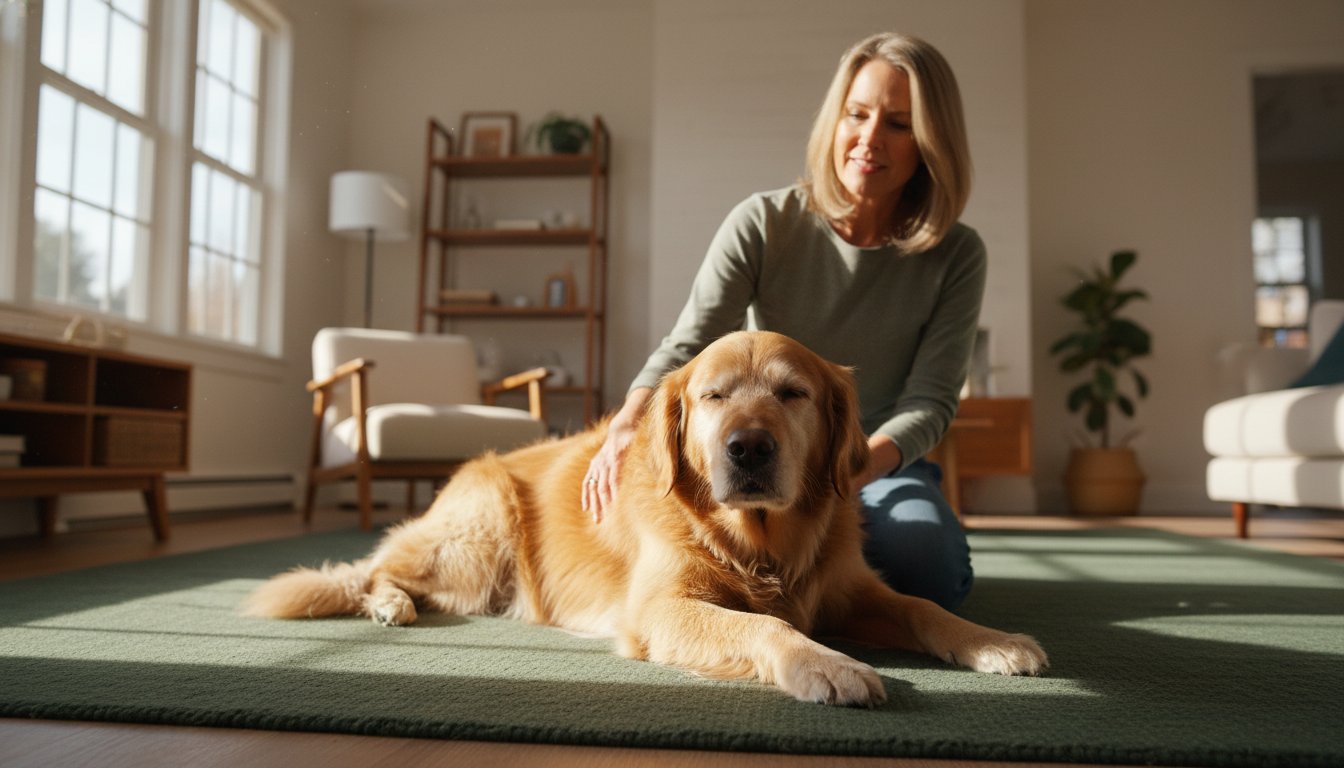
Did you know that overweight dogs face a lifespan that is, on average, 2.5 years shorter than those at an ideal weight? It is a heavy burden to watch a loyal friend hesitate at the bottom of the stairs or struggle to find a comfortable position on their favorite bed. You might feel a quiet sense of guilt, wondering if the stiffness you see today is a sign of hidden distress that you should have noticed months ago. Improving a senior dog’s quality of life is a biological equation that balances the reduction of silent inflammation with thoughtful environmental adaptations to restore your unique bond. We are here to help you navigate this transition with the clinical reassurance of veterinary science and the heart of a dedicated ally.
You deserve the peace of mind that comes from understanding exactly how to support your dog’s aging body. This guide provides a clear framework for assessing daily well-being and introduces science-backed strategies for mobility and restorative nutrition. We will explore how to transform your dog’s comfort through meticulous environmental changes and the use of pure, clean-label supplements designed for physical rejuvenation. From identifying subtle signs of pain to choosing botanical-based support, you will discover the path to a more vibrant and joyful chapter for your senior family member.
Key Takeaways
- Learn to adopt the “Wise Caretaker” perspective to identify the subtle, unspoken signs of hidden distress that senior dogs instinctively mask.
- Discover how addressing the biological toll of chronic inflammation can restore your companion’s physical vigor and psychological confidence.
- Understand the critical link between environmental traction and mental well-being, transforming your home into a sanctuary that reduces senior pet anxiety.
- Implement a roadmap for improving a senior dog’s quality of life through “exercise snacking” and nutritional profiles that prioritize high-quality protein for muscle maintenance.
- Explore the restorative power of science-backed, botanical origins that bridge the gap between nature and laboratory rigor for safe, long-term mobility support.
What Defines Quality of Life for a Senior Dog?
Quality of life is more than a simple checklist; it’s the delicate intersection of physical comfort, mental engagement, and emotional security. While traditional veterinary models often focus on the absence of disease, the 2026 standards for senior care prioritize proactive restoration. This shift moves us away from merely managing decline toward actively rejuvenating the animal’s daily experience. As a Wise Caretaker, you recognize that your dog’s intuition often leads them to mask their hidden distress. They are masters of the silent struggle, maintaining a brave face even as the aging process in dogs begins to impact their metabolic health and joint integrity.
Identifying the early, invisible signs of aging requires a keen eye for subtle shifts in routine. Perhaps your dog no longer meets you at the door with their favorite toy, or their sleep patterns have shifted toward restlessness in the midnight hours. These aren’t just “slowing down” moments. They are biological signals that the body’s internal equilibrium is under stress. By focusing on improving a senior dog’s quality of life through early intervention, we can address these shifts before they become chronic limitations.
The Three Pillars of Senior Canine Vitality
True vitality rests on three essential supports. First, Physical Comfort focuses on the presence of vigor rather than just the suppression of pain. It is the difference between a dog that can stand up and a dog that wants to run. Second, Mental Clarity addresses the cognitive “brain fog” that can lead to confusion or nighttime anxiety. Finally, Social Connection ensures the emotional bond remains vibrant. Even as sight or hearing fades, your dog’s need for familial inclusion remains a primary driver of their happiness and sense of security.
Using a Quality of Life Scale at Home
You don’t need clinical tools to monitor your dog’s well-being effectively. A simple, consistent tracking system in a low-stress home environment is often more revealing than a clinical assessment. Focus on three metrics: mobility (how easily they navigate the home), appetite (their enthusiasm for nourishment), and hygiene (their ability to maintain self-care). Tracking these daily allows you to see patterns of improvement or decline that a snapshot assessment might miss. Improving a senior dog’s quality of life starts with these intentional observations, turning your intuition into actionable data. Restorative wellness is the intentional practice of optimizing a senior dog’s environment and biology to ensure their final years are defined by comfort, dignity, and joy.
The Biological Foundation: Managing Inflammation and Joint Health
Chronic inflammation is the silent architect of physical decline in aging pets. It is a persistent, low-grade fire that slowly degrades cartilage and connective tissues, turning once-fluid movements into a source of hesitation. This biological toll isn’t just a matter of “getting old.” It is a complex physiological process where the body’s repair mechanisms can no longer keep pace with cellular wear. When we talk about improving a senior dog’s quality of life, we are really talking about extinguishing this internal fire to restore the structural integrity of their frame.
The “silent struggle” of joint stiffness often manifests as a psychological burden before it becomes a visible limp. When a dog feels stiff, they feel vulnerable. They might stop jumping onto the sofa or hesitate before greeting you because they lack the confidence that their body will support them. This loss of autonomy can lead to increased anxiety and a withdrawal from family life. By addressing the biological roots of this discomfort, we aren’t just helping them walk better; we’re helping them feel safe in their own skin again.
The Science of Mobility Support
Restoring mobility requires a multi-modal approach that targets the very building blocks of joint health. Glucosamine and chondroitin are essential for maintaining the viscosity of synovial fluid and the resilience of cartilage. These aren’t just additives; they are restorative agents that help the body cushion its own weight. When paired with Omega-3 fatty acids, which naturally modulate the inflammatory response, these ingredients create a powerful synergy. Following established veterinary guidelines for senior dogs, we know that managing these biological markers is crucial for long-term comfort. For those looking for a deeper dive into these formulations, our guide on Natural Joint Supplements for Dogs explores the laboratory rigor behind these botanical solutions.
Why Clean Label Supplements Matter
Senior dogs possess a delicate metabolic balance, particularly as liver and kidney functions naturally slow down. Synthetic fillers and artificial preservatives are more than just “empty calories.” They act as a metabolic tax that a senior system simply cannot afford to pay. Our “Nurturing Expert” philosophy demands total ingredient transparency, ensuring that every botanical origin is pure and every formulation is purposeful. We rely on FDA-registered facility standards to guarantee that what is on the label is exactly what goes into your dog’s body. Improving a senior dog’s quality of life depends on this level of meticulous preparation, ensuring that the remedies we provide never cause undue stress to their vital organs. Choosing a path of restorative joint support means prioritizing purity as much as potency.
Environmental Optimization and Mental Enrichment
Confidence begins at the paw. For a senior dog, the simple act of standing can become a source of silent dread if the surface beneath them offers no grip. Your home is the physical foundation of your dog’s daily existence, yet for an aging companion, once-familiar spaces can become challenging obstacle courses. We must view environmental optimization as a critical component of improving a senior dog’s quality of life. When a dog loses traction on a hardwood floor, they lose more than just their footing; they lose the psychological confidence to move freely within their own family circle. This connection between physical stability and emotional security is profound. A dog that fears falling will often withdraw, choosing to remain stationary rather than risk the discomfort of a splay injury.
Restorative sleep is equally vital, and it requires more than a simple cushion. Traditional poly-fill beds often collapse under a dog’s weight, providing zero pressure point relief for sensitive joints. In contrast, high-density orthopedic memory foam distributes weight evenly across the skeletal frame. This meticulous support allows the body to focus on cellular repair rather than fighting for a comfortable position. By upgrading their resting place, you’re providing a sanctuary where their body can truly recover from the day’s activities.
Creating a Low-Impact Sanctuary
Strategic placement of non-slip runners creates a network of safe “highways” throughout your home. These pathways prevent the sudden, jarring muscle strains that occur when paws slide outward unexpectedly. Additionally, we must consider temperature regulation. In the shifting climates of 2026, senior dogs struggle with thermoregulation as their metabolic efficiency wanes. Providing a dedicated “home base” equipped with both cooling mats and orthopedic warmth ensures they can regulate their internal temperature without physical exertion. This home base serves as a psychological anchor, offering a predictable and safe space where they can observe family life without feeling overwhelmed.
Cognitive Support and Anxiety Relief
Mental enrichment is the key to maintaining neuroplasticity in the aging brain. Low-impact puzzles and scent work provide a sense of purpose that physical limitations might otherwise steal away. These activities stimulate the olfactory bulb and keep the senior mind sharp, mitigating the cognitive decline that often mirrors the physical “slowing down” process. For many owners, the evening hours bring the challenge of “Sundowners” syndrome, a state of confusion and agitation. Addressing these moments requires a gentle touch and perhaps the support of botanical interventions. You can explore our Calming Chews for Dogs to find a science-backed approach to managing this specific form of senior anxiety. Improving a senior dog’s quality of life means nurturing the mind as much as the body, ensuring their golden years are defined by peace rather than confusion.
The Roadmap to Restorative Care: Nutrition and Routine
Restoring vitality in the golden years requires a transition from passive observation to a structured roadmap of care. While we have addressed the biological roots of inflammation and the importance of a safe environment, the daily rhythm of nutrition and movement serves as the engine for long-term health. Improving a senior dog’s quality of life depends on a “Heart and Head” routine that balances their deep emotional need for connection with the clinical requirements of an aging metabolism. This is not about a sudden overhaul; it is about the meticulous adjustment of daily habits to favor rejuvenation over decline.
Weight management stands as the most influential tool in your arsenal for reducing joint load. Even a slight increase in body mass creates exponential stress on compromised cartilage, accelerating the cycle of discomfort we discussed previously. By maintaining an ideal body condition, you are effectively providing a mechanical remedy for physical strain. This proactive approach ensures that every step your dog takes is lighter, allowing them to engage with their world without the heavy burden of excess weight.
Strategic Nutritional Adjustments
For those looking to upgrade their pet’s diet, E-commerce sales of fish-based pet food and accessories offer a convenient way to source high-quality, bioavailable proteins that support muscle maintenance and joint health.
The nutritional needs of a senior dog shift toward a requirement for protein quality over sheer quantity. As the body ages, its ability to process nutrients becomes less efficient, making the bioavailability of ingredients a non-negotiable standard. Look for whole-food sources on labels that prioritize lean muscle maintenance without taxing the kidneys. Antioxidants play a secondary but vital role by combating the oxidative stress that accumulates in senior tissues, protecting cellular integrity from the inside out. Integrating soft chews into this regimen offers a high-reward, high-efficacy delivery system. These chews provide a concentrated dose of restorative nutrients in a format that is gentle on aging teeth and highly palatable for dogs with shifting appetites. To support this nutritional transition, you can explore our Joint Support Chews, which are formulated with the laboratory rigor your senior companion deserves.
Gentle Movement and Physical Therapy
Movement is medicine, but it must be administered in the correct dosage. The “Exercise Snacking” method replaces one long, exhausting outing with multiple short, purposeful walks. This approach maintains circulation and joint lubrication without triggering the inflammatory “flare-ups” associated with overexertion. Maintaining lean muscle mass is the primary driver of metabolic health, as it ensures the body continues to burn calories efficiently while providing the structural strength needed to protect aging joints. At home, you can support this process through passive range-of-motion exercises, gently guiding their limbs through natural movements to prevent contracture. For dogs facing significant stiffness, hydrotherapy or warm-water soaking provides a buoyant, low-impact environment where they can build strength without the stress of gravity. Improving a senior dog’s quality of life is a journey of steady, gentle progress that honors their physical limits while pushing for restorative growth.
Paws & Whiskers: Science-Backed Support for the Golden Years
Paws & Whiskers exists at the intersection of deep affection and rigorous empirical data. We understand that your dog’s golden years aren’t just a phase of life; they are a legacy of companionship that deserves the highest standard of care. Our approach to improving a senior dog’s quality of life bridges the gap between botanical wisdom and laboratory precision, ensuring that every chew we formulate serves a specific restorative purpose. We move away from the clinical coldness of mass-market products toward a heart-centered philosophy of wellness that honors the unspoken bond between you and your aging companion. This is a mission of restoration, where we prioritize the physical outcome for the animal above all else.
The restorative power of our Joint Support Chews lies in their meticulous preparation. We’ve eliminated the synthetic fillers, corn, and soy that often tax a senior dog’s metabolic system, replacing them with pure, clean-label ingredients that support physical vigor. By focusing on ingredient transparency, we provide a solution that addresses the “silent struggle” of joint stiffness without introducing unnecessary chemical burdens to vulnerable livers and kidneys. Every ingredient is chosen for its ability to rejuvenate, allowing your dog to move with the strength and confidence they possessed in their younger years.
The Joint Support Difference
Our formula is not a generic supplement; it is a precisely balanced blend of Glucosamine, Chondroitin, and Omega-3 fatty acids. These vet-approved levels of active ingredients work together to rejuvenate synovial fluid and maintain the structural integrity of aging cartilage. To ensure uncompromising safety, every batch is manufactured in US-based, FDA-registered facilities. This level of oversight guarantees the potency and purity required for dogs of all sizes as they navigate their senior chapter. Whether your companion is a large breed facing mobility hurdles or a smaller dog requiring preventive care, our chews offer a holistic foundation for movement and strength.
Nurturing Your Dog’s Vitality
Consistency is the cornerstone of any restorative health journey. The biological benefits of nutraceuticals accumulate over time, making a recurring subscription the most effective way to ensure your dog never misses a day of support. Our mission-driven advocacy puts your pet’s physical vigor first, treating them as an integral family member rather than just a statistic. You can explore a complete wellness overview by visiting our guide on Dog Supplements. Improving a senior dog’s quality of life is a commitment we share with you. To welcome you into the Paws & Whiskers family, we invite you to enjoy a 20% discount on your first subscription, ensuring that the path to rejuvenation is as accessible as it is effective.
Restoring the Joy of the Golden Years
Your dog’s senior chapter shouldn’t be defined by what they can no longer do, but by the comfort and connection you continue to foster. We have explored how environmental traction provides the confidence to move and how “exercise snacking” maintains essential muscle mass without overexertion. Improving a senior dog’s quality of life requires this delicate balance of thoughtful home adaptations and high-precision biological support. By adopting the “Wise Caretaker” perspective, you can transform these years into a season of restoration rather than a period of passive decline.
The path forward is built on purity and scientific validation. Our vet-approved formulations focus on clean-label, filler-free ingredients that respect your pet’s aging metabolic system. Every chew is manufactured in FDA-registered US facilities to ensure the uncompromising safety your family deserves. It’s time to replace the silent struggle with visible vigor and renewed spirit. Restore your dog’s mobility with Paws & Whiskers Joint Support Chews and embrace the vibrant future your loyal companion has earned. You are their greatest advocate, and together, we can ensure their golden years are truly golden.
Frequently Asked Questions
How do I know if my senior dog is in pain or just slowing down?
Subtle behavioral shifts often signal internal pain rather than a natural loss of energy. You might notice your dog hesitating at the bottom of the stairs or shifting their weight frequently while standing. Because dogs are instinctively programmed to hide vulnerability, “slowing down” is frequently a sign of managed discomfort. Observing these quiet changes allows you to intervene early with restorative care before the struggle becomes a visible limp.
What are the best supplements to improve a senior dog’s mobility?
The most effective supplements prioritize ingredient purity and biological bioavailability. Look for formulations containing Glucosamine, Chondroitin, and Omega-3 fatty acids to support joint structural integrity. These ingredients work together to maintain the viscosity of synovial fluid, which is essential for smooth movement. Our Joint Support Chews utilize these science-backed components to help restore the physical vigor your dog enjoyed in their younger years.
Can I improve my senior dog’s quality of life without heavy medications?
You can certainly focus on improving a senior dog’s quality of life through non-pharmaceutical, multimodal strategies. This approach involves optimizing their environment with non-slip surfaces, maintaining a lean body weight, and using clean-label nutraceuticals to manage inflammation. By addressing the biological and environmental roots of discomfort, you can often delay the need for heavy medications while keeping your companion comfortable and engaged.
Is it normal for senior dogs to sleep all day, or is that a sign of decline?
While senior dogs do require more rest, their sleep should be peaceful and restorative. If your dog is sleeping excessively to avoid the pain of movement, or if they appear disoriented after waking, it may be a sign of cognitive decline or chronic inflammation. It is important to distinguish between a healthy nap and a withdrawal from family life caused by internal physical or mental distress.
How often should I take my senior dog to the vet for a wellness check?
Veterinary professionals recommend comprehensive wellness checks every six months for senior animals. Because our companions age much faster than we do, a bi-annual exam is the equivalent of a human visiting a doctor every few years. These frequent visits allow for the early detection of metabolic shifts or “silent” conditions that could impact their long-term health and comfort.
What can I give my senior dog for anxiety and restlessness at night?
Nighttime restlessness often stems from a combination of cognitive confusion and physical stiffness. Providing a supportive orthopedic bed and using calming botanical interventions can help soothe their nervous system. Our Calming & Anxiety Relief Chews are designed to address this specific senior anxiety, helping your dog find the tranquility they need for a deep, healing sleep after the sun goes down.
At what age is a dog officially considered a senior?
A dog’s entry into their senior years depends largely on their breed and size. Generally, the veterinary community considers a dog a senior at age seven. However, giant breeds may reach this milestone as early as five, while smaller dogs might not be classified as seniors until they are nine or ten. Regardless of the exact number, proactive care should begin at the first sign of aging.
How does weight impact my senior dog’s quality of life?
Weight is perhaps the most significant factor in improving a senior dog’s quality of life. Research indicates that overweight dogs live an average of 2.5 years less than those kept at an ideal weight. Excess body mass creates a constant inflammatory state and puts unnecessary mechanical stress on aging joints, making weight management a critical pillar of restorative care and long-term vitality.
Disclaimer
The information provided in this article is for educational and informational purposes only and is not intended as veterinary advice. Every dog is unique, and health concerns should be discussed with a licensed veterinarian. Always consult your veterinarian before introducing new supplements, changing your dog's diet, or beginning any health or wellness program, particularly if your dog has a medical condition, is pregnant or nursing, or is taking prescription medications.