

It’s 3:00 AM, and the rhythmic, frantic thumping of your dog scratching is the only thing breaking the silence. You’ve likely tried the specialized kibble, the monthly injections, and perhaps even the latest 2026 medications like Numelvi, yet you’re still left wondering why my dog’s allergies aren’t getting better. It’s a heavy burden to carry, watching your companion suffer while your spirit and your savings are taxed by treatments that feel like temporary patches. You aren’t alone in this cycle of hope and heartbreak, and your intuition that there must be a deeper answer is entirely correct.
We believe that chronic itching is rarely just a skin problem; it’s a distress signal from an overreactive immune system that needs nurturing, not just suppression. This guide will help you understand the hidden biological triggers that standard protocols often miss, offering a scientific perspective on how to build resilience from the inside out. You’ll find a practical plan to reduce inflammation and stabilize the gut-skin axis, moving your dog away from heavy sedatives and toward a life of genuine, lasting comfort.
Key Takeaways
- Understand why traditional symptom suppression often leads to a cycle where my dog’s allergies aren’t getting better, and how to pivot toward true immune resilience.
- Discover the vital link between your dog’s microbiome and their skin health to address the root causes of systemic inflammation through the gut-skin axis.
- Learn a logical 5-step troubleshooting protocol to identify environmental triggers and rule out “great mimickers” like yeast infections or mites.
- Identify the “dirty label” fillers in many canine supplements that could be inadvertently fueling your dog’s allergic flare-ups and discomfort.
- Gain a clear roadmap for using pure, clean-label nutrients to rebuild your dog’s natural physical barrier and restore long-term comfort.
Why Standard Allergy Treatments Often Fall Short in 2026
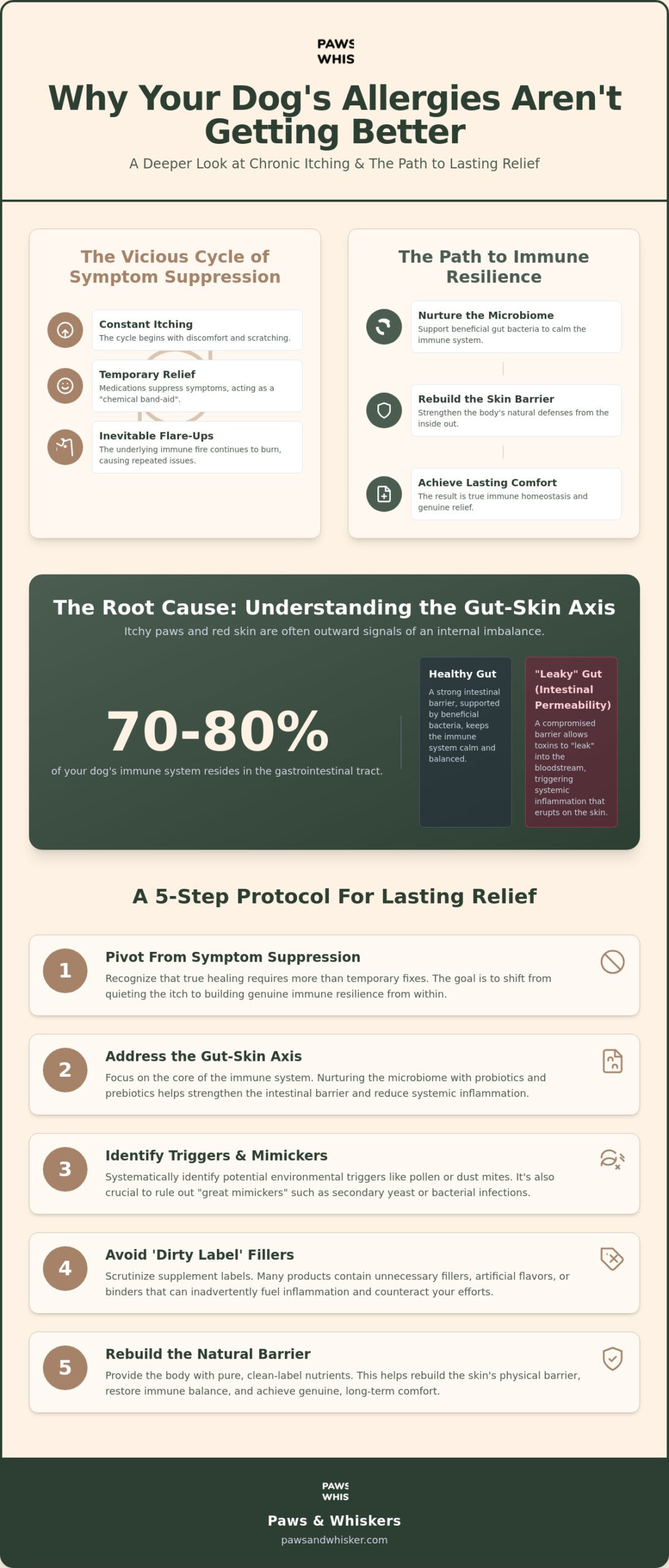
It’s a disheartening realization when, despite following every veterinary instruction and trying the latest medications, you find that my dog’s allergies aren’t getting better. Many pet parents feel trapped in a cycle of temporary relief followed by inevitable flare-ups. This occurs because standard treatments often act as chemical Band-Aids. They are designed to quiet the immediate noise of the itch, but they frequently leave the underlying immune fire burning. When we only suppress the outward symptoms, we ignore the internal biological errors that caused the overreaction in the first place.
A primary reason for this failure is the complexity of the canine inflammatory cascade. While humans rely heavily on histamines, dogs utilize a much broader array of inflammatory mediators. This is why antihistamine resistance is so common; medications like Benadryl or Zyrtec only target one small pathway. For a foundational look at these biological mechanisms, understanding canine allergies requires looking beyond the surface to see how genetics and environment collide. Furthermore, a one-size-fits-all approach ignores the fact that every dog possesses a unique immune signature. What works for a neighbor’s Retriever may do nothing for your Terrier if the root cause of their inflammation differs.
The Limits of Symptom Suppression
Environmental atopy and food sensitivities are distinct challenges that require tailored strategies. Atopy involves an overreaction to inhaled or contact allergens like pollen or dust mites, while food sensitivities often stem from a breakdown in oral tolerance within the digestive tract. The relentless itch-scratch cycle does more than cause discomfort; it physically depletes the skin barrier, making it easier for new allergens to penetrate. Immune homeostasis is the state of a balanced, resilient immune system that can distinguish between a true threat and a harmless pollen grain.
When OTC Solutions Aren’t Enough
Over-the-counter options like diphenhydramine or cetirizine often provide a sense of false hope. In moderate to severe cases, these H1 blockers are rarely enough to provide systemic relief, often losing efficacy within hours. If your dog’s discomfort returns the moment the medication wears off, it is a clear sign that the body needs more than a temporary fix. Relying solely on these “home remedies” without providing deep systemic support can lead to the development of secondary yeast and bacterial infections, which then mimic the original allergy and make the condition even harder to treat.
The Immune Foundation: Understanding the Gut-Skin Axis
When you feel like my dog’s allergies aren’t getting better despite your best efforts, it is time to look deeper than the surface of the skin. The most significant revelation in modern veterinary immunology is the gut-skin axis. Science tells us that roughly 70-80% of a dog’s immune system resides within the gastrointestinal tract. This means the itchy paws and red bellies you see are often just the outward manifestations of an internal imbalance. If the gut is in a state of chronic irritation, the entire immune system remains on high alert, reacting to harmless environmental triggers as if they were life-threatening invaders.
This internal turmoil often leads to a condition known as intestinal permeability, or “leaky gut.” When the delicate lining of the intestines becomes compromised, undigested food particles and toxins “leak” into the bloodstream. The body identifies these as foreign threats, triggering systemic inflammation that eventually erupts on the skin. While advances in allergy treatment have provided better ways to manage these flare-ups, true relief requires immune modulation. This process involves teaching the immune system to regain its composure, shifting it away from a state of hyper-reactivity and back toward a peaceful, protective baseline.
Nurturing the Microbiome for Clearer Skin
A thriving microbiome is the secret architect of healthy skin. Beneficial bacteria in the gut produce short-chain fatty acids that actively calm the immune system and strengthen the intestinal barrier. To support this delicate ecosystem, many pet parents find that incorporating probiotics for dogs is a foundational step in restoring internal harmony. Prebiotics act as the essential fuel for these “good” bacteria, ensuring they can survive and colonize effectively. By stabilizing the gut environment, you provide your companion with a defense mechanism that works from the inside out.
The Role of Omega Fatty Acids in Barrier Repair
Modern kibble, even high-quality varieties, often lacks the heat-sensitive essential fatty acids required for robust skin repair. Omega-3 fatty acids, specifically EPA and DHA, are potent biological tools that reduce skin redness and irritation at a cellular level. These nutrients help rebuild the physical barrier of the skin, making it harder for pollen and dust to penetrate and cause trouble. It is vital to choose clean, purified sources to avoid the heavy metal contamination often found in lower-grade oils. For those seeking to reinforce this natural shield, our Skin & Coat Omega-3 Soft Chews offer a concentrated, pure dose of the nutrients your dog needs to heal.
A 5-Step Troubleshooting Protocol for Stubborn Allergies
Watching your companion struggle is exhausting, especially when it feels like my dog’s allergies aren’t getting better despite your dedication. If initial treatments have failed, it’s time to move from a reactive stance to a systematic, diagnostic approach. This troubleshooting protocol is designed to help you peel back the layers of your dog’s health to find the hidden obstacles standing in the way of their recovery.
- Step 1: Rule Out the ‘Great Mimickers’. Before assuming an allergy, ensure your dog isn’t battling sarcoptic mites, fleas, or a deep-seated yeast infection. These conditions often create identical symptoms but require entirely different clinical interventions.
- Step 2: The Environmental Audit. Move beyond the obvious seasonal changes. We must identify both outdoor triggers and year-round household irritants that keep the immune system in a state of high alert.
- Step 3: Elimination Diet Basics. Since beef (34%) and dairy (17%) are the most common canine food allergens, a strict protein trial is essential. Avoid over-the-counter kibble during this phase; research in 2026 shows significant cross-contamination with undeclared proteins in non-prescription diets.
- Step 4: Supplementing for Resilience. Rather than just suppressing the itch, introduce nutrients that support the gut-skin axis and cellular repair to build the body’s natural defenses.
- Step 5: The Vet Partnership. If these steps don’t yield results, it’s time for a consultation with a veterinary dermatologist. These specialists, with initial visits typically costing between $200 and $500, can provide advanced intradermal testing or personalized immunotherapy protocols.
Identifying Hidden Environmental Triggers
We often focus on outdoor pollen, yet the “Allergic Load” theory suggests that a dog’s flare-up is usually the result of multiple small triggers adding up. Your dog might handle a little ragweed fine, but when you add dust mites in their bedding and harsh cleaning chemicals on the floor, their system finally boils over. To lower this threshold, wash all pet bedding weekly in hot water and consider switching to plant-based, fragrance-free household products. Even lawn treatments can linger on paws, so a quick wipe-down after walks can significantly reduce the daily allergen intake. For a more thorough removal of environmental irritants, professional grooming services like those offered at gardenstatepetcenter.com can be an essential part of maintaining a healthy skin barrier.
Systematic Supplementation Strategy
When you are desperate for results, it’s tempting to try everything at once. However, a scientific approach requires introducing only one new supplement at a time. This allows you to accurately monitor its efficacy without confusing the results. Remember that cellular changes in the skin barrier take time; you must maintain consistency for at least 30 to 60 days before judging success. For those seeking a comprehensive, evidence-based path, focusing on allergy relief for dogs provides the long-term support needed to move from temporary fixes to true immune restoration.
The Hidden Danger of Fillers in Canine Supplements
It is a frustrating irony that the very products designed to provide relief may be the reason my dog’s allergies aren’t getting better. Many mass-market allergy chews rely on “dirty labels” filled with cheap binders and inflammatory agents. When a dog’s immune system is already in a state of hyper-reactivity, even small amounts of corn, soy, or wheat can act as a trigger. These common fillers are often used to lower manufacturing costs, but for a sensitive animal, they represent a significant barrier to healing. Purity is non-negotiable when you are trying to calm an overactive biological response.
The science of clean labels focuses on eliminating these unnecessary burdens to allow the active ingredients to function effectively. Bioavailability is just as critical as the dose itself. If an ingredient is sourced poorly or processed with high heat, its ability to be absorbed and utilized by the body diminishes. We prioritize ingredients in their most natural, potent forms to ensure they reach the cellular level where they are needed most. Furthermore, manufacturing these formulations in FDA-registered facilities ensures that every chew meets rigorous safety standards, protecting your companion from the contaminants often found in unverified supplements.
Reading Your Dog’s Supplement Label Like a Pro
Identifying “red flag” ingredients is the first step in protecting your dog’s health. Be wary of generic “natural flavors,” which can often hide MSG, soy, or other allergens that aggravate the skin. Look instead for whole-food ingredients that you recognize and can trust. Clean-label nutraceuticals are transparently sourced, whole-food-based supplements that prioritize biological efficacy over manufacturing convenience. By choosing products with a clear, honest ingredient list, you remove the hidden obstacles that keep your dog in a cycle of discomfort.
This philosophy of purity and ingredient transparency isn’t limited to pet care; for those who want to discover Puur Skincare Canada, you’ll find a similarly curated selection of natural and Korean products designed for human skin health and resilience.
Why Vet-Approved Formulations Matter
Clinical validation is the bridge between hope and results. A vet-approved formulation has undergone the rigorous testing necessary to ensure it is safe for all life stages, from energetic puppies to senior companions. This scientific oversight moves your care plan away from homeopathic guesswork and toward evidence-based restoration. We are deeply committed to providing dog supplements that uphold the highest standards of integrity and medical validation. If you are ready to eliminate the hidden triggers in your dog’s routine, our Allergy & Immune Support Chews offer the pure, targeted support your dog deserves.
Nurturing Resilience: The Paws & Whiskers Path to Lasting Relief
The journey to healing is rarely a straight line, especially when you are convinced that my dog’s allergies aren’t getting better despite your best efforts. We understand the silent weight of those sleepless nights and the guilt that comes with seeing your companion in visible distress. At Paws & Whiskers, our “Wise Caretaker” philosophy is rooted in the belief that true wellness is a legacy of love, meticulous science, and deep empathy. We don’t just offer temporary patches; we provide the biological tools your dog needs to reclaim their vitality and move toward a life of itchy-free comfort.
Our Allergy & Immune Support Chews are the cornerstone of this restorative path. By utilizing a multi-pronged approach, these chews help modulate the immune system’s overactive response to environmental triggers. Unlike traditional sedatives that merely mask the problem, our formulation relies on pure, botanical origins and clean-label standards to support natural histamine balance. When paired with our Skin & Coat Omega-3 Soft Chews, you aren’t just treating a symptom. You are actively rebuilding the physical barrier of the skin from the inside out, ensuring that the moisture stays in and the irritants stay out.
A Synergistic Approach to Allergy Management
True restoration happens when we address the gut and the skin simultaneously. This synergistic strategy creates a comprehensive shield, combining internal immune modulation with external barrier repair to break the cycle of chronic inflammation once and for all. By incorporating targeted antioxidants and pure fatty acids, we help your dog’s body rediscover its state of immune homeostasis. We encourage you to view this process as a marathon of nurturing rather than a sprint of suppression. Since March 2026, the global market for dog allergy supplements has seen over 12% annual growth, reflecting a significant shift among pet parents toward these holistic, evidence-based solutions.
Your Next Steps Toward a Happier Pup
The most effective way to ensure lasting relief is through consistency and unwavering support. Gaps in immune support can lead to setbacks, which is why we recommend a subscription model to keep your companion’s resilience high year-round. If you feel you have tried every miracle cure and pharmaceutical patch without success, do not lose heart. Restoration is possible when we stop fighting the symptoms and start nurturing the animal’s inherent strength. The transition from “heart” to “head” requires a commitment to purity and scientific rigor, and we are here to walk that path with you every step of the way.
Explore our science-backed Allergy & Immune Support solutions and begin your dog’s journey back to vibrant, comfortable health today.
Restoring Your Companion’s Natural Vitality
Navigating the complex world of canine health requires a shift from simply masking symptoms to nurturing the body’s internal wisdom. By prioritizing the gut-skin axis and eliminating the hidden fillers that trigger inflammation, you provide your dog with the foundation for true restoration. If you have spent months feeling like my dog’s allergies aren’t getting better, remember that healing is a steady process of rebuilding resilience rather than a quick chemical fix. You now have the troubleshooting framework and biological insights needed to move beyond temporary patches toward a legacy of long-term comfort.
We are dedicated to this mission of advocacy, offering vet-approved, clean-label formulas crafted with science-backed botanical ingredients. Every batch is meticulously prepared in our US-based, FDA-registered facilities to ensure the highest standards of purity and efficacy for your family member. It is time to replace frustration with a proven, heart-centered approach to wellness that respects your dog’s unique biological needs.
Nurture your dog’s immune resilience with our Allergy & Immune Support Chews. Your dog’s journey to a vibrant, itch-free life starts with the right internal support, and we are honored to be your partner in their recovery.
Frequently Asked Questions
Why are my dog’s allergies getting worse even on medication?
Medications often focus on suppressing the itch signal rather than addressing the underlying immune dysfunction or secondary infections. If the inflammatory triggers in the environment persist, or if yeast and bacteria take hold in the damaged skin barrier, the symptoms will continue to intensify. This is often a sign that the body’s allergic load has exceeded the medication’s ability to provide a temporary patch.
Can I give my dog human allergy medicine like Benadryl every day?
While you can give certain human antihistamines under veterinary guidance, they are rarely an effective long-term solution. Research indicates these medications only provide relief for about 30% of dogs because canine inflammation involves pathways that go far beyond simple histamines. Daily use might offer mild sedation, but it won’t address the gut-skin axis or help rebuild a resilient immune system.
How long does it take for a change in diet or supplements to help my dog’s skin?
It typically takes between 30 and 60 days to see visible improvements from nutritional changes or new supplements. This timeline is dictated by the natural rate of skin cell turnover and the time required for the gut microbiome to stabilize. You must maintain a consistent routine during this period to allow the beneficial nutrients to fully integrate into the skin’s physical barrier.
Is it possible for a dog to suddenly develop allergies later in life?
Dogs can develop new sensitivities at any age due to cumulative environmental exposure or shifts in their internal immune health. A sudden change in your household, such as different cleaning chemicals or new lawn treatments, can trigger a late-onset reaction in a senior pet. If you notice an older dog scratching, don’t rule out allergies just because they have been healthy in the past.
What are the most common signs that my dog’s allergies are actually a gut health issue?
Chronic skin irritation paired with intermittent digestive issues like gas, bloating, or irregular stools often points to a gut health imbalance. When the intestinal lining is compromised, it triggers systemic inflammation that eventually erupts on the skin. This connection is a primary reason why my dog’s allergies aren’t getting better until the microbiome is properly nurtured and restored.
Can environmental allergies in dogs be cured, or only managed?
Most environmental allergies are managed rather than cured, though immunotherapy can significantly reduce a dog’s sensitivity over time. Management focuses on lowering the allergic load through environmental cleaning and supporting the immune system from the inside out. By building internal resilience, you can help your companion live a comfortable, vibrant life without the need for heavy, suppressive drugs.
How do I know if my dog has a food allergy or a seasonal allergy?
Seasonal allergies typically fluctuate with the weather, whereas food allergies usually cause consistent, year-round itching. If your dog’s discomfort remains the same regardless of the season, a protein sensitivity is a likely culprit. A strict eight-week elimination diet using a novel protein is the most reliable scientific method to identify whether the trigger is coming from their bowl.
What should I do if my dog’s skin is red, hot, and smells ‘yeasty’?
Red, hot, and odorous skin usually indicates a secondary yeast or bacterial infection that has exploited a weakened skin barrier. You should consult your veterinarian to treat the immediate infection while simultaneously starting a protocol to strengthen the immune foundation. Clearing the infection is a necessary step to stop the itch-scratch cycle and allow the skin’s natural defenses to begin the healing process.
Disclaimer
The information provided in this article is for educational and informational purposes only and is not intended as veterinary advice. Every dog is unique, and health concerns should be discussed with a licensed veterinarian. Always consult your veterinarian before introducing new supplements, changing your dog's diet, or beginning any health or wellness program, particularly if your dog has a medical condition, is pregnant or nursing, or is taking prescription medications.