

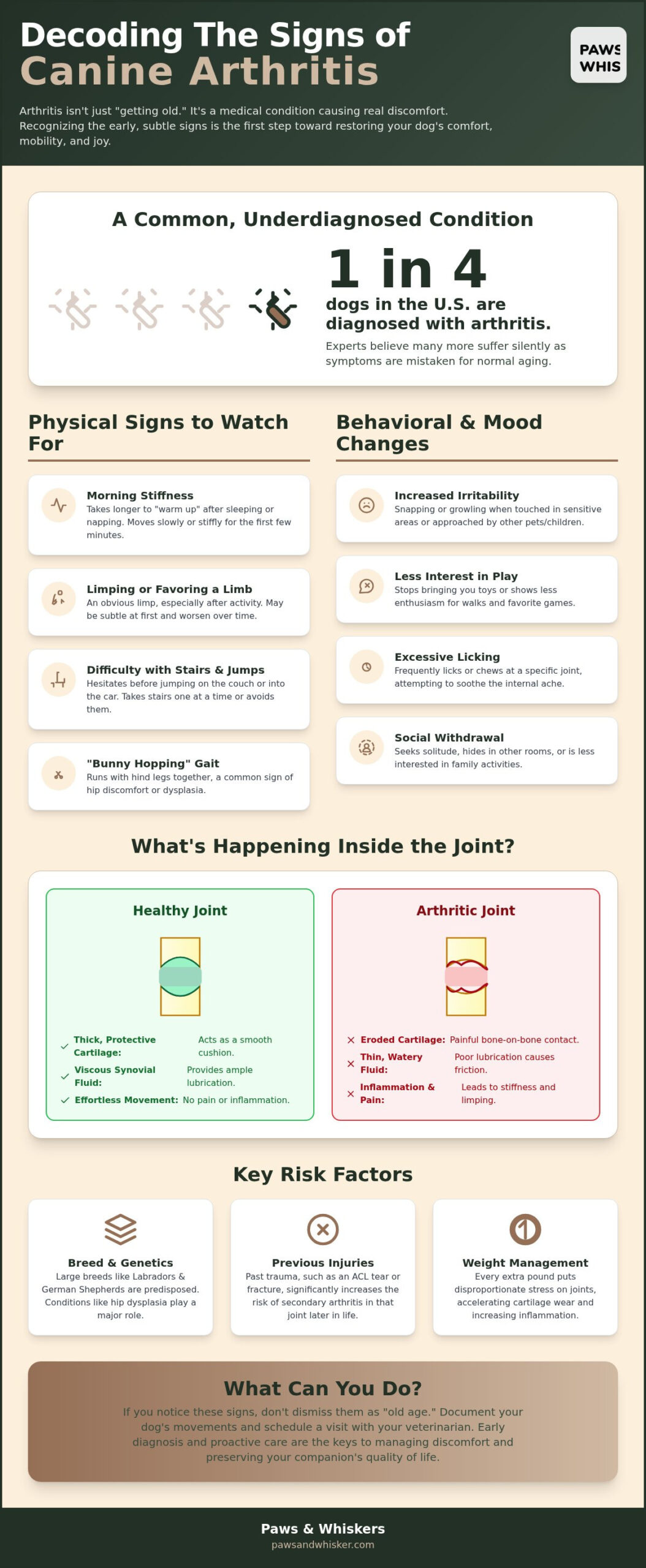
One in four of the 77.2 million pet dogs in the United States are currently diagnosed with arthritis, yet experts believe many more suffer in silence because their discomfort is mistaken for simple aging. It’s heartbreaking to watch a once-energetic companion hesitate at the stairs or struggle to rise after a nap. You might feel a pang of guilt wondering if you’ve missed something, or perhaps you’re simply confused why your vibrant friend seems to be slowing down so soon. Your intuition is a powerful tool; that subtle shift in their spirit is often the first indicator that their joints need support.
We understand that your dog is an integral member of your family, and seeing them in pain is a burden you shouldn’t carry alone. This guide will teach you how to identify the subtle signs of arthritis in dogs by decoding the physical and behavioral changes that signal internal struggle. By blending deep empathy with clinical reassurance, we’ll provide a clear checklist of symptoms and a science-backed path toward rejuvenation. You’ll learn how to move past the “old age” myth and take proactive steps to restore your dog’s strength, movement, and joy.
Key Takeaways
- Understand why “slowing down” is often a clinical symptom of inflammation rather than just a normal birthday milestone.
- Learn to identify the physical signs of arthritis in dogs, ranging from subtle morning stiffness to the specific “bunny hop” gait during walks.
- Decode your companion’s silent language by recognizing how sudden irritability or social isolation can signal hidden joint discomfort.
- Discover how to document real-world movement at home to help your veterinarian reach a faster, more accurate clinical diagnosis.
- Explore holistic ways to restore vitality through environmental modifications and the science of clean-label joint support.
Understanding Canine Osteoarthritis: More Than Just ‘Getting Old’
Many pet parents watch their companions move a little slower and sigh, thinking it’s just the natural progression of time. However, the biological reality is often more complex than a simple birthday milestone. When we talk about the signs of arthritis in dogs, we’re actually looking at the visible results of a microscopic struggle happening within the joints. Canine osteoarthritis is a degenerative inflammatory condition that requires a multi-modal care approach.
When a dog stops jumping onto the couch or hesitates at the bottom of the stairs, they aren’t just losing interest. They’re exhibiting a clinical symptom of chronic inflammation. This “slowing down” is a protective mechanism; their body is trying to limit the friction in the joint to avoid the sharp sting of bone-on-bone contact. We distinguish between primary arthritis, which stems from lifelong wear and tear, and secondary arthritis, which is triggered by specific joint instabilities or developmental issues. Understanding this distinction is the first step in moving from passive observation to active restoration.
The Role of Synovial Fluid and Cartilage
In a healthy joint, cartilage acts as a smooth, slippery shock absorber, while synovial fluid provides the necessary lubrication for effortless movement. As arthritis progresses, this protective layer wears thin and the fluid loses its viscosity. This triggers an exhausting inflammatory cycle: the pain makes your dog move less, which leads to muscle atrophy and increased stiffness, creating a spiral of physical discomfort. As a Wise Caretaker, your greatest tool is early intervention. Identifying these signs of arthritis in dogs before the damage becomes irreversible allows you to support the joint’s natural environment with targeted nutrients like Glucosamine and Chondroitin. This proactive approach focuses on holistic vitality rather than just masking the symptoms of a deeper issue.
Risk Factors: From Genetics to Weight Management
While any dog can experience joint discomfort, certain factors increase the likelihood of early onset. Genetics play a significant role, particularly in large breeds like Labrador Retrievers and German Shepherds. Conditions such as Canine hip dysplasia or previous injuries like ACL tears often serve as the primary catalyst for secondary arthritis later in life. Beyond genetics, weight management is the most critical environmental factor you can control. Every extra pound places disproportionate stress on sensitive joints, accelerating the erosion of cartilage and heightening the inflammatory response. Managing these risks isn’t just about physical health; it’s about preserving the quality of your dog’s life story and ensuring they can continue to participate in the family activities they love.
The Physical Indicators: From Subtle Stiffness to Obvious Limping
While many resources suggest that limping is the primary indicator of joint pain, waiting for a visible limp often means the condition is already quite advanced. As a Wise Caretaker, you can learn to spot much earlier signs of arthritis in dogs by observing how they interact with their environment. These physical shifts are often subtle, manifesting as a slight hesitation before a jump or a slower pace during the first few minutes of a walk. Your dog isn’t simply being stubborn; they’re navigating a world that has suddenly become physically demanding.
Vertical transitions, such as climbing stairs or entering a car, become significant hurdles for an arthritic dog. You might notice your companion pawing at the edge of the couch instead of jumping up, or taking stairs one step at a time with a deliberate, stiff motion. Over time, this reluctance to use certain limbs leads to muscle atrophy. If you look closely at your dog’s hindquarters, you may see a thinning of the muscle mass as they shift their weight forward to relieve the pressure on their hips and knees. This forward weight shift is a silent plea for relief that often goes unnoticed until the physical change is dramatic.
The ‘Warm-Up’ Phenomenon
Morning stiffness is a classic hallmark of degenerative joint disease. You’ll likely notice that your dog takes longer to “warm up” after a long nap or a night’s sleep. This happens because synovial fluid, the joint’s natural lubricant, thickens during periods of inactivity. According to Cornell University on Osteoarthritis, chronic inflammation causes the joint capsule to thicken, making initial movements painful. Cold weather often exacerbates this by increasing fluid viscosity, making those first ten steps of the day an essential diagnostic baseline for monitoring your dog’s comfort levels.
Changes in Posture and Weight Distribution
Pay close attention to your dog’s silhouette and gait during your daily walks. An abnormal “bunny hop” movement, where both back legs move together while running, is a common way dogs compensate for hip discomfort. You might also see a “hunched” back, which suggests the dog is trying to tuck their pelvis and shift their center of gravity away from painful rear joints. Some dogs will even resort to licking or chewing at a specific elbow or hock, attempting to soothe the internal heat of localized inflammation. If you notice these early signals, incorporating Joint Support Chews into their daily routine can provide the targeted, clean-label nutrients needed to support cartilage health before mobility further declines.
The ‘Hidden’ Behavioral Shifts: Decoding Your Dog’s Silent Language
Because a dog’s stoic nature often masks internal distress, chronic pain usually remains hidden until it eventually manifests as a significant change in temperament. Many owners unintentionally dismiss a new found irritability as the “grumpy senior” phase. In reality, sudden snapping or growling when touched is rarely about a bad mood. It’s an instinctive plea for pain relief. When a dog’s joints are inflamed, the mere anticipation of being moved or petted can trigger a defensive response. This shift in personality is one of the most heartbreaking signs of arthritis in dogs, yet it is also a vital signal that your companion needs your help.
You may also notice your “velcro dog” suddenly seeking isolation. If a pet who once followed you from room to room now spends hours in a quiet corner or under a bed, they are likely trying to manage their discomfort in private. This withdrawal from social interaction is a coping mechanism. Similarly, changes in grooming habits can be telling. Some dogs will obsessively lick or chew at a painful hock or wrist, while others may stop grooming their back or hindquarters entirely because the act of twisting their body has become too painful to endure.
Anxiety and Restlessness
Pain doesn’t punch a time card; it often intensifies when the house goes quiet. If your dog is pacing at night or struggling to find a comfortable sleeping position, they are likely dealing with the “throbbing” sensation associated with joint inflammation. You might hear them sighing frequently or notice increased panting that isn’t related to heat or exercise. According to the ACVS on Osteoarthritis in Dogs, this restlessness is a primary clinical indicator of discomfort. A heightened startle reflex is also common. A dog that was once calm may now jump at small noises or act fearful when people approach their “sore” side.
Loss of Interest in ‘Joyful’ Activities
The ball is no longer worth the effort. You might see your dog watch a thrown toy with interest but remain rooted to the spot, calculating the physical cost of the chase. This transition from excitement to caution is a clear indicator of declining mobility. It’s a subtle grief for both owner and pet. Research published in early 2026 indicates that an estimated 21% of dogs experience osteoarthritis by the age of two, proving that these behavioral shifts can happen much earlier than we expect. To help you differentiate between normal aging and degenerative disease, explore these 5 Early Signs Your Dog Is Dealing With Joint Pain. Recognizing these shifts early allows you to intervene with science-backed care before their quality of life further diminishes.
When to See the Vet: The Clinical Path to a Diagnosis
Your intuition has led you this far, but a clinical diagnosis is the bridge between suspecting discomfort and implementing a restorative plan. When you notice the early signs of arthritis in dogs, your first step should be capturing a home video. Dogs are notoriously stoic in a clinical setting; the adrenaline of a vet visit often masks the very stiffness you see every morning. Showing your veterinarian a clip of your dog struggling to rise from their bed or “bunny hopping” in the backyard provides invaluable real-world data that a ten-minute exam might miss. This visual evidence allows the doctor to see the struggle through your eyes, bypassing the “brave face” many dogs put on at the office.
Once at the clinic, the veterinarian will perform a thorough physical manipulation exam. They are feeling for heat, swelling, and a specific grating sensation called crepitus, which indicates cartilage has worn down to the point of bone-on-bone friction. They will also assess the range of motion in each limb to identify which joints are most affected. If the discomfort is significant, diagnostic imaging becomes necessary. X-rays allow the vet to see osteophytes, or bone spurs, which are a definitive marker of advanced osteoarthritis. In some cases, blood work is ordered to rule out tick-borne illnesses like Lyme disease or other inflammatory conditions that can mimic joint pain and complicate the diagnostic process.
Questions to Ask Your Veterinarian
Empower yourself during the consultation by asking about the specific “Grade” of your dog’s arthritis. This classification helps you understand if the inflammation is mild and manageable or if it has progressed to a point requiring more intensive intervention. Discuss a multi-modal plan that incorporates weight management, controlled exercise, and high-quality supplementation. It’s essential to understand the balance between pharmaceutical pain medications, which may have long-term side effects on liver or kidney function, and natural support options that focus on long-term joint health and vitality.
The Importance of a Baseline
Diagnosing joint issues at age seven provides a much better prognosis than waiting until age eleven. Establishing this baseline allows you to track progress using a “comfort journal,” where you record daily activity levels and ease of movement. This data helps you monitor the efficacy of new treatments and adjustments to their routine. For a deeper look at how to support your dog’s biology during this phase, consult our Natural Joint Supplements for Dogs: The Scientist’s Guide. Taking action now, rather than waiting for a total loss of mobility, is the hallmark of the Wise Caretaker. If you’re ready to start their restorative journey today, our Joint Support Chews offer a clean-label foundation for daily vitality and strength.
Nurturing Your Dog’s Mobility: Holistic Strategies and Clean-Label Support
Once you’ve identified the signs of arthritis in dogs, the focus shifts from observation to active restoration. While pharmaceutical interventions have their place in acute pain management, a holistic, science-backed approach offers a path toward long-term vitality. The foundation of this care lies in supporting the joint’s biological structure. Glucosamine and Chondroitin aren’t just buzzwords; they are essential building blocks that help maintain cartilage elasticity and support the production of synovial fluid. By providing these nutrients, you aren’t just masking a symptom. You’re giving your dog’s body the tools it needs to repair and protect itself from further erosion.
We believe that “motion is lotion,” but the type of movement matters immensely. High-impact activities like jumping for a frisbee can exacerbate inflammation, while controlled, low-impact exercise keeps the joints lubricated and the supporting muscles strong. This balanced approach, combined with environmental modifications, creates a safety net for your companion. It’s about looking at their life through the lens of a Wise Caretaker, ensuring every step they take is supported by both your affection and empirical data.
Choosing a Clean-Label Joint Supplement
Safety and transparency should never be negotiable when it comes to your dog’s health. Many mass-market supplements contain hidden fillers or synthetic additives that can actually trigger systemic inflammation, counteracting the very benefits they claim to provide. Look for formulations manufactured in FDA-registered US facilities that prioritize clean-label transparency and US-sourced ingredients. Our Joint Support Chews are crafted with vet-approved ratios of high-purity nutrients, ensuring that every bite serves as a nurturing ritual of care. This commitment to quality transforms a daily supplement into a cornerstone of your dog’s health history, providing peace of mind alongside physical rejuvenation.
Lifestyle Adjustments for a Pain-Free Home
Your dog’s environment plays a pivotal role in their daily comfort levels. Simple modifications can significantly reduce the physical toll on their joints. Consider these adjustments to restore their confidence:
- Weight Management: This is the most effective “free” treatment for arthritis; reducing excess weight directly decreases the mechanical stress on sensitive joints.
- Environmental Aids: Place non-slip rugs over hardwood floors to prevent painful slips and use ramps to eliminate the jarring impact of jumping into the car or onto the bed.
- Low-Impact Activities: Prioritize swimming or slow “scent-walks” over high-jump fetch to keep their spirit engaged without over-exerting their body.
Your dog’s golden years don’t have to be defined by a slow decline into discomfort. With the right combination of environmental support, controlled movement, and high-purity nutrition, their senior chapter can be their most vibrant and comfortable yet. Your dog’s legacy is one of loyalty and joy; providing them with a pain-free life is the ultimate way to honor that bond.
Restoring Your Companion’s Vitality and Strength
You now possess the knowledge to look past the stoic exterior of your beloved companion. By learning to decode the early signs of arthritis in dogs, you’ve already taken the most important step toward preserving their quality of life. From identifying the “bunny hop” gait to recognizing the emotional weight of social withdrawal, you’re no longer just watching them age; you’re actively advocating for their comfort. Every small adjustment you make in their environment and nutrition serves as a testament to the bond you share. Your intuition, paired with the science-backed strategies we’ve discussed, provides a clear path forward for your family.
Your dog’s golden years can be a season of rejuvenation rather than a slow decline into stiffness. Give your dog the gift of mobility with our science-backed Joint Support Chews. Our vet-approved, clean-label formula is meticulously manufactured in FDA-registered US facilities to ensure the highest purity for your family member. Join over 1,000+ devoted pet parents who have left five-star reviews after seeing their companions rediscover the joy of movement. You’re their voice, their protector, and their most dedicated ally. We’re honored to help you make their next chapter their most vibrant one yet.
Frequently Asked Questions
How can I tell if my dog is in pain if they aren’t whimpering?
Dogs are instinctively stoic and rarely vocalize chronic pain like humans do. Instead, you must look for subtle behavioral cues such as increased panting, restlessness at night, or a “velcro dog” suddenly seeking isolation. Physical shifts, including a widened stance in the front legs or a hunched back, are often more reliable indicators of distress than whining or whimpering.
What is the best age to start giving my dog joint supplements?
Proactive support can begin as early as age two, particularly for large breeds or those predisposed to joint issues. Since research indicates that 21% of dogs experience osteoarthritis by this young age, starting a clean-label supplement early provides the necessary building blocks for cartilage health. It’s much easier to preserve healthy joint function than to attempt to restore it after significant erosion has occurred.
Can arthritis in dogs be reversed or only managed?
Arthritis is a degenerative condition that cannot be fully reversed, but it can be effectively managed to restore vitality. While the biological changes to the bone are permanent, you can significantly reduce inflammation and support the remaining cartilage. A combination of weight management and targeted nutrients allows your dog to return to a state of comfort and joyful movement.
Is it okay to walk my dog if they have arthritis?
Yes, consistent low-impact exercise is essential for maintaining joint health and muscle strength. Controlled movement helps circulate synovial fluid, which acts as a natural lubricant for the joints. Stick to shorter, frequent walks on level ground rather than high-intensity play. If your dog shows increased signs of arthritis in dogs after activity, it’s a signal to reduce the duration or intensity.
How do I know if my dog’s ‘slowing down’ is just old age?
Slowing down is almost always a clinical symptom of discomfort rather than a normal part of aging. If your dog hesitates at the stairs or takes longer to “warm up” after a nap, they are likely experiencing joint inflammation. Aging shouldn’t be painful. When you identify these shifts early, you can implement a care plan that keeps their senior years vibrant and active.
What are the side effects of common dog arthritis medications?
Traditional pharmaceutical pain medications, such as NSAIDs, can place significant stress on a dog’s internal organs over time. Long-term use is sometimes associated with gastrointestinal upset, as well as potential liver or kidney complications. This is why many Wise Caretakers prefer a multimodal approach, using clean-label supplements to provide long-term support while minimizing the need for high doses of prescription drugs.
Are natural joint chews as effective as prescription drugs?
Natural joint chews and prescription drugs serve different purposes in a comprehensive care plan. Prescription medications are often necessary for acute, immediate pain relief, while high-quality chews focus on the long-term restoration of joint tissues. By using science-backed ingredients like Glucosamine and Chondroitin, you support the joint’s environment naturally, which can reduce the reliance on pharmaceuticals over time.
Can a change in diet help my dog’s joint pain?
A diet focused on weight management is the most effective way to reduce joint stress and inflammation. Carrying even a few extra pounds puts disproportionate pressure on inflamed joints, accelerating cartilage breakdown. Incorporating anti-inflammatory nutrients and maintaining a lean body condition can significantly improve your dog’s mobility. It’s a foundational step in any nurturing care plan designed to restore physical vigor.
Disclaimer
The information provided in this article is for educational and informational purposes only and is not intended as veterinary advice. Every dog is unique, and health concerns should be discussed with a licensed veterinarian. Always consult your veterinarian before introducing new supplements, changing your dog's diet, or beginning any health or wellness program, particularly if your dog has a medical condition, is pregnant or nursing, or is taking prescription medications.